
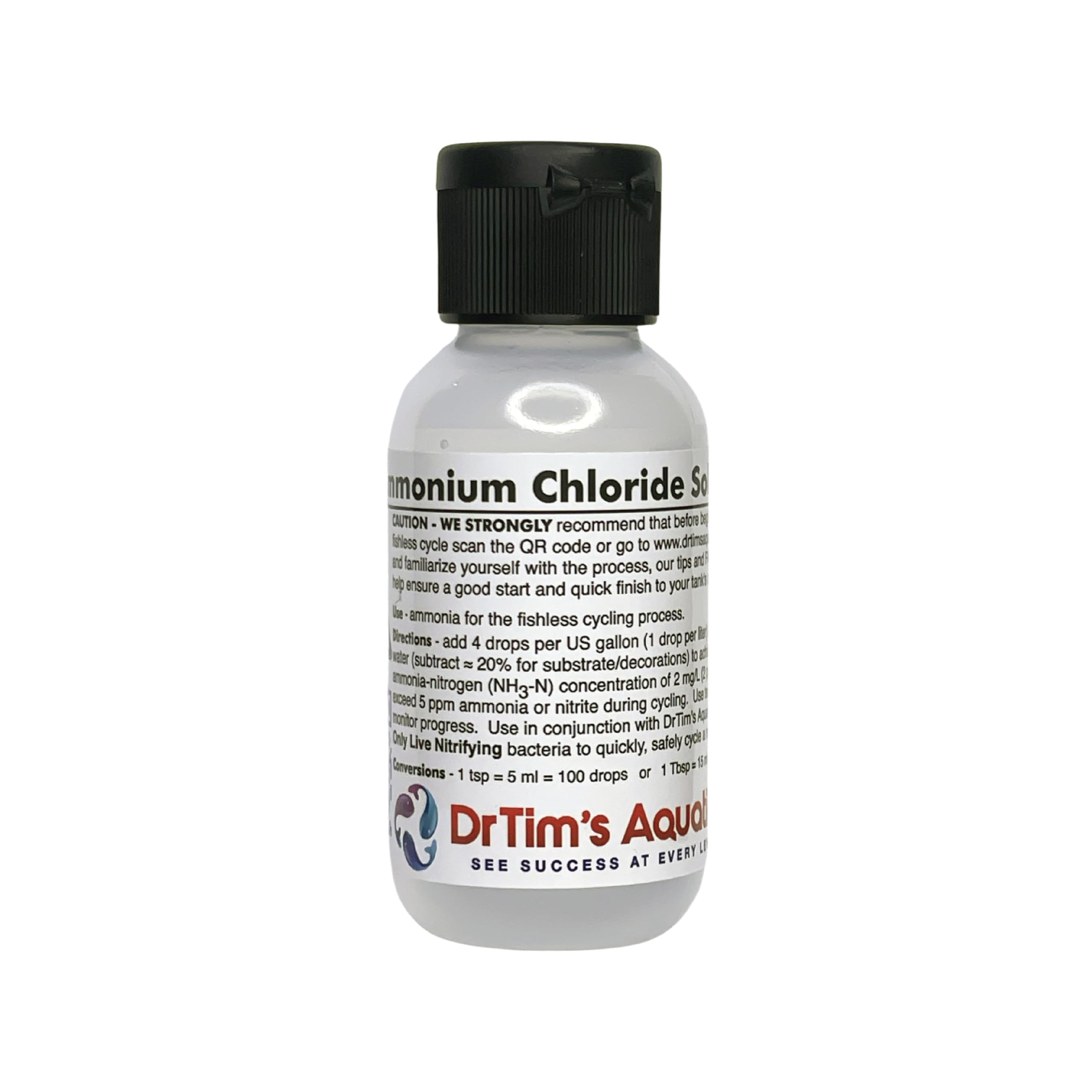
Setting up a new aquarium involves a lot of waiting, and for many hobbyists, the most tedious part is the nitrogen cycle. Dr. Tim’s Ammonium Chloride is one of those products designed to make that waiting period a bit more deliberate. Instead of using fish food or a hardy fish to produce ammonia, you add a precise amount of this liquid to your tank water. The idea is straightforward: you control the ammonia source, so you can monitor the cycle’s progress without the guesswork.
In practice, this means adding a few drops to your aquarium until the ammonia reading hits your target level—usually around 2 to 4 ppm. Then you wait and test. As the cycle progresses, you’ll see nitrite appear, then nitrate, and finally, you’ll need to add more ammonia to keep the bacteria fed. It’s a method that requires a test kit and a bit of patience, but it’s far more predictable than tossing in a pinch of fish flakes and hoping for the best.
The product itself is a simple, clear liquid. It’s just ammonium chloride dissolved in water, with no added chlorine or other chemicals. That’s a plus for reef keepers and anyone worried about introducing unnecessary additives. The 2-ounce bottle is small, but a little goes a long way. In a typical 20-gallon tank, you might only need a few drops per dose, so the bottle can last through several cycles or multiple tank setups.
One of the key features here is the precision it offers. Because you’re adding a known quantity of ammonia, you can avoid the spikes and crashes that sometimes happen with messy alternatives. It also helps if you’re trying to cycle a tank quickly, especially when paired with a bacterial supplement like Dr. Tim’s One and Only. But even on its own, it gives you a clear, measurable way to track where your cycle stands.
That said, there are some limitations. The biggest is that you’re still doing regular water testing—there’s no shortcut around that. If you’re not comfortable with liquid test kits or don’t want to monitor ammonia, nitrite, and nitrate levels, this product won’t magically cycle your tank. It also requires you to be careful with dosing. Overdosing can stall the cycle or lead to high nitrite levels that take longer to clear. The dropper bottle helps, but it’s not foolproof.
Compared to using fish food, this is a much cleaner approach. Fish food breaks down unpredictably, and you can end up with excess waste that fuels algae or cloudy water. Ammonium chloride is pure and doesn’t add organic matter. On the other hand, it’s less “natural” in the sense that you’re adding a chemical compound, but for the purpose of cycling, that’s actually a benefit. It’s also cheaper in the long run than buying live fish to cycle a tank, especially if you’re setting up multiple aquariums.
Who is this for? It’s ideal for new hobbyists who are willing to learn the nitrogen cycle and want a controlled way to do it. It’s also great for experienced keepers who are setting up a quarantine tank or a new display and don’t want to risk using fish as ammonia sources. If you’re the type of person who likes data and measurable progress, you’ll appreciate the clarity it brings.
But it’s not for everyone. If you’re looking for a completely hands-off, “just set it and forget it” approach, this isn’t it. You’ll need to test regularly and adjust dosing. Also, if you’re cycling a very small tank (like a nano tank under 5 gallons), the dropper might be a bit awkward for the tiny amounts needed—you might end up using a syringe for accuracy. And if you’re someone who prefers the old-school method of using a hardy fish, this might feel overly technical, though that method is now widely discouraged for ethical reasons.
In terms of performance, it does what it says. The ammonia is available immediately, and it’s easy to read the concentration with a standard test kit. I’ve seen it work in both freshwater and saltwater setups, and it doesn’t affect pH or other parameters beyond the intended ammonia. The lack of chlorine is a nice touch, as some other ammonia sources (like household ammonia) can contain surfactants that are harmful to bacteria.
One thing to note: the bottle is small, and if you’re not careful, you might lose the dropper cap or spill it. It’s also worth keeping it away from children and pets, as it’s a chemical solution. But these are minor quibbles.
Overall, Dr. Tim’s Ammonium Chloride is a solid tool for fishless cycling. It’s not a miracle product, but it does exactly what it’s supposed to do. If you’re willing to put in the testing time, it can make the cycling process more predictable and less stressful. For anyone starting a new tank and wanting to do it right, this is a practical choice.