
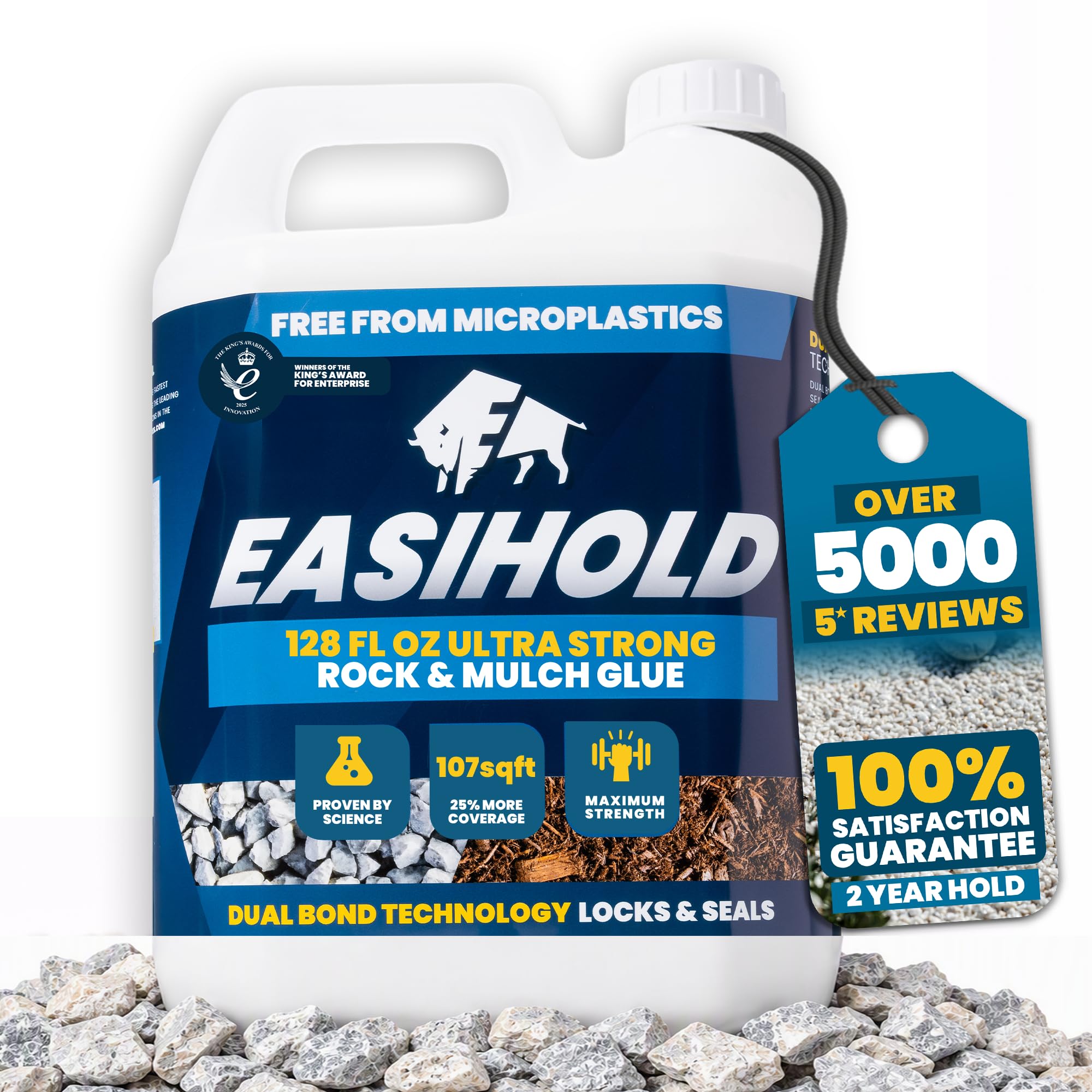
Landscaping with loose gravel or bark mulch often looks great for about a week. Then the first rainstorm or a single afternoon of kids playing in the yard redistributes it across the lawn, onto the patio, and into the house. For anyone tired of that cycle, adhesive binders like Vuba Easihold promise a way to lock stones in place without the permanence of concrete or pavers. I spent a few weekends testing this 1-gallon jug on a steep side yard that had been shedding pea gravel for years, and the results were better than expected—though not without some caveats.
Easihold is a polyurethane-based glue that you mix with water and spray or pour over laid gravel. The liquid seeps down and bonds the stones together as it cures, creating a firm but slightly flexible surface. The 1-gallon size claims to cover up to 107 square feet, which is generous for a single project. I used it on roughly 80 square feet of path and border area, applying it with a cheap pump sprayer, and I still had about a quarter of the jug left. The coverage estimate seems realistic if you apply it evenly and don’t oversaturate.
One of the main selling points here is that it’s non-toxic and safe for pets once cured. That’s a real advantage over some solvent-based adhesives that smell like a chemical plant for days. The product has a mild odor during application, but it dissipated within a few hours, and I didn’t have to worry about the dog walking through the area after it dried. It also dries clear, which is a big deal if you’re using decorative stones or colored gravel. The binder doesn’t change the look of the material—it just holds it in place. I tested it on both tan pea gravel and dark slate chips, and in both cases the finish was invisible.
In terms of performance, the cured bond is solid. After a week of dry weather, I tried to scrape up a few stones with a screwdriver, and they held firm. The surface can handle foot traffic without crumbling, and it’s been through two decent rainstorms without any visible washouts. On a slope with a 20-degree incline, the gravel stayed put, which was the whole point of the project. For a patio or walkway that gets regular use, this should extend the life of your gravel by years, saving you from constant raking and replenishing.
However, there are trade-offs. The first is that application is not as simple as the label suggests. You need to mix the glue with water in the right ratio, and if you over-dilute it, the bond is weak. If you under-dilute, it’s too thick to penetrate deeply. Getting that balance right took a couple of test patches. Also, the glue works best on clean, dry gravel. If you apply it to damp stones or during high humidity, the curing time stretches out and the bond may be less reliable. I had to wait for a dry spell to finish the job, which is a limitation in climates with frequent rain.
Another thing to keep in mind is that this is not a permanent solution. The bond is strong but not indestructible. In high-traffic areas or under heavy wheel loads, you’ll eventually see some stones loosen. Unlike concrete or a resin-bound paving system, Easihold doesn’t create a solid slab. It’s more like a reinforced layer that can be broken up if you need to dig or re-grade later. That flexibility is useful, but it also means you might need to reapply every few years, depending on wear and tear.
Compared to alternatives like polymeric sand for paver joints or a full resin-bound gravel system, Easihold sits in a middle ground. Resin-bound systems are more durable and look more polished, but they cost significantly more and are difficult to install yourself. Polymeric sand works only for narrow joints, not open gravel areas. Easihold is cheaper and easier to apply than resin, but it doesn’t give you the same seamless, hard surface. For a DIY landscaper who wants to stabilize a gravel path or decorative bed without hiring a contractor, it’s a practical option.
Who is this for? Homeowners with slopes, drainage channels, or frequently disturbed gravel areas will get the most benefit. It’s also great for keeping bark mulch in place around flower beds, especially in windy spots. On the other hand, if you’re looking for a permanent hardscape solution, or if you have an area that stays wet most of the year, this is not the right product. It’s also not ideal for driveways that see heavy vehicle traffic—the bond will eventually break down under constant pressure.
Overall, Vuba Easihold does what it claims, with some patience required for proper application. It’s not a miracle product, but it’s a solid, non-toxic, and reasonably priced way to reduce gravel maintenance. Just read the instructions carefully, wait for a dry day, and test a small area first. If you do that, you’ll likely be satisfied.