
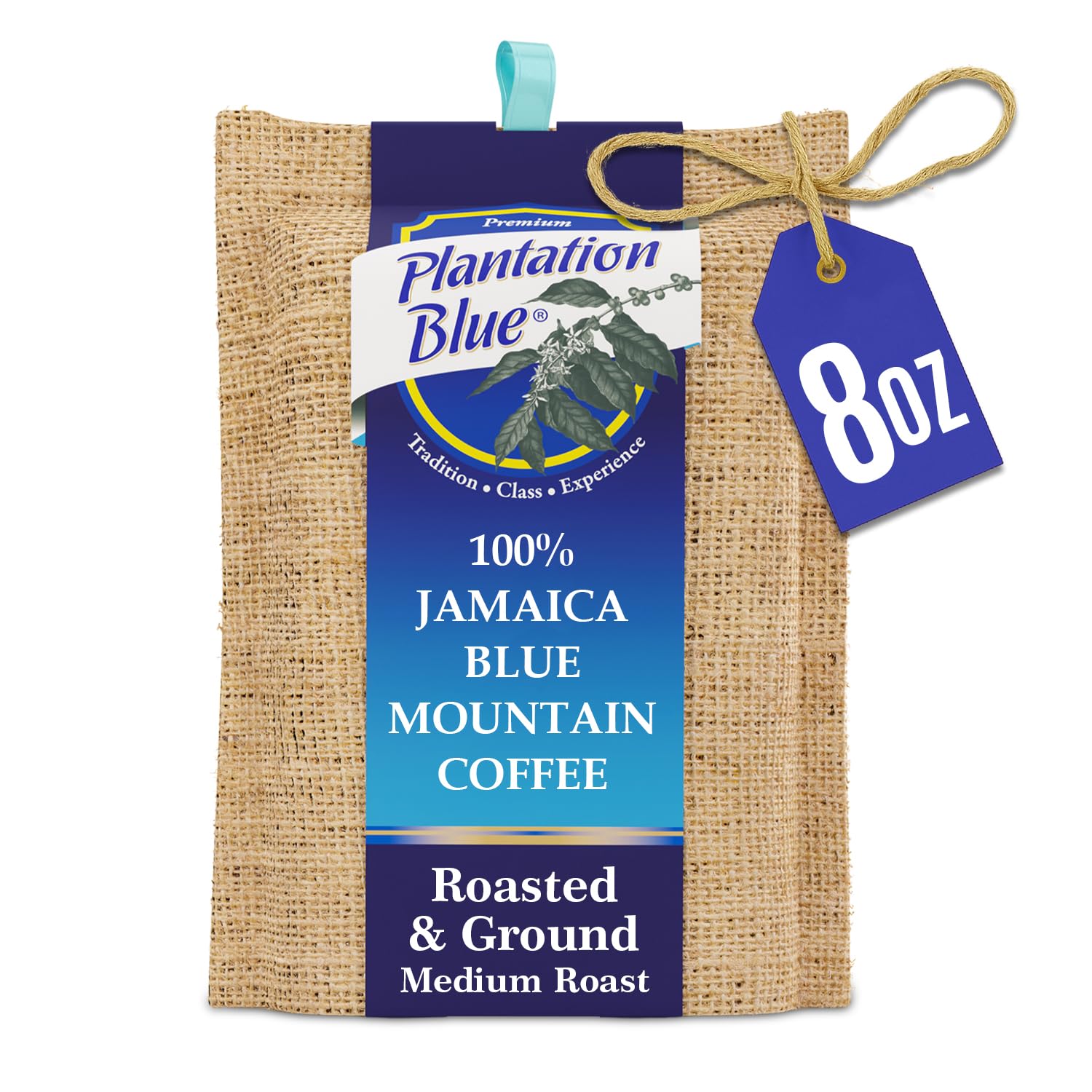
Jamaican Blue Mountain coffee carries a reputation that precedes it. It’s one of those names that gets thrown around in coffee circles, often with a mix of reverence and skepticism. The Plantation Blue 100% Jamaican Blue Mountain Coffee, in its 8-ounce ground form, is a direct attempt to deliver that experience without requiring a burr grinder or a trip to the island. After spending a couple of weeks with this bag, I have a clearer picture of what you’re actually paying for.
The first thing you notice is the price. This is not an inexpensive coffee. An 8-ounce bag typically lands in the $40–$50 range, which puts it firmly in the territory of a treat rather than a daily driver. The question is whether the cup justifies the cost. In my testing, I brewed it in a standard drip machine, a French press, and a pour-over setup. The results were consistent: a remarkably smooth, low-acidity cup with a delicate aroma that’s more floral and nutty than bold or fruity. There’s a subtle sweetness, almost like a hint of cocoa, but it’s not a flavor bomb. It’s a quiet, refined coffee that rewards attention rather than demanding it.
One of the key functional features here is the sourcing and grading. Jamaican Blue Mountain coffee is regulated by the Coffee Industry Board of Jamaica, and Plantation Blue is certified 100% Blue Mountain, which means it’s not a blend or a rebranded product from another region. The beans are grown at elevations between 3,000 and 5,500 feet, which contributes to the mild, clean profile. The medium roast is a sensible choice for this bean—it preserves the intrinsic characteristics without introducing the smoky or bitter notes that a darker roast might. The grind size is labeled as “ground,” but it’s not specified for a particular brewing method. In practice, it’s a medium-fine consistency that works okay in a drip machine and a French press, though it’s slightly too fine for the latter if you prefer a coarser grind for a cleaner press.
There are limitations, and they’re worth noting. The most obvious is the price-to-quantity ratio. At 8 ounces, you’re getting roughly 22–24 cups of coffee, depending on how strong you brew. That’s about $2 per cup, which is more than most specialty coffees but less than a café latte. The other trade-off is the flavor profile itself. If you’re accustomed to bright, acidic African coffees or the heavy body of a Sumatran, this will feel almost muted. It’s not a coffee that slaps you awake; it’s a coffee that gently nudges you. For some, that’s a relief. For others, it might be underwhelming, especially at this price point. I also found that the flavor degrades noticeably after the bag is opened for more than a week, so you need to use it relatively quickly or store it in an airtight container.
Compared to other premium coffees, like a Kona from Hawaii or a good Colombian geisha, the Blue Mountain holds its own in terms of smoothness but lacks the complexity that some coffee enthusiasts seek. A well-sourced Ethiopian Yirgacheffe will give you a more vibrant, wine-like acidity for half the price. What Blue Mountain offers is a clean, almost tea-like body with zero bitterness, even when over-extracted. That’s a rare quality. It’s forgiving in a way that most specialty coffees aren’t, which makes it a decent choice for someone who’s new to high-end coffee but doesn’t want to fuss with dialing in the perfect brew.
Who is this for? If you enjoy a mild, easy-drinking coffee and you’re curious about what the Blue Mountain fuss is about, this is a legitimate way to try it without buying whole beans and a grinder. It’s also a good gift for a coffee lover who appreciates provenance and wants a reliable, non-intimidating cup. However, if you’re someone who prefers bold, dark roasts or you’re on a budget, this isn’t the right pick. There are plenty of excellent $15–$20 bags that offer more complexity and a stronger flavor punch. The Plantation Blue is about subtlety and status, and you have to be okay with paying for both.
In terms of packaging, the bag is sturdy with a one-way valve, which is standard for specialty coffee. The ground format is convenient, but it’s also a bit of a compromise. Whole beans would preserve the aroma longer, but not everyone wants to invest in grinding equipment. As it stands, this is a solid, if expensive, introduction to Jamaican Blue Mountain. Just don’t expect a life-changing cup. Expect a very good, very smooth coffee that’s more about refinement than revelation.