
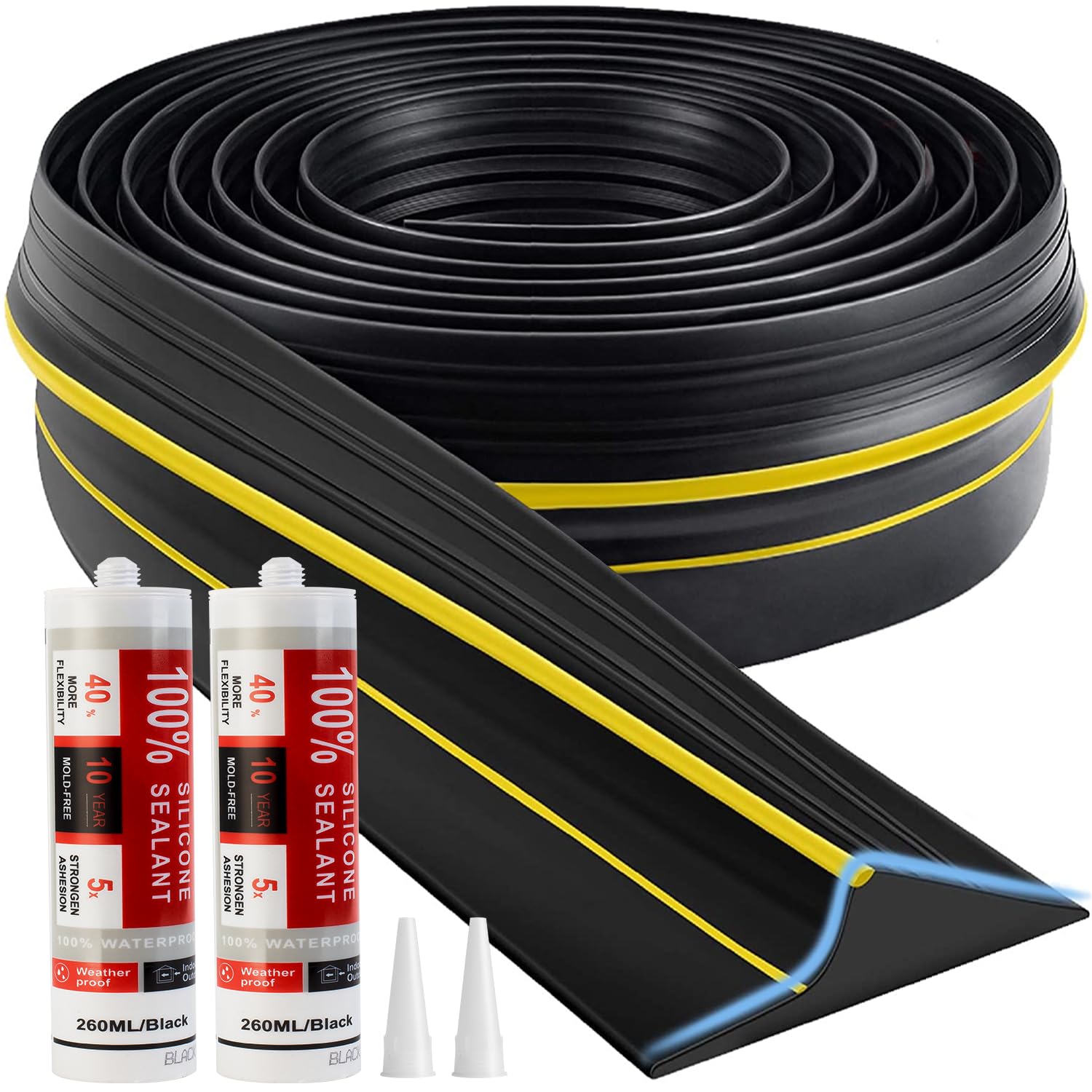
Garage floors and weather don’t always get along. Rainwater sneaks under the door, leaves blow in, and occasionally a mouse finds its way through the gap. The Jin&Bao Universal Garage Door Threshold Seal aims to close that gap with a 20-foot rubber strip and adhesive. After spending a few weeks with it installed on a standard two-car garage, here’s how it actually performs.
The kit includes a single 20-foot length of rubber seal, which is enough for most residential doors up to 16 feet wide, plus two tubes of adhesive. The strip is designed to be laid on the floor just inside the door, creating a raised barrier that the door presses against when closed. Installation is straightforward but requires a clean, dry surface. You’ll want to sweep and mop the concrete, let it dry completely, then apply the adhesive in a zigzag pattern along the strip’s base. The adhesive is thick and holds well, but it’s not instant—you’ll need to hold the strip in place for a few minutes or use weights until it sets. Plan for about 30 minutes of work, plus drying time.
Once installed, the seal does a solid job of blocking water. During a heavy rainstorm with wind, the garage floor stayed dry, which was the primary goal. It also cuts down on drafts, so the garage feels slightly warmer in winter. The rubber is firm but pliable, and it compresses enough to form a decent seal against most garage doors. The surface has a subtle tread pattern, which helps with traction when walking over it, though it’s not as grippy as a dedicated anti-slip mat.
One thing to note: the strip is not perfectly uniform. The ends have a slight taper, which is good for creating a transition, but the middle sections can have minor variations in thickness. This didn’t affect sealing performance, but it’s worth knowing if you’re expecting a flawless finish. Also, the adhesive is strong but not permanent—if you ever need to remove the strip, it will likely leave residue on the concrete that requires scraping and solvent.
Compared to a traditional door sweep or a rubber threshold that mounts to the door itself, this floor-mounted seal is easier to install and doesn’t require adjusting the door. It’s also more effective at blocking water that pools on the driveway, since it creates a physical barrier at ground level. However, it won’t help with gaps at the top or sides of the door—those need separate weatherstripping. And if your garage floor is uneven or cracked, the strip may not sit flush in all spots, leaving small gaps where water can still get through.
In terms of durability, the rubber feels like it will hold up for a few years, but it’s not indestructible. Driving a car over it repeatedly is fine, but if you use a floor jack or heavy equipment, you might notice indentations. The adhesive bond is strong on clean concrete, but on dusty or oily floors, it can fail—so surface prep is critical.
Who is this for? Homeowners with a reasonably level garage floor who want to keep rain, snowmelt, and small pests out. It’s also useful for attached garages where you want to reduce drafts and improve energy efficiency. It’s not ideal for garages with severely cracked or sloped floors, nor for those looking for a permanent, zero-maintenance solution. If your door already seals tightly at the bottom, you might not see much benefit.
Overall, the Jin&Bao threshold seal delivers on its main promise: blocking water and air from entering under the garage door. It’s a practical, affordable fix that most DIYers can handle in an afternoon. Just be prepared to do the prep work and manage your expectations—it’s a rubber strip, not a miracle cure. For the price, it’s a reasonable investment if you’ve been dealing with a wet garage floor.