
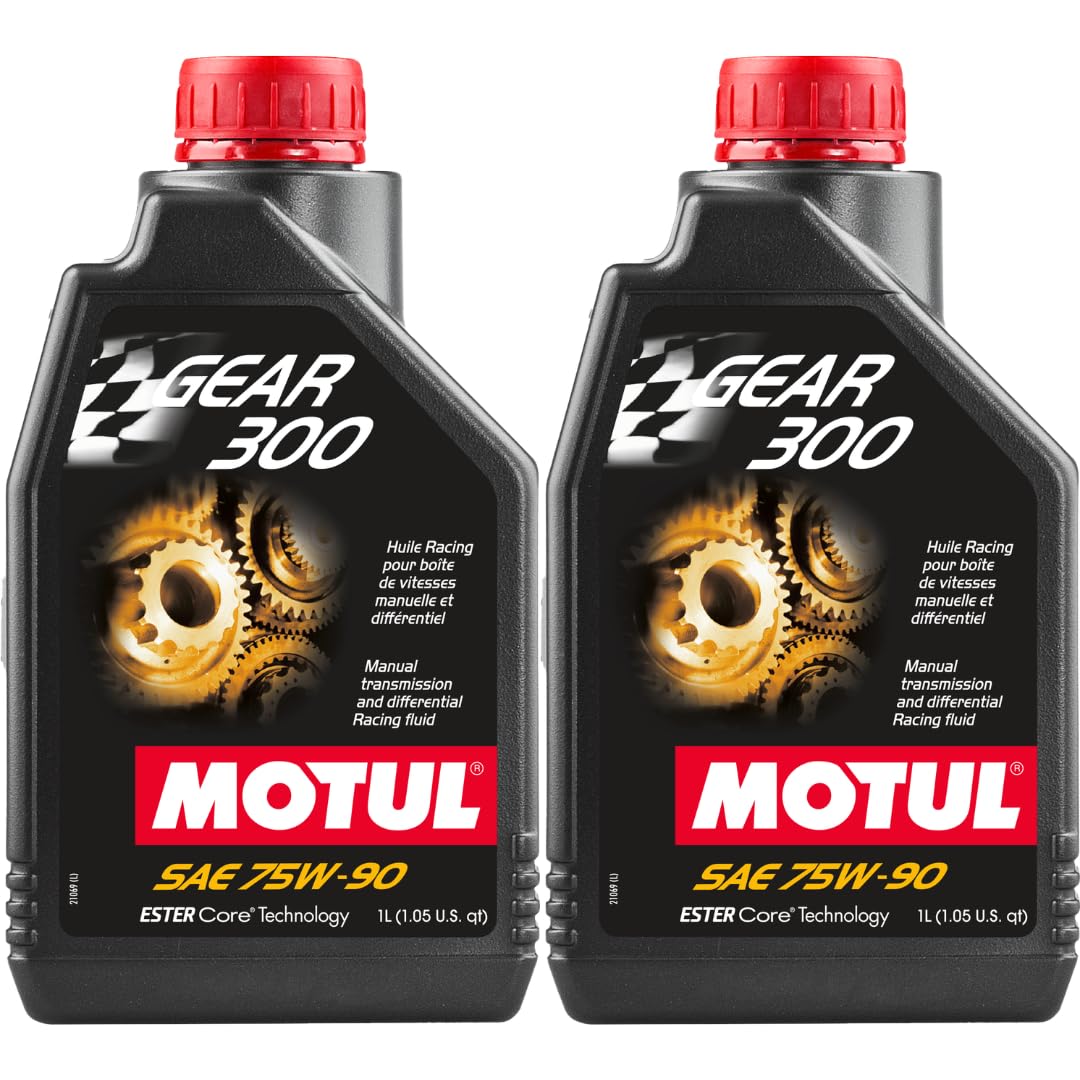
When it comes to gearbox and differential oils, the choices can feel overwhelming. Motul’s Gear 300 75W90 has built a reputation among enthusiasts, often mentioned in the same breath as track days and spirited driving. But does it live up to the chatter? After spending time with the 2-pack in a daily-driven sports coupe and a weekend track car, it’s clear this is a competent, well-engineered lubricant—though not without its nuances.
The first thing you notice is the price. It’s not cheap, especially compared to standard 75W90 oils from brands like Castrol or Valvoline. But Motul positions this as a 100% synthetic, ester-based formula, which is a different beast from conventional or even hydrocracked synthetics. Esters are known for their thermal stability and ability to cling to metal surfaces, which theoretically means better protection under high heat and load. In practice, that translates to confidence during a 20-minute track session where oil temps climb well beyond what street driving demands.
Shifting feel is where Gear 300 often gets praised, and that reputation isn’t unfounded. In the coupe’s six-speed manual, cold shifts were notably smoother than with the previous non-synthetic fluid. Once warm, the gearbox felt precise, with no notchiness or resistance. The differential, too, seemed to run quieter, especially on deceleration. That said, the improvement isn’t night-and-day if your current fluid is already a quality synthetic. You’re paying for a margin of refinement, not a miracle.
One limitation worth noting is the viscosity’s behavior in extreme cold. While 75W90 is a winter-friendly grade, the ester base can feel slightly thicker than some competitors at sub-zero temperatures. On a 20°F morning, the first few minutes of driving had a noticeable reluctance in gear engagement. It’s not a dealbreaker, but if you live in a climate with bitter winters, a lighter gear oil like a 75W80 might be more forgiving.
Comparing it to other premium options, Red Line’s 75W90 NS is a common alternative. Red Line is also fully synthetic and has a similar following. In head-to-head use, Motul feels a touch smoother in the gearbox, while Red Line might have a slight edge in differential chatter suppression. Both are excellent; the choice often comes down to personal preference or what your local speed shop stocks. If you’re on a budget, a standard synthetic like Mobil 1 will do the job for daily driving, but you might notice more gear noise or slightly less consistent shift quality under hard use.
Who is this for? If you autocross, track your car, or drive a high-performance vehicle with a sensitive gearbox, the extra cost is justifiable. It’s also a solid choice for towing or heavy-duty use where the oil sees sustained stress. On the flip side, if your car is a commuter and you rarely push it, this is overkill. A conventional or mid-tier synthetic will protect adequately and save you money. Also, if your vehicle specifies a GL-5 rating for limited-slip differentials, check the spec sheet—Gear 300 meets GL-5, but some OEMs require a friction modifier for clutch-type LSDs. Motul does not include one, so you may need to add it separately to avoid chatter.
Packaging is straightforward: two one-liter bottles, which is just about the right amount for a typical transmission and diff on a compact sports car. The bottles have a narrow spout, which helps with pouring, though a funnel is still recommended to avoid drips. There’s no measuring guide on the bottle, so keep your own tool handy.
In terms of longevity, Motul claims extended drain intervals, but real-world data is sparse. Some track users report it holding up well over multiple events, while others change it after every season. As an editorial rule of thumb, if you’re racing, treat it as a consumable—don’t expect it to outlast several seasons of abuse. For street use, the standard interval is fine.
Overall, the Motul Gear 300 75W90 is a high-quality product that does what it promises: reliable lubrication with a slight performance edge. It’s not the cheapest, not the most cold-friendly, and requires a bit of know-how for LSD applications. But for the driver who values consistency and protection during hard driving, it’s a worthy investment. Just don’t expect it to transform your car’s character—it’s an upgrade, not a revolution.