
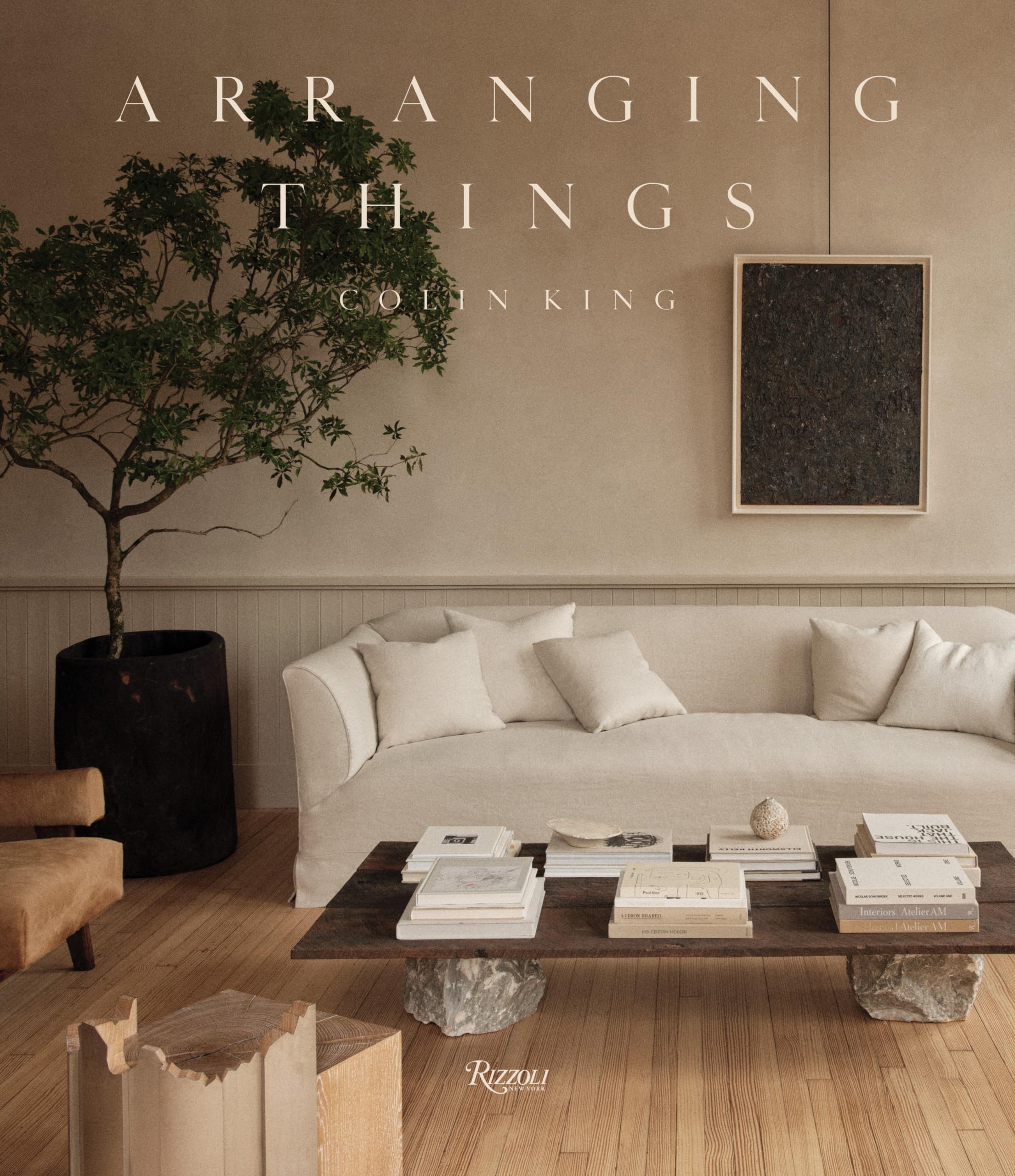
Arranging Things is a book about composition — specifically, about how objects, shapes, and visual elements are placed in relation to one another and why some arrangements read as resolved while others feel awkward. It sits in the space between a design manual and a collection of essays, and its usefulness depends heavily on what the reader brings to it.
The book is most often picked up by people who make visual decisions regularly but lack formal training: photographers working on still life or interiors, stylists putting together shoots, illustrators thinking about layout, and hobbyists who sense that something is off in their arrangement but can’t articulate why. It is less a step-by-step workbook than a set of principles illustrated through examples, which means it rewards slow reading and repeated reference rather than a single cover-to-cover pass.
In practice, readers tend to use it in two ways. Some keep it near a workspace and flip to a section when a composition isn’t working, using the examples as a diagnostic checklist — is the balance off, is there a competing focal point, is the negative space doing anything. Others read it once for the conceptual framing and then find themselves noticing arrangements differently afterward, which is arguably the more lasting effect. It works better as a reference than as a course.
The core content covers the fundamentals you’d expect: balance and visual weight, hierarchy and focal points, rhythm and repetition, contrast, and the use of negative space. What distinguishes the treatment is the emphasis on relationships between elements rather than on individual objects — the book is consistently interested in how one thing affects another, which is a more useful frame than the usual list of rules. The examples are drawn from a range of contexts, and the prose is measured rather than prescriptive. There is no insistence on a single correct arrangement, which some readers will appreciate and others will find frustrating.
That flexibility is also the main limitation. Readers looking for a definitive method — a set of rules they can apply mechanically — will not find one here, and the book does not pretend to offer it. The guidance is interpretive, which means it can feel abstract when you’re stuck on a concrete problem. A photographer trying to decide whether to move a vase two inches to the left will get more from trial and error than from these pages. The book teaches you to see, not to execute, and that distinction matters.
Another trade-off is the pace. The writing is deliberate and sometimes dense, and the density isn’t always matched by the visual examples. Some sections would benefit from more side-by-side comparisons showing a weak arrangement next to a stronger one; the analysis is often carried by text when a pair of images would communicate faster. Readers who prefer heavily illustrated guides may find themselves wanting more plates and fewer paragraphs.
Compared with a general design textbook, Arranging Things is narrower and more focused — it stays on composition and doesn’t wander into color theory, typography, or production. Compared with a photography-specific composition guide, it is broader in scope and less tied to camera technique, which makes it more transferable but also less immediately actionable for a photographer mid-shoot. It occupies a middle ground: more conceptual than a how-to, more practical than a theory book.
Who is it for? It suits people who already make things and want a sharper vocabulary for why their arrangements succeed or fail — stylists, still-life photographers, interior-minded designers, and serious hobbyists. It also works for students who want a foundation in visual relationships before moving into a specialized discipline. Who is it not for? Complete beginners who want explicit instructions, readers who prefer image-heavy references with minimal text, and anyone hoping for a quick fix. It also won’t substitute for hands-on practice; the book sharpens observation, but observation still has to be applied.
Realistic expectations matter here. This is not a book that will transform your work in an afternoon. Its value accumulates — a principle noticed in one chapter tends to surface weeks later while you’re arranging a shelf or framing a shot. Readers who approach it as a long-term reference, to be revisited rather than finished, tend to get the most from it. Those who read it once and expect immediate, concrete improvement may come away underwhelmed.
Overall, Arranging Things is a considered, slightly demanding book with a clear point of view about how visual relationships work. It is strongest as a thinking tool and weakest as a manual, and it asks more of the reader than a typical guide. For the right reader — someone already engaged in visual work and willing to sit with abstraction — that trade-off is reasonable.