
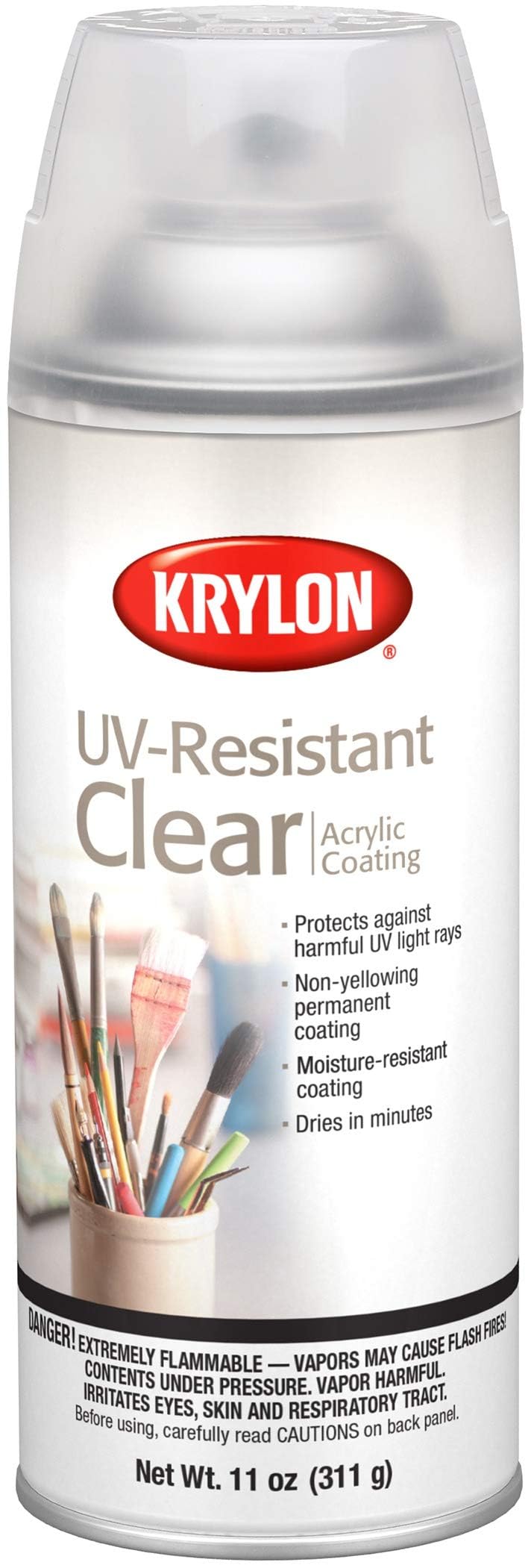
Krylon’s UV-Resistant Clear Acrylic Coating 1305 sits in a crowded field of spray clearcoats, and the two-pack format is aimed at people who expect to use it more than once. It is a solvent-based acrylic aerosol marketed primarily for protecting inkjet prints, photographs, and artwork from fading, but it also sees use on crafts, signage, and small painted projects. The 11-ounce cans are a standard size for this kind of product, and buying in pairs is mostly a convenience matter rather than a value proposition in itself.
The obvious use case is print protection. Inkjet prints, especially dye-based ones, fade quickly when exposed to light, and a UV-blocking topcoat is one of the few practical countermeasures available to home users. Photographers, print shops, and hobbyists who sell or display prints often reach for a spray like this because it is cheaper and less equipment-intensive than laminating. It also gets used on canvas prints, papercraft, and painted wood or metal where a clear protective layer is wanted without changing the underlying color much.
Functionally, the product is straightforward. It is a clear acrylic coating with UV inhibitors, formulated for use over solvent-based and most water-based inks and paints, though compatibility should always be tested first. It dries to a non-yellowing film, which matters for anything intended to stay visible for years. Krylon lists it as suitable for both indoor and outdoor use, and it can be applied over cured paint, primer, and bare substrates. The two-pack simply means two cans, which is useful if you are coating several large prints or doing repeat sessions, since a single can does not go as far as people often expect.
Coverage is the first reality check. An 11-ounce can covers a modest area—roughly a few square feet per coat depending on how heavily you apply it—and proper UV protection generally requires multiple thin coats rather than one wet pass. A two-pack helps, but anyone coating a stack of large-format prints will still go through cans quickly. The aerosol format also means overspray, fumes, and the need for a ventilated space or outdoor application. This is not a product to use in a small closed room.
Application technique matters more than the marketing suggests. Thin, overlapping passes from a consistent distance produce a better result than heavy coats, which can pool, drip, or leave a slightly textured surface. On glossy photo paper, the finish can shift the surface sheen somewhat, and some users report a subtle change in appearance compared with the uncoated print. It is not a perfectly invisible coating in every case, particularly on very glossy or dark surfaces where slight haze or unevenness can show under raking light.
Durability expectations should be realistic. UV inhibitors slow fading; they do not stop it indefinitely, and a spray coating is not equivalent to museum-grade framing behind UV-filtering glass. Prints displayed in direct sun will still degrade over time, just more slowly. The coating also offers only modest abrasion resistance—it helps against scuffs and handling marks but will not protect a print from meaningful physical wear the way a laminate or glass frame would.
Compared with alternatives, the trade-offs are clear. A spray clearcoat is faster and cheaper than cold laminating or professional framing, and it works on irregular shapes that film lamination cannot handle. Against water-based clearcoats, the solvent acrylic tends to be more durable and more resistant to moisture, but it carries stronger fumes and longer cure times. Against dedicated archival varnishes, it is a general-purpose product rather than a conservation-grade one, and it should not be treated as such.
The two-pack suits people who already know they will use it: photographers protecting batches of prints, crafters sealing painted projects, or sign makers coating small outdoor pieces. It is less suitable for anyone wanting a single small job done, since one can would do, and it is a poor fit for users without a ventilated workspace or those expecting a fully invisible, archival-grade finish. For occasional protective coating where convenience and cost matter more than conservation standards, it is a reasonable workhorse—provided you test on scrap first and accept that UV protection is a delay, not a permanent shield.