
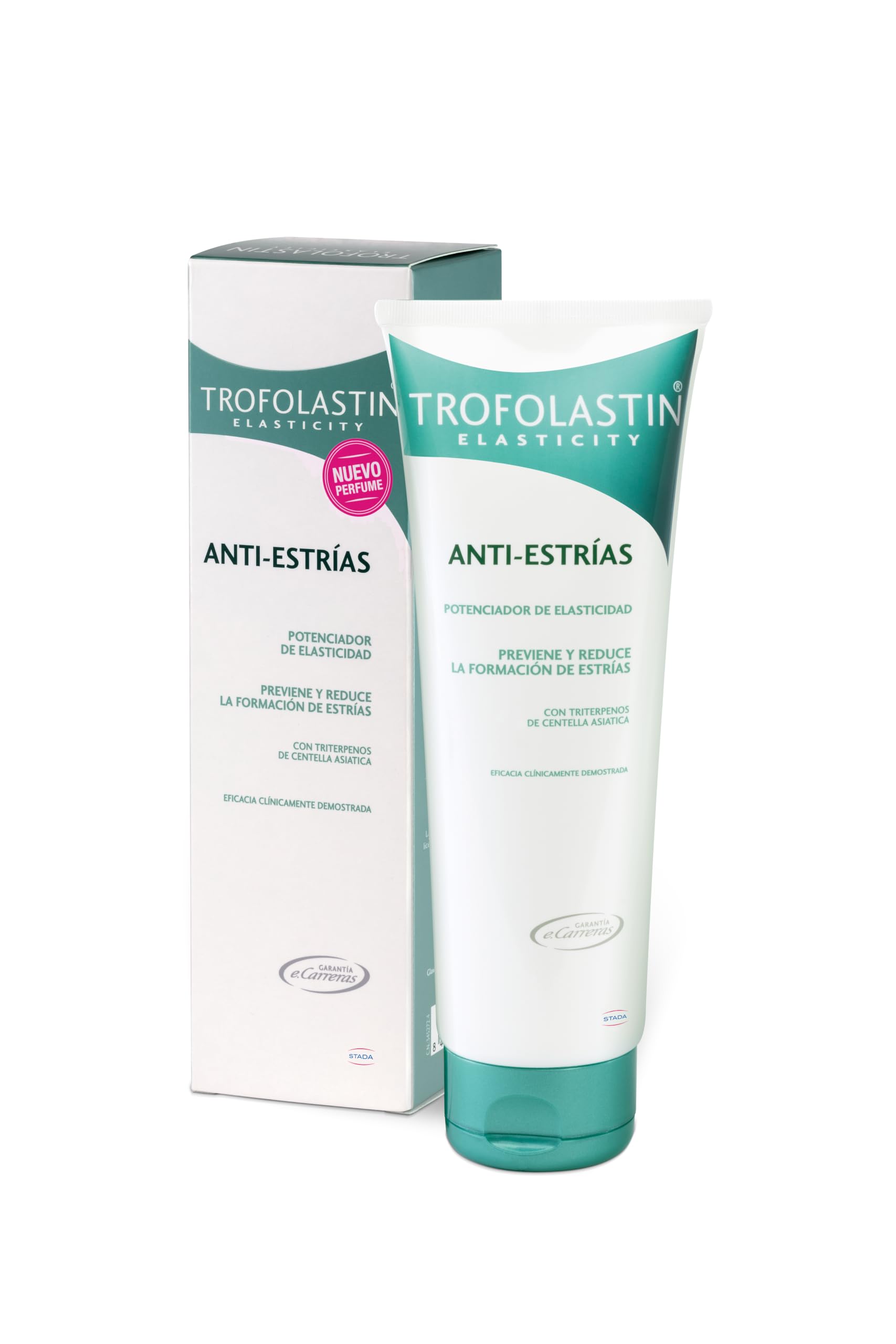
Stretch mark creams occupy a crowded and often overpromising corner of skincare. Trofolastin Anti-Stretch, developed by the Spanish pharmaceutical company Catalysis, is one of the more established options, frequently recommended by dermatologists in Spain and parts of Europe. But how does it hold up in everyday use, and what can you realistically expect? This review takes a closer look at the formula, its practical application, and where it fits among alternatives.
Trofolastin Anti-Stretch is a topical cream designed to prevent and reduce the appearance of stretch marks (striae). It comes in a 200 ml tube, which is a standard size for body care products. The cream is white, fragrance-free, and has a lightweight, non-greasy texture that absorbs relatively quickly. The key active ingredients include Centella asiatica extract (often credited with supporting collagen production), vitamin E (an antioxidant), and hyaluronic acid (for hydration). The formula also contains dimethicone, which creates a protective barrier on the skin, and glycerin for moisture retention. Notably, it is free from parabens and allergens, making it suitable for sensitive skin.
In real-world usage, Trofolastin is typically applied twice daily to areas prone to stretch marks—most commonly the abdomen, breasts, thighs, and hips during pregnancy, or during periods of rapid growth or weight change. The manufacturer recommends massaging it in gently until fully absorbed. Because it is fragrance-free and non-sticky, it layers well under clothing and doesn’t interfere with daily routines. Many users report that consistent use over several months is necessary to see any difference, which aligns with the general consensus that stretch mark creams require diligent, long-term application.
What sets Trofolastin apart from some competitors is its clinical backing. Several studies, including a randomized trial published in 2000, have suggested that the cream can reduce the incidence of stretch marks during pregnancy when used from the first trimester. However, it’s important to temper expectations: no topical product can completely prevent or erase stretch marks, as genetics and hormonal factors play significant roles. Trofolastin may help improve skin elasticity and hydration, which can minimize the severity of new marks, but it is unlikely to eliminate existing ones entirely. Users with older, white stretch marks (striae alba) may see little to no change, as these are essentially scars.
One limitation is the price. At around $30–$40 for 200 ml, it is more expensive than many drugstore stretch mark creams. Given that you need to apply it generously twice daily, a tube may last only about a month, making it a considerable ongoing expense. Additionally, while the formula is cosmetically elegant, it may not be rich enough for very dry skin types, who might prefer a thicker cream or oil. The lack of fragrance is a plus for sensitive noses, but some users might miss a pleasant scent.
Compared to alternative product categories, such as body oils (e.g., Bio-Oil) or prescription retinoids, Trofolastin sits somewhere in the middle. Body oils can be more moisturizing but often feel greasier and may not absorb as quickly. Retinoids, while more effective at fading existing stretch marks, are not recommended during pregnancy and can cause irritation. Trofolastin’s advantage is its safety profile for pregnancy and its gentle formulation, making it a go-to for expectant mothers. However, for those not pregnant, a retinoid or laser treatment might offer more noticeable results for existing marks.
Who is this for? Trofolastin is best suited for pregnant women looking to prevent stretch marks, especially those with a history of stretch marks or who are experiencing rapid abdominal growth. It’s also a reasonable option for anyone prone to stretch marks during puberty or weight fluctuations who prefers a fragrance-free, non-greasy formula. It is not for those expecting a miracle cure for old stretch marks, nor for those on a tight budget. If you have very dry skin, you may need to layer it with a richer moisturizer. And if you’re looking for a product to fade existing marks, you’d be better off exploring retinoids or professional treatments.
In summary, Trofolastin Anti-Stretch is a well-formulated, clinically supported cream that can be a useful part of a stretch mark prevention routine, particularly during pregnancy. It’s not a magic bullet, and it requires commitment and realistic expectations. But for those willing to invest in a gentle, effective option, it’s worth considering.