
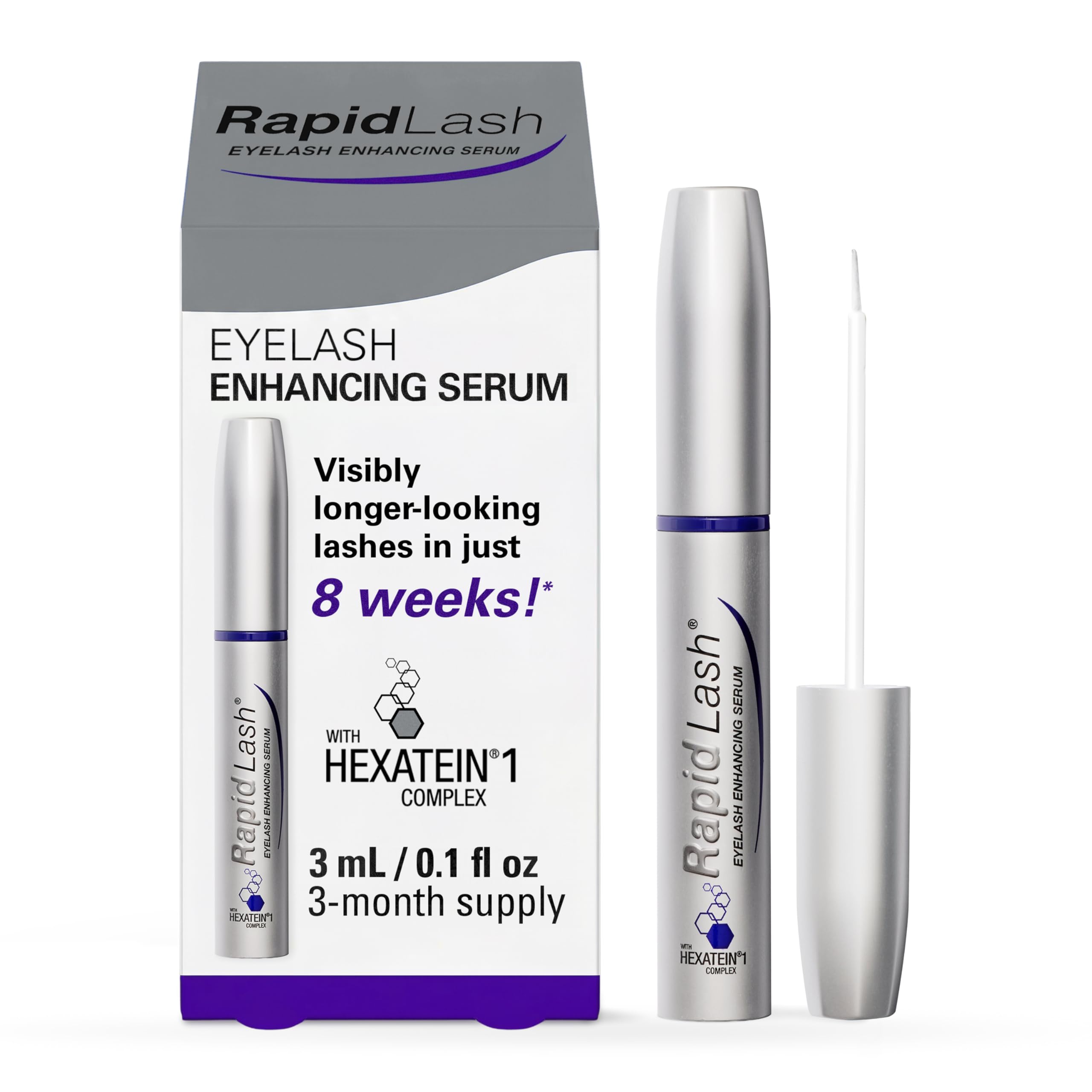
RapidLash Eyelash Enhancing Serum is one of the longer-running names in the cosmetic lash serum category, and the 3mL size is marketed as a two-month supply. It sits in an awkward middle ground between drugstore conditioning products and prescription-strength prostaglandin analogues, and understanding where it falls on that spectrum is the key to deciding whether it’s worth trying. This review looks at how the product is actually used, what it realistically does, and where it falls short.
The product is applied like a liquid eyeliner along the upper lash line, once daily, typically at night after cleansing and before skincare or makeup. The 3mL tube uses a fine brush applicator, and the instructions call for a thin line at the base of the lashes rather than coating the lashes themselves. In practice, most users find the application takes under a minute, though the learning curve is real: too much product can migrate into the eye, and inconsistent placement near the lash base is the most common reason people report uneven results. A two-month supply assumes daily use; skipping days stretches the tube but also stretches the timeline for any visible change.
Functionally, RapidLash is a conditioning serum rather than a drug. Its formula includes peptides, biotin, panthenol, and moisturizing ingredients intended to improve the appearance of lash condition and reduce breakage. That distinction matters. Unlike prescription products such as bimatoprost, which affect the hair growth cycle directly, cosmetic serums like this one work at the surface level, supporting the lashes you have rather than reliably generating new growth. Users who see results typically describe lashes that look slightly fuller or less prone to shedding, not dramatic length changes. Anyone expecting a prescription-level transformation should recalibrate before buying.
Realistic performance expectations are where this category gets murky. Cosmetic lash serums are not required to demonstrate the same clinical outcomes as drugs, and individual responses vary widely. Some users notice a difference in lash appearance after six to eight weeks of consistent use; others notice little beyond better-conditioned lashes. Results also tend to reverse when use stops, which is true of nearly every product in this category and is worth factoring into the cost. At roughly the price of a mid-range mascara per month, the ongoing expense is modest but not trivial.
There are limitations worth naming. First, the applicator and liquid format require care: contact with the eye can cause irritation, and users with sensitive eyes or contact lens wearers should be cautious, especially during the adjustment period. Second, the product does not address the lower lashes or brows, so anyone looking for a multi-area solution will need a separate product. Third, the two-month framing is somewhat optimistic for judging results; many users need closer to three months to form a fair opinion, which means the initial tube may run out before a clear verdict is possible. Finally, because it is a cosmetic product, there is no guarantee of visible change, and the label’s claims are appearance-based rather than clinical.
Compared with alternatives, RapidLash occupies a middle tier. Lash conditioners and peptide-based serums from other cosmetic brands are broadly similar in approach and often cost less, though formulations and applicators vary. Prescription prostaglandin analogues are more effective for length and fullness but carry a higher risk of side effects, including iris discoloration and periorbital fat changes, and require a doctor’s involvement. Mascara and lash primers offer immediate cosmetic results with no waiting period but no cumulative effect. RapidLash’s appeal is that it sits between these options: more targeted than a conditioner, less aggressive than a prescription, and easier to obtain than either.
Who is it for? It suits people who want to try a cosmetic lash serum without a prescription, who are consistent with daily routines, and who have realistic expectations of modest improvement in lash condition and appearance. It is a reasonable entry point for someone curious about the category. It is not suitable for anyone expecting dramatic growth, for people who have had irritation from similar products, for contact lens wearers prone to eye sensitivity, or for those who want a one-and-done solution rather than an ongoing regimen. Pregnant or nursing users should consult a clinician before starting any new cosmetic serum, as with most products in this category.
The bottom line: RapidLash is a competent, well-known cosmetic lash serum with a sensible application routine and modest, variable results. It is neither a miracle nor a gimmick. Buy it if you want a low-commitment way to condition and maintain your lashes and can accept that the outcome may be subtle. Skip it if you need guaranteed visible change or are looking for prescription-level performance.