
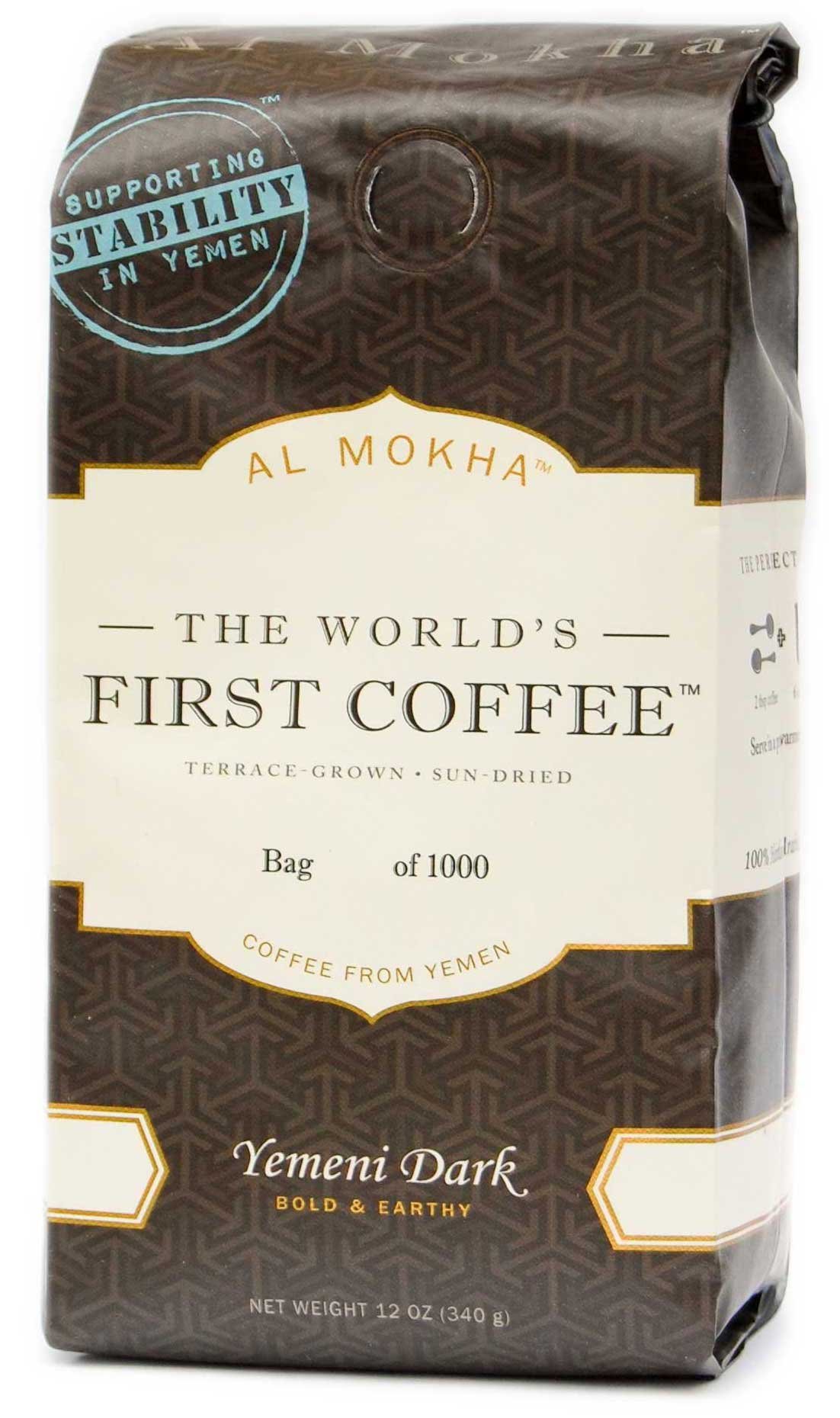
There’s a certain romance attached to the name Mokha. It conjures up images of ancient ports, sailing dhows, and the birthplace of coffee trade. Al Mokha’s Yemen Dark Roast leans into that history hard, and for good reason. Yemen is often cited as one of the first regions to cultivate coffee commercially, and this bag aims to connect modern drinkers to that legacy. But does the romance survive the roast?
Out of the bag, the first thing you notice is the aroma. It’s intense, almost smoky, with a dark chocolate undertone that feels more like a dessert than a breakfast beverage. The beans themselves are a uniform, oily dark brown — a clear sign of a roast that’s been taken well past the development stage. If you’re someone who prefers light, floral, or tea-like coffees, this is not your lane. This is a coffee that announces itself.
Brewing it is where things get a bit tricky. I tried it in a French press and a pour-over, and the results were distinctly different. In the French press, the body was thick and almost syrupy, with a heavy, bittersweet cacao flavor and a lingering spice note that reminded me of cardamom or clove. The pour-over, on the other hand, mellowed the intensity but also brought out a slightly ashier character that I wasn’t entirely sold on. Your mileage will vary based on your equipment, but this is not a forgiving bean. It rewards careful attention and punishes sloppy technique.
One of the key features here is the origin itself. Yemeni coffee is typically grown in small, terraced farms at high altitudes, and the beans are often dry-processed, which contributes to their unique, rustic flavor profile. Al Mokha is transparent about their sourcing, and that’s a point in their favor. You’re not just buying a bag of beans; you’re buying a story that’s been verified by third-party certifications. That said, the story doesn’t always translate into the cup in the way you might hope.
The biggest trade-off with this dark roast is the loss of nuance. Yemeni coffees are known for their wild, complex acidity and fruit-forward notes — think blueberry, wine, or even a hint of fermented funk. Here, those are largely buried under the roast. You get a hint of that wildness in the aftertaste, but it’s fleeting. If you’re expecting the bright, exotic flavors that specialty coffee enthusiasts rave about in Yemeni beans, you’ll be disappointed. This roast is aimed squarely at those who prefer a bold, traditional cup, not at those chasing terroir expression.
Compared to a typical Ethiopian or Kenyan dark roast, this one has a heavier, more earthy weight to it. It lacks the bright citrusy snap of an Ethiopian Yirgacheffe, even when both are roasted similarly. Instead, it feels more like a cross between a Sumatra and a dark-roasted Colombian — but with a slightly wilder, spicier edge that is distinctly its own. It’s not a subtle coffee, and it doesn’t try to be.
For actual daily use, I found it works best as a morning cup with milk or a splash of cream. The bitterness holds up well to dairy, and the chocolate notes turn into something like a mocha. Black, it’s a bit much for my taste, especially if you’re used to drinking medium roasts. It also makes a solid base for espresso-based drinks, where the heavy body can cut through milk without getting lost.
But here’s the thing: this coffee isn’t for everyone. If you’re a fan of light, fruity, or naturally processed coffees, you’ll likely find this roast too aggressive. If you’re a dark roast devotee who appreciates a little history with your cup, you might love it. It’s also not the best choice for cold brew — the extraction brings out a bitter, almost rubbery note that I didn’t enjoy.
In terms of value, it’s priced at a premium, which is understandable given the origin and the import process. Yemeni coffee is not cheap to source, and the supply chain is complicated. But you’re paying for the name and the story as much as the beans themselves. If you’re looking for a budget-friendly daily driver, this isn’t it. If you want a conversation piece that delivers a punchy, nostalgic cup, it might be worth the splurge.
Ultimately, Al Mokha’s Yemen Dark Roast is a respectable, if somewhat heavy-handed, tribute to a legendary origin. It’s not a coffee that will convert anyone, but it will satisfy those who already know what they want. Just don’t expect it to taste like the Yemen of old — or like the Yemen that specialty coffee blogs describe. This is a dark roast first, and a Yemeni coffee second. That’s both its strength and its limitation.