
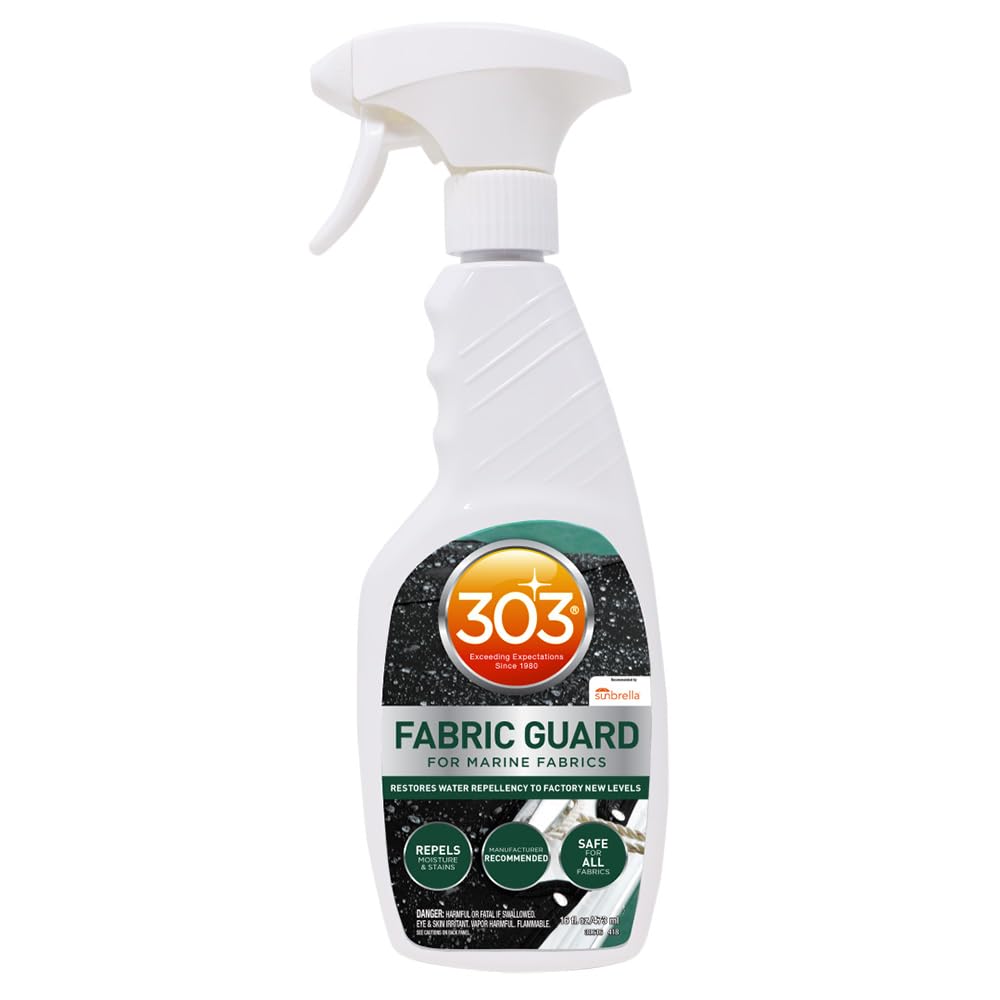
303 Fabric Guard is a spray-on treatment designed to restore water repellency to outdoor fabrics. It occupies a specific niche: it is not a cleaner, and it is not a generic waterproofing spray for hard goods. It is aimed at textiles that have lost their factory-applied durable water repellent (DWR) finish, or that never had one to begin with. Understanding that distinction matters, because a fair amount of the disappointment people report with this product comes from expecting it to do something it was never formulated to do.
The active chemistry is a fluoropolymer-based water repellent. In practice, that means it bonds to fabric fibers and lowers surface energy so water beads and rolls off rather than soaking in. 303 specifies that it is safe for use on outdoor fabrics including canvas, nylon, polyester, and many furniture and marine textiles, and that it does not alter the fabric’s breathability or color when applied correctly. The 16-ounce aerosol is a convenient size for a single patio set or a few jackets, though anyone treating a boat cover or a large awning will go through it quickly.
Real-world use is fairly straightforward but not effortless. The fabric needs to be clean and dry first, since oils, dirt, and detergent residue interfere with adhesion. Application is a light, even mist from roughly six to eight inches away, followed by a cure period. 303 recommends letting it dry fully, and in cool or humid conditions that can take considerably longer than the label’s optimistic estimate. The solvent smell is noticeable during application and lingers for a while, so this is best done outdoors or in a well-ventilated space. Coverage is decent but not generous; a light even coat is what the instructions call for, and over-application tends to leave a stiff or slightly tacky feel rather than improving performance.
Performance is where expectations need calibrating. On a freshly treated canvas chair or a nylon jacket, water beads up convincingly and light rain rolls off. That effect is real, and it typically holds for a season or so of normal outdoor exposure before needing reapplication. What it does not do is turn a porous fabric into a waterproof barrier. Seams, heavy saturation, and prolonged standing water will still get through. It is a repellent, not a membrane. UV exposure, abrasion, and repeated washing all degrade the coating, and the product does not claim otherwise. Comparing it to a silicone-based spray like those sold for tents and boots is useful: silicone treatments tend to be cheaper and work well on heavy canvas, but they can darken fabric and leave a more pronounced residue. The fluoropolymer approach here is generally cleaner on color and feel, at a higher cost per ounce. Compared with factory DWR, no aftermarket spray matches the original finish, and anyone expecting a factory-fresh result will be let down.
A few trade-offs are worth stating plainly. First, the aerosol format is convenient but wasteful compared with a pump or concentrate; overspray is easy and hard to recover. Second, the cure time is longer than many buyers anticipate, and treating something and immediately using it in the rain is a common mistake. Third, it is not a cleaner or a mildew treatment, so fabric with existing stains, mold, or embedded dirt needs to be addressed first, or the treatment simply seals in the problem. Finally, the price per ounce is on the high side for a consumable that needs periodic reapplication.
This product suits people with a modest amount of outdoor fabric to maintain: patio cushions, camping gear, a few jackets, canvas bags, and similar items where restoring repellency is worth a little effort. It is also a reasonable choice for anyone who wants a treatment that is less likely to discolor or stiffen fabric than a budget silicone spray. It is not the right pick for someone trying to waterproof a tent floor, seal a leaky seam, or treat a very large surface like a full boat cover on a budget. Nor is it a substitute for proper fabric care; if the material is dirty or already failing structurally, no spray will fix that. Treated as a maintenance product with realistic expectations and a seasonal reapplication schedule, it does its job without much fuss.