
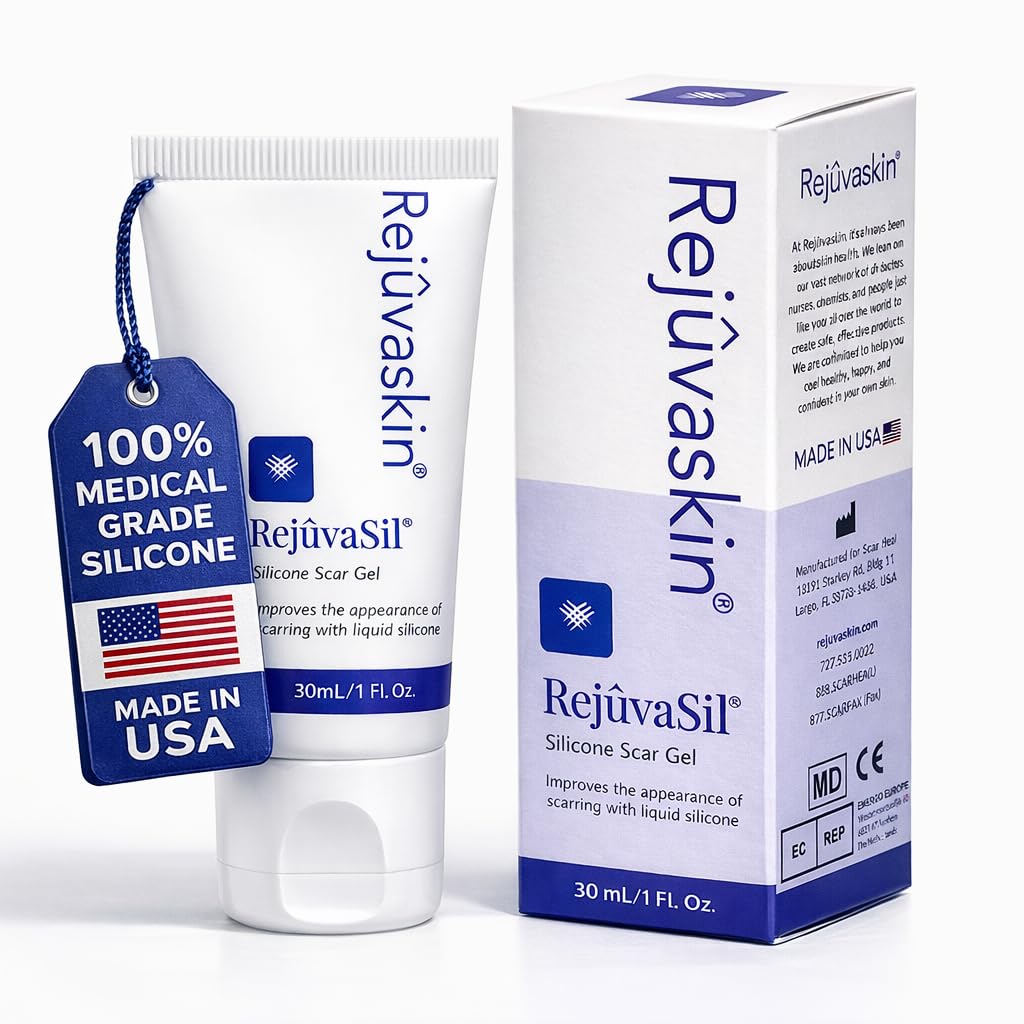
Silicone scar treatments have become a standard recommendation from dermatologists and surgeons, but the market is crowded with options that vary in texture, drying time, and cost. The Rejuvaskin RejuvaSil Silicone Scar Gel, a 30ml tube, is one such product aimed at surgical scars, burns, keloids, and acne scars. This review examines how it performs in real-world use, its key features, and where it might fall short.
RejuvaSil is a clear, non-greasy gel that dries to form a thin, flexible film over the scar. The idea is to mimic the occlusive properties of silicone sheeting, which has been shown to help flatten and soften scars by regulating collagen production and maintaining hydration. The gel is applied in a thin layer, typically twice daily, and allowed to dry. It’s less conspicuous than silicone sheets, making it a practical choice for visible areas like the face or hands. The 30ml tube is small enough to carry, and a little goes a long way—most users will find it lasts several weeks with regular use.
In terms of functional features, RejuvaSil is formulated with dimethicone, a common silicone polymer that creates a breathable barrier. It’s fragrance-free and doesn’t contain alcohol, which can be irritating to healing skin. The gel is also non-comedogenic, so it’s unlikely to clog pores, which is a plus for acne-prone users. However, it does take some time to dry—about 5 to 10 minutes—so it’s not ideal for quick application before rushing out the door. Additionally, the gel can pill or rub off if clothing or makeup is applied too soon, so timing matters.
Real-world usage context: RejuvaSil is best suited for scars that are already closed and healed. It’s not for open wounds or fresh incisions. For post-surgical scars, once the stitches are removed and the skin is intact, the gel can be started. For acne scars, it’s more of a long-term project; silicone gel can help with texture and redness over months, but it won’t fill in deep pits or icepick scars. Users often apply it after cleansing and before moisturizer, and it can be used under sunscreen during the day. The manufacturer suggests using it for at least 60 to 90 days, which is consistent with clinical recommendations for silicone scar products.
One limitation is the drying time and the need for a thin layer. Apply too much, and it takes longer to dry and may feel tacky. Apply too little, and you might not get the full benefit. It’s a bit of a learning curve. Also, while the gel is transparent, it can leave a slight sheen on the skin, which is noticeable under bright light. For those with darker skin tones, there’s no tint, so it won’t camouflage the scar—it’s purely a treatment.
Compared to silicone sheets, RejuvaSil offers more flexibility and is easier to use on irregular or moving areas like joints. Sheets, however, provide more consistent pressure and occlusion, which some studies suggest may be more effective for raised scars. Sheets are also reusable and can be more cost-effective in the long run, though they’re less discreet. For acne scars on the face, a gel is often preferred because sheets are impractical for curved areas and can be visible.
Who is it for? RejuvaSil is suitable for adults with healed surgical scars, burns, or keloids who want a discreet, easy-to-apply option. It’s also a reasonable choice for acne scars on the face if expectations are realistic—it may help soften and flatten, but it won’t erase them. It’s not for children under 12 without medical advice, and it’s not for those with active acne or broken skin. People with sensitive skin should patch-test first, as with any new topical product. Those looking for a quick fix will be disappointed; silicone scar treatment requires patience and consistency.
Overall, RejuvaSil is a solid, no-frills silicone gel that does what it claims, provided you use it correctly and give it time. It’s not a miracle product, and it won’t work for everyone, but for many, it’s a practical addition to a scar care routine.