
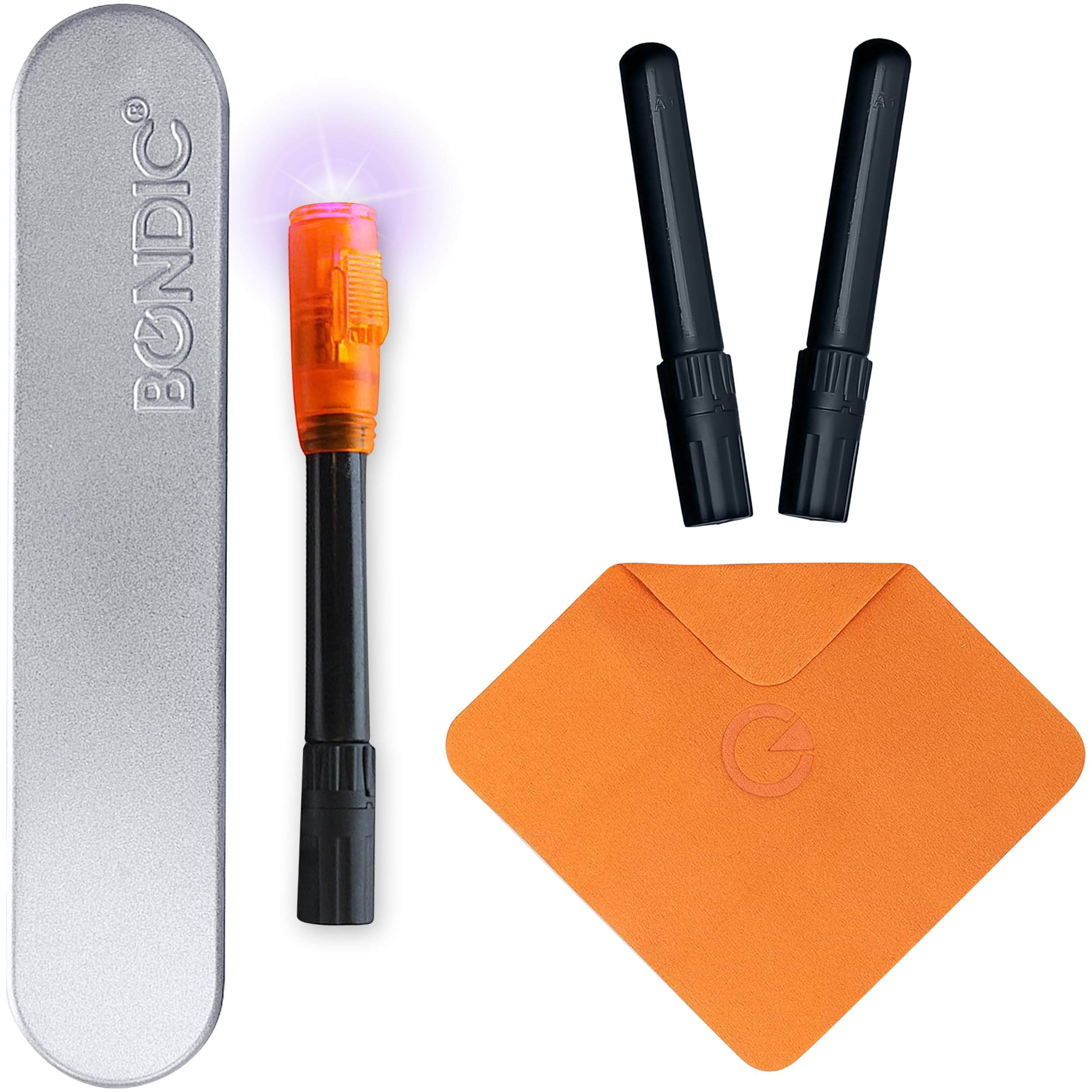
Bondic Pro is one of those products that gets marketed as a universal fix for everything, which is usually a sign to lower expectations. In practice, it is a UV-cured resin system: a liquid plastic in a syringe-like applicator that stays workable until you hit it with the included UV light. That single characteristic—curing on demand rather than setting on contact—is what separates it from conventional cyanoacrylate super glue and defines where it works well and where it does not.
The kit typically includes the applicator pen with resin, a small UV LED light, and interchangeable tips. The application process is straightforward: squeeze resin onto the joint, position the parts, then cure. Because the resin does not harden until exposed to UV, there is no frantic rush to align pieces before the glue grabs, which is the main practical advantage over super glue for fiddly repairs. The trade-off is that curing takes several seconds per spot and often requires multiple passes for a strong bond, so it is slower overall than a fast-setting adhesive.
Where the Bondic Pro earns its place is in small, non-structural repairs. Reattaching a broken plastic tab on a toy, filling a chip in a hard plastic housing, securing a loose piece of costume jewelry, or bonding a small glass ornament are the kinds of jobs it handles reasonably well. The cured resin is hard and slightly translucent, and it can be sanded or drilled once fully set, which makes it useful for building up a missing edge or filling a gap rather than just joining two flat surfaces. It also bonds to a range of materials—plastic, glass, metal, and some ceramics—though results vary by surface.
- Cure-on-demand handling: The resin remains liquid until UV exposure, allowing repositioning before setting.
- Gap-filling ability: Unlike thin super glue, the resin can bridge small gaps and build up material.
- Workable after curing: Cured resin can be sanded, filed, or drilled, which suits repair and shaping tasks.
- Self-contained kit: The applicator and UV light are included, so no separate lamp is needed for basic use.
The limitations are worth being clear about. Bond strength on smooth, non-porous surfaces is generally lower than a good two-part epoxy or even a quality cyanoacrylate, and the resin does not penetrate tight cracks the way thin super glue does. UV light has to reach the resin to cure it, so repairs in deep or shadowed areas may not fully set unless you cure in stages or use a thin application. The included light is small and low-powered, meaning cure times are longer than the packaging might suggest—expect to hold the light in place for a while and repeat. The resin also has a limited shelf life once opened, and the applicator tips can clog if resin is left in them.
Compared with standard super glue, Bondic Pro is less about instant bonding and more about controlled placement and gap filling. Compared with a two-part epoxy, it is easier to apply and does not require mixing, but it is generally weaker on load-bearing joints. It sits in a middle category: more forgiving than super glue, less strong than epoxy, and best suited to small repairs where positioning matters and structural stress is low.
This kit suits hobbyists, model makers, and households that deal with small plastic or glass breakages and want time to align parts before the adhesive sets. It is also reasonable for jewelry repair where a hard, sandable fill is useful. It is not suitable for anyone expecting a permanent structural bond on high-stress items, repairs in areas that cannot be reached by UV light, or jobs where a fast, one-drop fix is needed. Buyers should also factor in the ongoing cost of replacement resin and the reality that the included light is a basic tool rather than a professional curing lamp.
Overall, Bondic Pro is a legitimate niche adhesive rather than the universal repair solution its marketing implies. Used within its limits—small, accessible, low-stress repairs where repositioning and gap filling matter—it performs as described. Pushed beyond those limits, it will disappoint. The key is matching the tool to the job rather than expecting it to replace every adhesive in the drawer.