
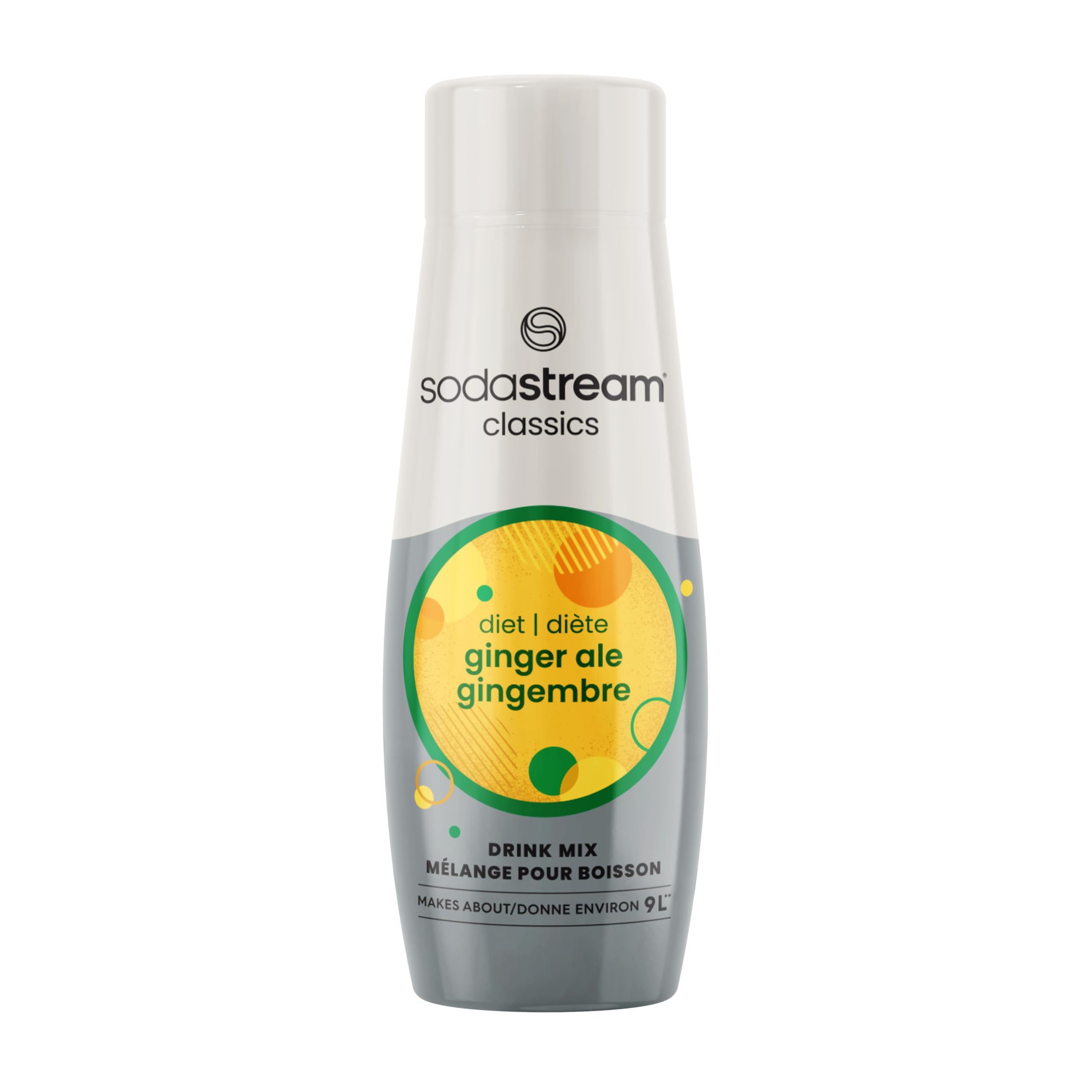
SodaStream’s diet ginger ale syrup is one of those products that makes sense only once you understand how it fits into a home carbonation routine. It comes in a 14.8-fluid-ounce bottle that is designed to flavor roughly the equivalent of several liters of carbonated water, depending on how strong you mix it. The process is straightforward: carbonate water in a SodaStream machine, then add a measured amount of syrup and stir gently. It is not a standalone beverage and does nothing useful without a carbonation device, which is the first thing worth stating plainly.
The flavor itself lands in familiar territory. It reads as a diet ginger ale in the mass-market sense: light ginger character, a noticeable sweetness from the sweetener blend, and a finish that some drinkers describe as slightly artificial. It is not a spicy, ginger-forward brew like a craft ginger beer, and anyone expecting that will be disappointed. The diet formulation uses sucralose and acesulfame potassium, which is typical for this category and produces the slightly lingering aftertaste those sweeteners are known for. Chilling the finished drink and using well-carbonated water reduces that perception somewhat, but it does not eliminate it.
In practice, the syrup is used in small doses. A capful or a short pour into a bottle of carbonated water is the usual approach, and the bottle’s cap is designed to double as a measuring guide. Strength is a matter of preference, and the package directions tend toward a moderate mix. Users who like a bolder flavor will go through the bottle faster than the stated yield suggests, which affects the real cost per liter. That is a practical point often glossed over in listings: the economics depend heavily on how strong you mix it.
Compared with buying cans or bottles of diet ginger ale at retail, the syrup approach has clear advantages and clear costs. The advantages are storage and logistics. A single small bottle takes up little shelf space, does not need refrigeration before opening, and eliminates the cycle of hauling and recycling heavy multipacks. The trade-off is upfront equipment cost and ongoing effort. You need a SodaStream machine and a CO2 cylinder, and you need to keep the cylinder filled. Once those are in place, the per-liter cost of the syrup itself is generally lower than canned soda, but the machine and gas are part of the real equation. Compared with a competing brand of diet ginger ale syrup, the differences come down to sweetener blend and ginger intensity rather than any structural advantage.
There is also the question of carbonation quality. Syrup added to freshly carbonated water produces a drink that is decent but not identical to commercially bottled soda. The bubbles tend to be larger and dissipate a bit faster, and the flavor does not integrate as smoothly, especially if the syrup is poured in after carbonation and not stirred. Adding syrup before carbonation is generally discouraged because it can affect the carbonation process and, in some machines, the warranty terms. This is a minor point but one that shapes expectations: the result is good enough for everyday drinking, not a perfect replica of a store-bought bottle.
The bottle itself is a standard plastic syrup container with a cap that must be rinsed between uses to avoid sticky buildup. Once opened, the syrup should be stored in a cool place and used within a reasonable window; it does not keep indefinitely, and the flavor can dull over months. The 14.8-ounce size is convenient for a single household but small for heavy consumption, meaning repeat purchases are frequent for daily drinkers.
Suitable for people who already own a SodaStream and want a low-calorie ginger ale option without storing cases of cans. It is also reasonable for those who drink diet soda regularly and want to cut packaging waste. It is not suitable for anyone without a carbonation machine, for drinkers who want a strong, natural ginger bite, or for those sensitive to artificial sweetener aftertaste. It is also a poor fit for people who expect the exact flavor profile of a specific national brand, since the match is close but not identical.
Overall, this is a functional, mid-tier syrup that does what it claims with predictable compromises. It is convenient and space-efficient, the flavor is acceptable for a diet soda, and the cost works out favorably only if you already have the equipment and mix it moderately. The artificial sweetener finish and the dependence on a machine are real drawbacks, not dealbreakers. Buyers should treat it as a practical pantry item rather than a premium beverage, and judge it on those terms.