
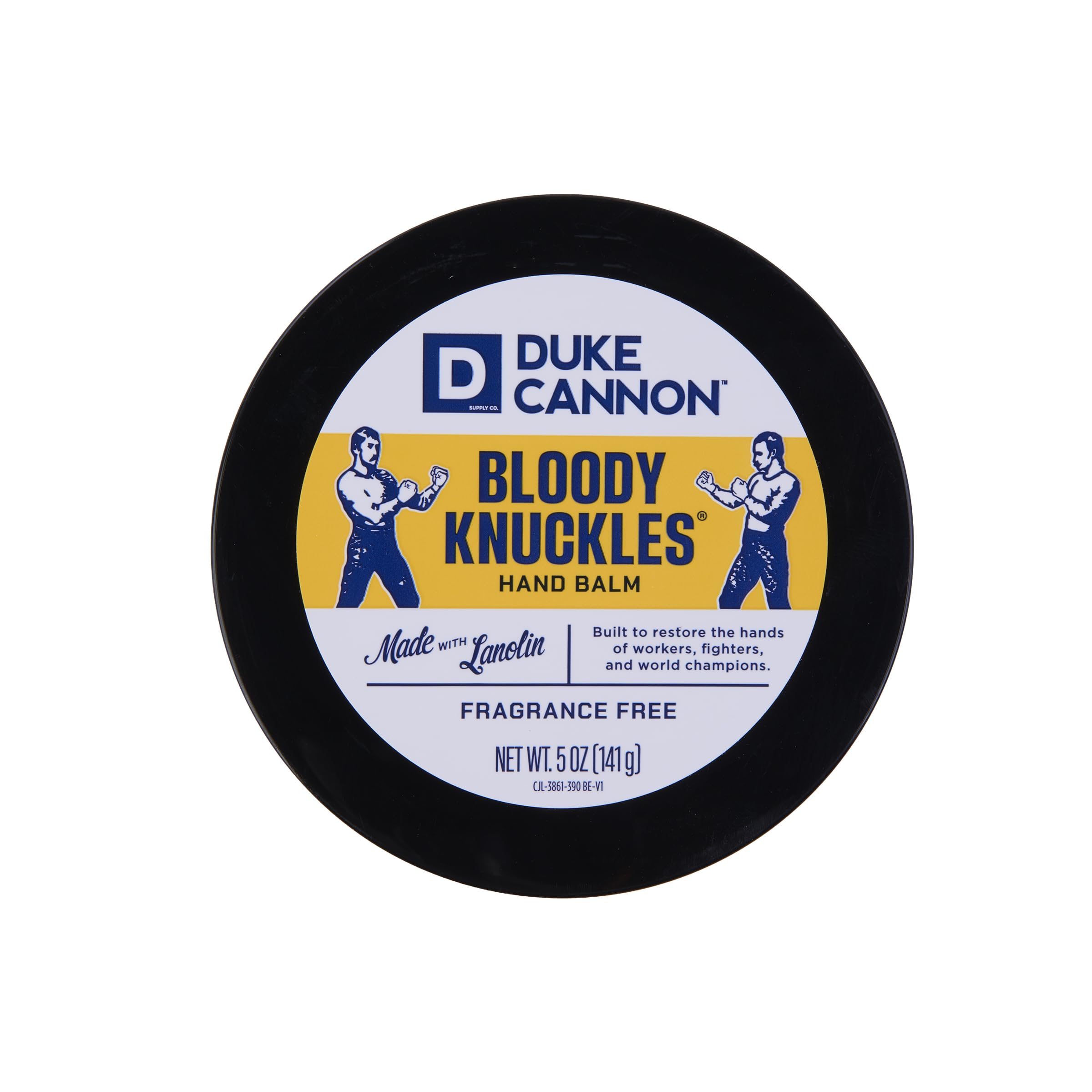
Duke Cannon’s Bloody Knuckles Hand Repair Balm sits in a category that has quietly grown crowded over the past few years: thick, occlusive hand salves aimed at people whose skin takes a beating. The 5 oz tube is larger than most drugstore hand creams, and the formulation leans toward heavy rather than light. Whether that is a feature or a drawback depends entirely on how and when you plan to use it.
The product is built around a straightforward idea. Rather than a lotion that absorbs quickly and disappears, this is a balm that stays put. The ingredient list includes shea butter, lanolin, and various plant oils, which is typical for the heavy-hand-cream segment. The texture is dense and slightly waxy out of the tube, and it takes some working in before it stops feeling tacky. That residue is the point, but it is also the first thing a new user will notice.
Where it fits in real use
The most natural use case is post-work skin recovery. People who spend time with their hands in water, solvents, cold air, or abrasive materials tend to develop dryness around the knuckles, fingertips, and the sides of the fingers. A balm like this is meant to be applied after the hands are clean and dry, often at the end of the day, and left to sit. Applying it before bed is the common approach, since the residue makes it impractical to handle a phone or keyboard immediately afterward.
It also works as a preventive layer in cold weather. A thin application before going outside can reduce chapping on exposed knuckles, though the waxy feel means it is not something most people will want to apply repeatedly during a workday. For tradespeople, gardeners, and anyone who washes their hands frequently, the appeal is that a single application lasts through several hand washes rather than rinsing away instantly.
What the formulation actually does
- Shea butter and lanolin act as occlusives, slowing water loss from the skin surface.
- The balm is thicker than a standard lotion, so a little goes a relatively long way.
- The 5 oz tube is larger than typical 2–3 oz hand creams, which suits frequent users.
- The scent is present but not overpowering; it reads as a light, clean fragrance rather than a medicinal one.
- The tube format is practical for a glove box or toolbox, though the cap and thick product can make dispensing a bit slow when the tube is cold.
Performance is consistent with what the ingredient list suggests. Dry, rough patches around the knuckles soften noticeably over several days of regular use, and cracked skin at the fingertips tends to improve if the balm is applied consistently. It is not a treatment for actively broken or bleeding skin, and it should not be expected to replace a medicated ointment if the skin is genuinely damaged. Think of it as maintenance and protection rather than repair in the clinical sense.
The trade-offs
The main limitation is the residue. This is not a balm you can apply and forget. It leaves a visible sheen and a slightly slippery feel for a while, which rules it out for anyone who needs to type, drive, or handle documents right after application. People who dislike the feeling of product on their skin will likely find it unpleasant, and those who prefer fast-absorbing lotions will see it as a step backward rather than forward.
The scent is another point of division. It is mild, but it is there, and fragrance-sensitive users may prefer an unscented alternative. The thick texture also means the product can be difficult to spread over large areas quickly, so it is better suited to targeted application on problem spots than to a full-hand rubdown.
How it compares
Against a standard drugstore hand lotion, this balm is heavier, longer-lasting, and more expensive per ounce. A typical lotion absorbs in under a minute and can be reapplied throughout the day; this product asks for a few minutes of patience and is better used once or twice daily. Compared with a pure petroleum jelly or a dedicated healing ointment, the Duke Cannon balm is more cosmetically elegant and easier to spread, though it offers less of a sealed barrier. It occupies a middle ground: heavier than a lotion, lighter than an ointment.
Who it suits and who it does not
It is a reasonable fit for people with persistently dry, rough hands from manual work, cold climates, or frequent washing, especially those who apply hand products at night. It is less suitable for anyone who needs a quick-absorbing lotion for daytime office use, people who dislike fragrance, or those with skin conditions that require a dermatologist-recommended treatment rather than an over-the-counter balm. The 5 oz size makes it a practical staple for a work bag or bathroom shelf, provided the user accepts the trade-off of a heavier, slower-absorbing product.