
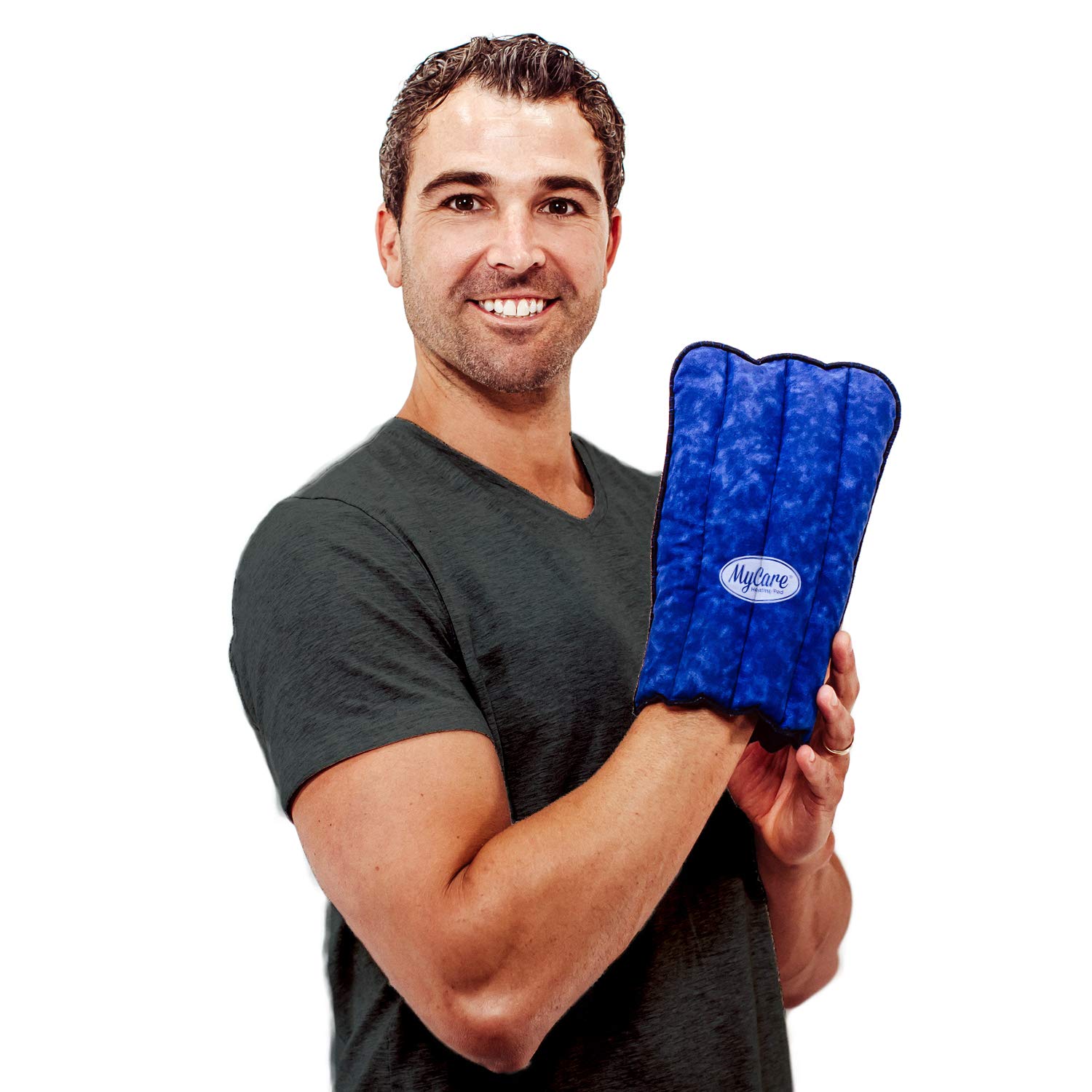
The MyCare Microwavable Warming Glove is one of those products that sounds almost too simple to be useful: a fabric glove filled with a heat-retaining material that you warm in a microwave and slip over your hand. It targets people dealing with arthritis, trigger finger, or carpal tunnel discomfort, and it can also be chilled for cold therapy. Whether it earns a place in a drawer or a physical therapy bag depends largely on how you expect to use it.
In practice, the glove is worn on the hand and wrist while you sit, read, type, or watch television. It is not a compression garment or a brace, so it doesn’t restrict movement much, which makes it easy to keep on during low-activity tasks. The moist heat comes from the filling, which absorbs ambient moisture and releases it gradually as it cools. Users typically microwave it in short bursts, check the temperature against the wrist or forearm, and then put it on. That warm-up routine is quick, but it does require some trial and error to find the right time for a given microwave, since wattage varies considerably between appliances.
The design covers the hand and extends up the wrist, which is the right coverage area for carpal tunnel-related stiffness and general joint aches. Seams and stitching are the main durability question with this type of product, and buyers should expect the fabric to show wear over months of regular heating. The filling is a grain-like material, so the glove has some weight and doesn’t drape like a thin cloth. That weight is part of what makes the heat feel substantial, but it also means the glove won’t mold tightly to the contours of the hand the way a gel pack might.
One notable limitation is temperature consistency. Microwavable grain fills heat unevenly, and hotspots are a real possibility, especially with higher-wattage microwaves or longer heating times. The glove needs to be kneaded and checked before use, and anyone with reduced sensation in the hands, which is common with neuropathy or advanced diabetes, should be cautious. This is not a set-and-forget device. It also cools down within roughly 15 to 25 minutes depending on room temperature, so it’s better suited to a single focused session than to all-day wear.
Compared with electric heating pads, the MyCare glove trades convenience for portability and no cord. An electric pad offers steadier, adjustable heat and can run indefinitely, but it tethers you to an outlet and isn’t shaped for the hand. Compared with gel hot-cold packs, the glove offers better coverage of the fingers and wrist and stays in place without strapping, though gel packs tend to heat more evenly and are easier to wipe clean. Compared with a wrist brace, this product addresses temperature and circulation rather than support or immobilization, so it isn’t a substitute for a splint prescribed for carpal tunnel syndrome.
The cold therapy function is worth mentioning but is secondary. Chilling the glove in the freezer works for post-activity swelling or a hot, inflamed joint, but the same uneven-temperature caveat applies, and a frozen grain fill can feel stiff and lumpy against the skin. For most buyers, the moist heat mode will be the primary use.
Who is this for? It suits people with mild to moderate hand arthritis, post-activity stiffness, or Raynaud’s-type cold sensitivity who want a cordless, wearable heat source for short sessions at a desk or on the couch. It’s also reasonable for someone who finds electric pads too dry or too bulky for the hand. Who is it not for? Anyone who needs continuous heat for long periods, people with significant loss of hand sensation who can’t reliably judge temperature, and those looking for structural support for carpal tunnel syndrome should look elsewhere. It’s also not ideal for someone who wants a single pack that covers a larger area like the whole forearm.
Realistic expectations matter here. This is a low-tech comfort product, not a treatment device, and it works best as part of a routine that includes movement, ergonomic adjustments, and whatever a clinician recommends. At a typical price for this category, the value comes down to fit and how often you’ll actually use it. Buyers should check the manufacturer’s heating instructions carefully, start with shorter intervals, and treat the first few uses as a calibration period. Treated that way, it’s a sensible, modestly useful addition for hand stiffness, with the usual caveats about even heating and fabric longevity.