
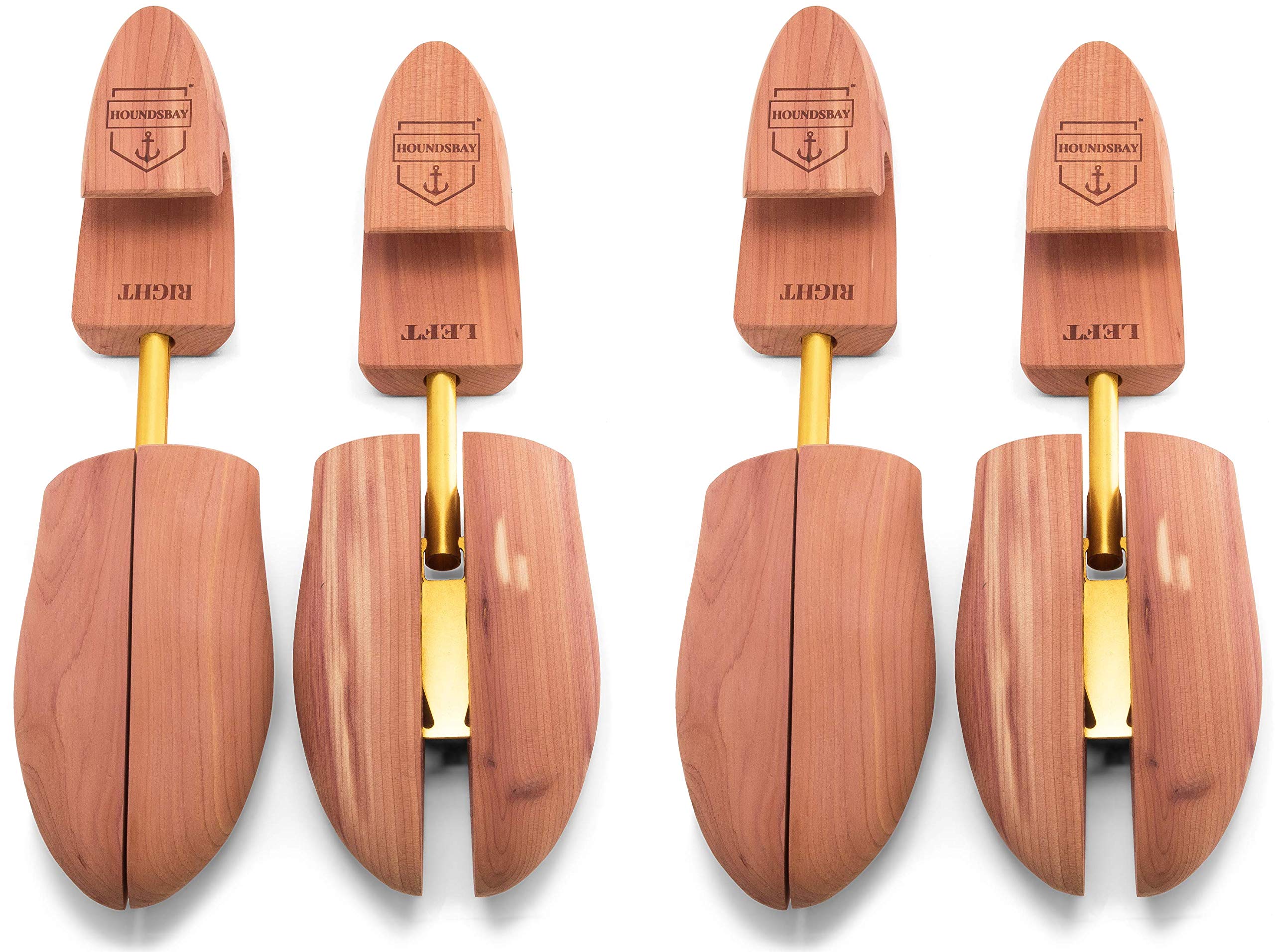
Shoe trees occupy an odd place in footwear care. They are inexpensive, widely recommended, and yet many people never buy them, while others treat them as essential as a shoehorn. The HOUNDSBAY Cedar Shoe Tree sits in the budget-to-mid range of that market: a straightforward two-piece wooden shaper aimed at men and women who want to keep leather shoes from curling at the toe and absorbing moisture after wear. It is not a stretching device in any meaningful sense, despite the product name including the word, and buyers should understand that distinction before ordering.
In practice, a shoe tree gets used for a minute or two at the end of the day. You pull it out of the shoe, slide the front section into the toe, press the heel piece against the back, and let the spring tension hold both halves in place. The HOUNDSBAY follows this conventional design. The front portion is shaped to fill the toe box, and the rear section holds the heel counter upright. Cedar is the standard material here for good reason: it absorbs some of the moisture leather picks up from feet and ambient humidity, and it carries a natural scent that many people find preferable to the smell of a damp shoe. The tension spring is what keeps the two halves from collapsing, and on this model it is a coiled steel spring running through the center.
What the tree realistically accomplishes is modest but useful. It keeps the vamp from sagging and the toe from curling upward between wears, which matters most for dress shoes and any leather footwear stored for long stretches. It also helps shoes dry more evenly after a long day, though it will not rescue a soaked shoe on its own; you still need air circulation and, ideally, alternating pairs. The cedar scent fades over time, and some users report that the wood surface needs occasional light sanding to refresh it. That is normal for cedar products rather than a defect, but it is worth knowing that the fresh-cedar effect is not permanent.
Several practical limitations stand out. First, the sizing is approximate. Shoe trees are usually sold in ranges rather than exact sizes, and a tree that is slightly too large can feel tight in the heel or distort a soft leather upper if forced. A tree that is too small does little to hold the shape. Second, the two-piece spring design applies outward pressure at the heel and toe simultaneously, which is fine for most shoes but can be awkward in narrow or unusually shaped lasts. Third, and most importantly for anyone reading the product name literally: this is a shaper, not a stretcher. It will not widen a tight shoe or break in a stiff one. If you need actual stretching, you want an adjustable stretcher with a turning mechanism, which is a different tool entirely and usually costs more.
Compared with generic unbranded cedar trees sold in multi-packs, the HOUNDSBAY sits at a slightly higher price point without obvious structural advantages. The wood is cedar, the spring is steel, and the shape is conventional. Where it may justify the difference is in finish and consistency: cheaper trees sometimes arrive with rough edges or splinters that can snag shoe linings, and a better-finished surface reduces that risk. Against plastic or composite trees, cedar has the moisture-absorption advantage, though plastic trees are lighter and cheaper and will not leave wood dust in the shoe. Against boot-specific trees with taller heel sections, this design is less suited to tall boots, where a dedicated boot tree holds the shaft better.
Who it suits: people with a small rotation of leather dress shoes, loafers, or casual leather footwear who want a low-cost way to maintain shape between wears. It is also reasonable for anyone buying their first shoe trees and unwilling to spend much.
Who should look elsewhere: anyone hoping to stretch tight shoes, owners of tall boots, people with very narrow or unusually shaped footwear, and those who want a precise size match rather than a range. For heavy daily wear across many pairs, buying several inexpensive trees may make more sense than one nicer set.
Overall, the HOUNDSBAY Cedar Shoe Tree does the basic job without distinction. It is a functional, conventional shaper whose main value is in keeping leather shoes from collapsing between wears. Expectations should be set accordingly: it is a maintenance accessory, not a repair tool, and its benefits accumulate over months of consistent use rather than appearing after a single insertion.