
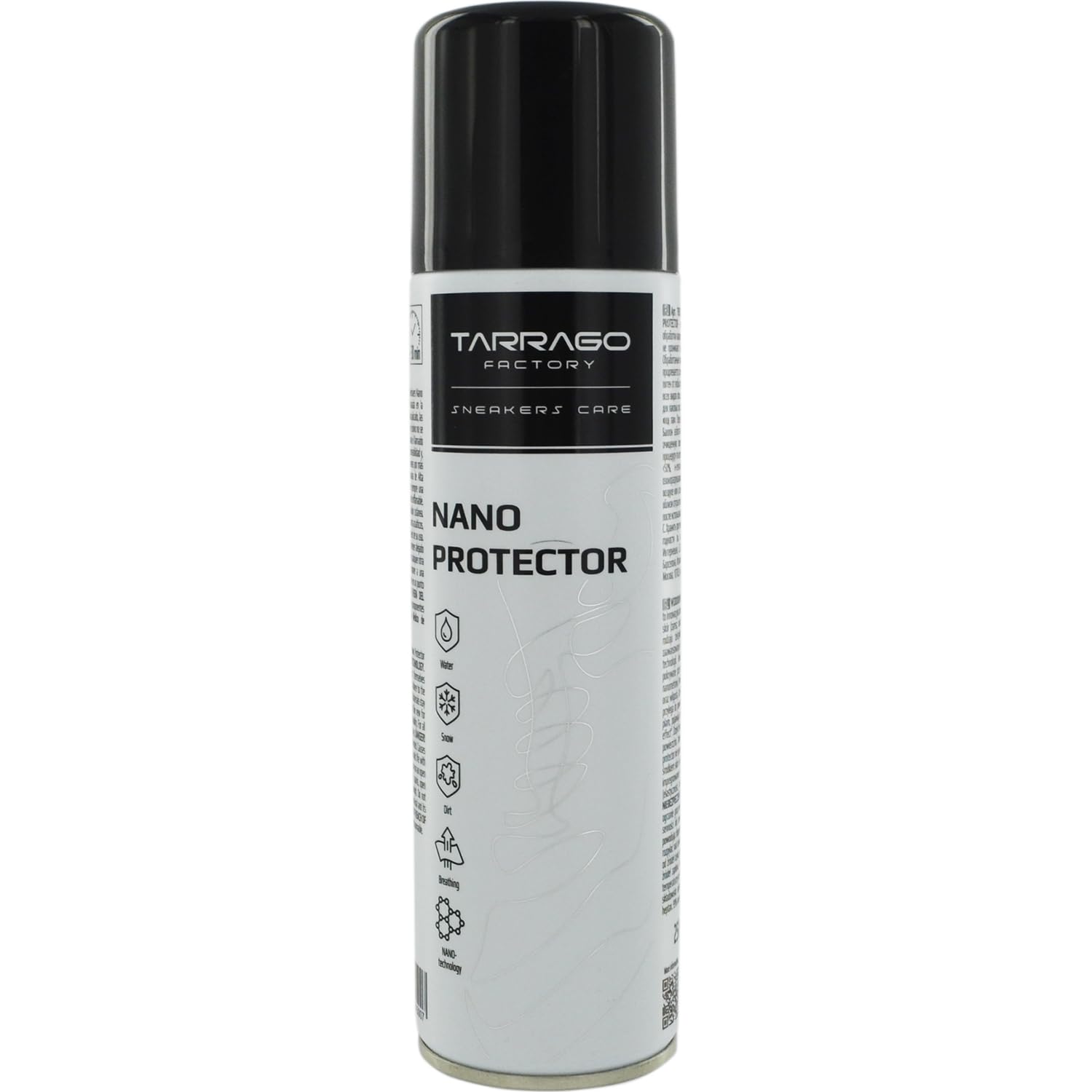
Tarrago’s Sneaker Nano Protector is one of those maintenance products that tends to get bought after the fact — usually the day after a white pair of canvas sneakers meets a muddy puddle. It’s a 250ml aerosol-style spray built around a fluoropolymer-style nano treatment, sold primarily as a water and stain repellent for footwear. The pitch is straightforward: spray it on, let it cure, and liquids bead up and roll off instead of soaking in. In practice, that’s roughly what happens, with some caveats worth understanding before you buy.
The product is aimed at a fairly wide range of materials — suede, nubuck, canvas, leather, mesh, and synthetic uppers. That breadth is part of its appeal, since most people own a mix of shoe types and don’t want three different protectors on the shelf. It’s also marketed for white shoes specifically, which is a sensible framing: white canvas and white leather are where visible staining is most punishing, and where a repellent layer earns its keep fastest.
How it’s actually used matters more than the marketing copy. The typical routine is to clean the shoes first — dust, salt, or existing stains need to come off before sealing, or you’re just locking dirt in — then spray an even coat from roughly 20–30cm away in a well-ventilated area, and let it dry for several hours, often overnight. A second light coat is common for high-wear areas like the toe box and heel. The 250ml can is enough for multiple applications across a few pairs, though heavy users will go through it faster than they expect, especially if they re-treat frequently.
Functionally, the treatment works by lowering the surface energy of the material so water and water-based liquids don’t spread or absorb. On suede and nubuck, the effect is the most dramatic and the most useful, since those materials are otherwise notoriously vulnerable to rain and spills. On canvas, water beading is visible and satisfying, and it does slow the absorption of coffee, mud, and road spray. On smooth leather, results are more modest — leather already has some natural resistance, and the spray mainly helps with the seams, stitching, and porous edges rather than the whole surface.
- Coverage: 250ml treats several pairs depending on shoe size and material porosity.
- Cure time: Typically several hours to overnight for full effect; not a spray-and-wear-immediately product.
- Materials: Suede, nubuck, canvas, mesh, leather, and most synthetics; not intended for patent leather or heavily oiled leathers.
- Reapplication: Expected every few weeks with regular wear, sooner in wet or dirty conditions.
- Format: Aerosol spray; requires ventilation and some care to avoid overspray on floors or nearby fabrics.
The main limitation is durability. Nano repellents are not permanent coatings; they degrade with abrasion, flexing, and repeated cleaning. If you wear the same pair daily, expect the beading effect to weaken within a few weeks, and faster at flex points like the toe crease. Re-treating is part of ownership, which means the real cost is the ongoing can replacement rather than the initial purchase. It’s also not a cleaning product — it won’t remove stains, and applying it over dirt traps grime against the material. Some users also find that certain suede finishes darken slightly during application and return to normal after drying, but it’s worth testing on a hidden area first.
Compared with a traditional cream or wax-based protector, the nano spray is lighter and less likely to alter the texture or breathability of the material, which matters on mesh runners and lighter canvas. Wax treatments offer more robust, longer-lasting water resistance but can darken suede and leave a residue. On the other side, generic silicone sprays are cheaper but often leave an uneven finish and attract dust. Tarrago sits in the middle: more refined than a budget silicone spray, less heavy-duty than a wax treatment, and best suited to people who want invisible protection without changing how the shoe looks or feels.
Who is it for? Owners of suede, nubuck, or light-colored canvas sneakers who wear them in unpredictable weather and want a low-effort layer of defense. It’s also reasonable for anyone rotating several pairs who wants one product that covers most of them. Who is it not for? People expecting a one-time, permanent treatment, those with patent leather or heavily oiled boots (different products suit those better), and anyone unwilling to clean and re-treat every few weeks. It’s also not a substitute for proper cleaning after a genuinely muddy outing — it buys time, not immunity.
Realistic expectations help here. A treated pair will shed light rain, splashes, and the occasional spilled drink far better than an untreated one, and cleaning becomes easier because stains sit on the surface rather than sinking in. It will not survive a submerged puddle crossing or a full day in steady rain, and it won’t stop mud from caking on. Treated as routine maintenance rather than a magic shield, the Tarrago Nano Protector does its job competently, with the main trade-offs being reapplication frequency and the need for careful, ventilated application.