
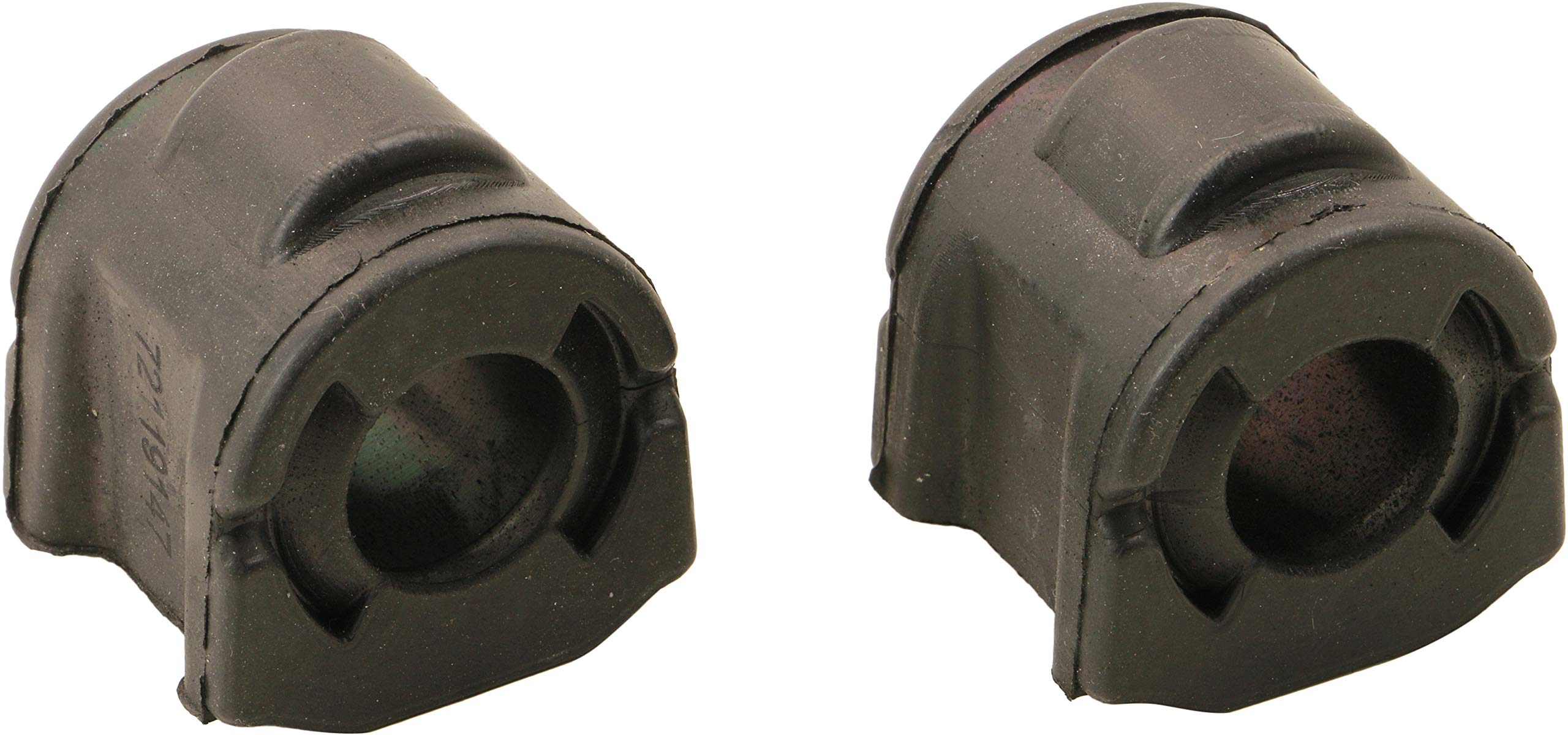
The MOOG K201913 stabilizer bar bushing kit is one of those parts most Forester owners never think about until something starts clunking over speed bumps or the car begins to feel loose in corners. It is a small, unglamorous component, but it sits at the center of how a Subaru Forester’s front end communicates with the road. This kit is designed to replace the worn rubber bushings that mount the front sway bar to the chassis, and in practice it is a maintenance item rather than an upgrade.
In real-world use, these bushings are installed during routine suspension refresh work, often alongside new end links, struts, or control arm bushings. A Forester that has covered 80,000 to 120,000 miles is a typical candidate, especially if it has spent time on rough pavement or carried heavy loads. The symptoms that lead someone to this kit are usually familiar: a dull thud over uneven surfaces, vague steering feel at highway speed, and a front end that seems to wander slightly on grooved pavement. Replacing the bushings addresses the play between the sway bar and its mounting brackets, which is a common source of those noises.
Functionally, the K201913 kit includes the bushings and the hardware needed to secure the bar to the frame. MOOG’s bushings are typically made from a rubber compound rather than polyurethane, which matters for how the car feels afterward. Rubber isolates vibration and road noise well, and it flexes enough to keep the ride comfortable on a daily-driven Forester. That is a deliberate trade-off: polyurethane bushings, which are a common alternative in the aftermarket, offer sharper turn-in and less deflection under load, but they also transmit more harshness into the cabin and often require periodic re-greasing to prevent squeaks. For a family-oriented crossover like the Forester, the rubber approach is usually the more sensible default.
Fitment is where this kit earns or loses its keep. The K201913 is listed for specific Forester generations, and buyers should verify their model year and whether their car uses the 21mm or 23mm front bar, since bushing diameter must match the bar. Installing bushings that are slightly too large or too small leads to premature wear or noise, and that is a mistake that happens more often than it should. The included brackets and hardware are intended to be a direct replacement, but on older Foresters with rust in the mounting area, expect to spend extra time cleaning threads and possibly replacing corroded bolts. This is not a difficult job for someone with basic hand tools and jack stands, but it is also not a job to rush.
Performance expectations should stay grounded. Fresh bushings will restore the front end to something close to how the car felt when new, tightening up the steering response and quieting the clunks. They will not transform the Forester into a sporty handler, and anyone hoping for a dramatic change in body roll should look at the rear bar and end links as well. The improvement is incremental but noticeable, particularly on cars where the original bushings have hardened and cracked. It is a repair, not a modification.
There are limitations worth naming. Rubber bushings will eventually degrade again, and the service life depends heavily on climate and road conditions. In areas with heavy road salt, the hardware can corrode faster than the bushing itself. The kit also does not include end links, which are frequently worn at the same time and are often the actual source of a clunk. Buyers who assume this kit alone will solve every front-end noise may be disappointed. It is also worth noting that MOOG’s quality has been debated among enthusiasts in recent years, with some reporting that certain MOOG parts are now sourced from different suppliers than in the past. The K201913 has a generally solid reputation, but it is not a premium or motorsport-grade part, and it should not be treated as one.
Compared with a polyurethane bushing set from a brand like Whiteline or Energy Suspension, the MOOG kit prioritizes comfort and low maintenance over precision. That makes it the better choice for a stock or lightly modified Forester used for commuting, family hauling, and occasional light trail duty. It is less suitable for someone building a dedicated autocross or rallycross car, where the extra stiffness and feedback of polyurethane would be worth the trade-offs. It is also not the right pick for a Forester with a lifted suspension and oversized tires, where the additional stress may warrant a more robust aftermarket solution.
Who is this for, then? It suits the owner of a higher-mileage Forester who wants to address a specific noise or looseness with an OEM-style replacement and does not want to change the character of the ride. It is a reasonable choice for a DIY mechanic comfortable with suspension work, and a sensible part for a shop doing a routine front-end refresh. It is not for someone chasing sharper handling, and it is not a cure-all for a worn-out suspension. Treated as a maintenance item with realistic expectations, the K201913 does its job without drama.