
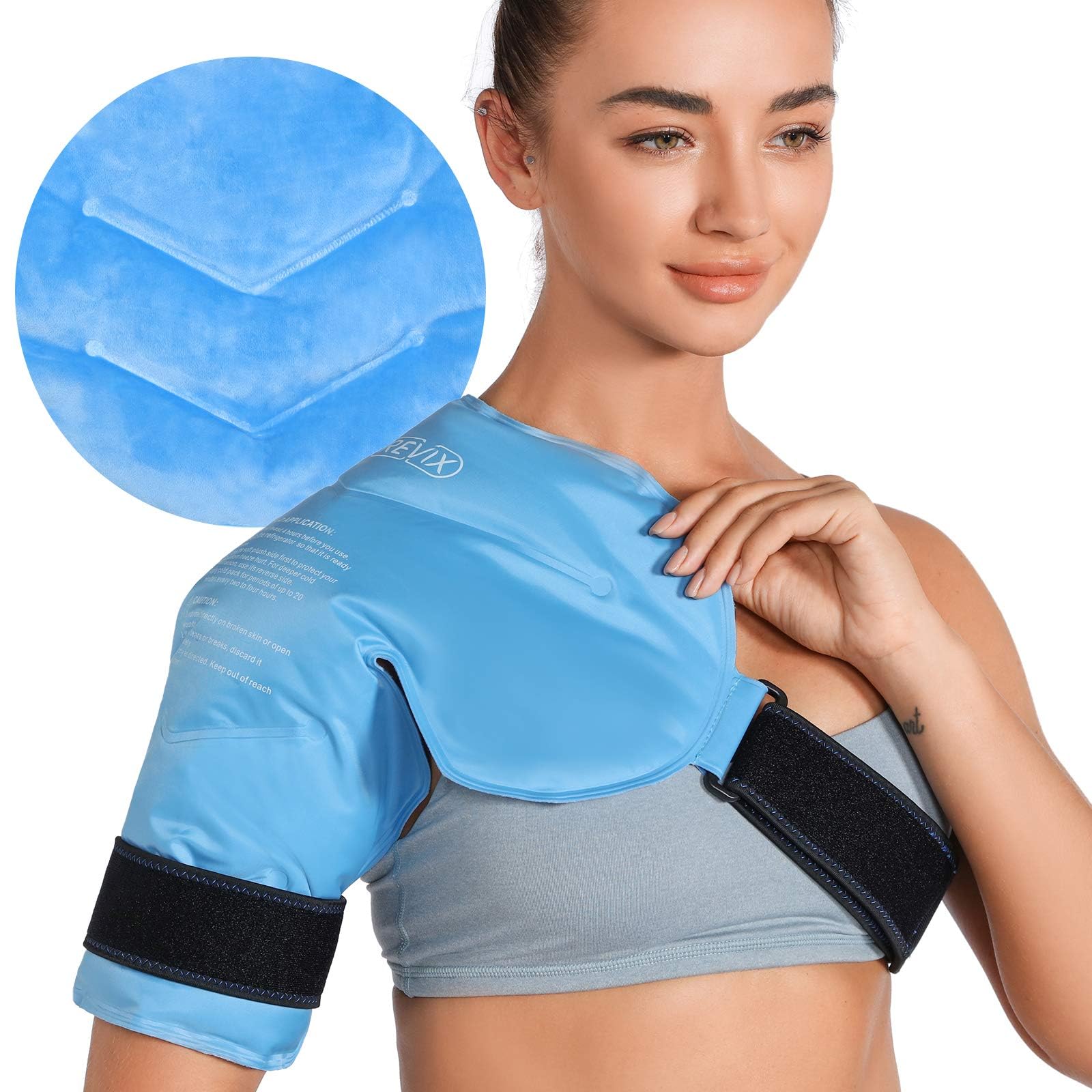
The REVIX Shoulder Ice Pack Wrap sits in a fairly crowded category of reusable gel cold therapy products, but its design targets a specific problem: keeping a cold pack in place on a joint that moves in almost every direction. Shoulder ice packs are awkward by nature. A flat gel pack slides off the shoulder the moment you sit up, and a rigid ice bag has to be held or taped in place. REVIX’s answer is a wrap-style design with straps and a contoured gel insert intended to drape over the shoulder and stay put while you move around or rest.
In practice, this is the kind of product people buy after a rotator cuff injury, shoulder surgery, or a stubborn case of bursitis, usually on a physical therapist’s or surgeon’s recommendation to ice for 15 to 20 minutes several times a day. That use pattern matters for judging it, because the product is judged less on how cold it gets and more on whether it makes those repeated sessions convenient enough to actually do.
What the wrap actually is
The core component is a reusable gel pack shaped to follow the curve of the shoulder rather than a flat rectangle. The pack is held inside a fabric sleeve with adjustable straps, so it can be positioned over the front of the shoulder, the top, or the back depending on where the pain or swelling is. The outer fabric is soft against skin, and the whole thing is designed to be worn hands-free, which is the main functional difference from a plain gel pack or a bag of frozen peas.
The gel can be used cold from the freezer or heated in a microwave, so it doubles as a warm compress for stiffness, which is a common need in shoulder rehab alongside cold therapy. It is reusable, and the sleeve is generally spot-cleanable. None of this is unusual for the category, but the shoulder-specific contour and strapping are the parts that distinguish it from a generic rectangular pack.
How it holds up in real use
The strapping system is the make-or-break feature, and it mostly works. The wrap can be snugged down well enough to stay in place while sitting, reading, or working at a desk, which is the realistic scenario for most icing sessions. It is not a compression garment, though, and it will shift if you lie down on it or move your arm through a large range of motion. Expect to adjust it once or twice per session rather than strap it on and forget it.
Cold duration is typical for gel packs of this size: roughly 15 to 20 minutes of usable cold from a fully frozen pack, which lines up with standard icing guidance anyway. The pack takes a few hours to refreeze, so if you need back-to-back sessions, a second pack is worth having. The fabric layer slows the cold slightly compared to pressing a bare gel pack to the skin, which is generally a good thing for comfort but means the cold feels milder than a direct ice application.
Trade-offs worth knowing
- Fit is not universal. The wrap is sized for an average adult shoulder. Very small frames or very broad shoulders may find the straps either too long or too short to position the gel pack where it is needed.
- One size, one shoulder at a time. It is designed for a single shoulder, so bilateral shoulder issues mean buying two or alternating.
- Not a substitute for compression or support. It does not provide meaningful compression or immobilization, so it will not replace a sling or a dedicated compression wrap during recovery.
- Gel packs lose effectiveness over time. Like all reusable gel packs, the insert can develop leaks or lose its cold-holding ability after many freeze-thaw cycles, and replacement inserts are not always easy to source.
How it compares to alternatives
The most direct comparison is a plain rectangular gel pack held on with an elastic bandage or a towel. That setup is cheaper and more flexible for icing other joints, but it is fiddly and tends to slip, which is exactly the problem the REVIX wrap solves. A step up in price and complexity is a circulating cold therapy machine, which delivers consistent cold for longer periods and is often rented or prescribed after major surgery. Those machines are bulky, expensive, and tethered to a power outlet, so the REVIX wrap occupies a sensible middle ground: more convenient than a loose gel pack, far simpler than a machine.
Compared with heat-only shoulder wraps, the dual hot/cold capability is a genuine advantage for rehab, where cold is used after activity and heat before it.
Who it suits, and who it does not
This wrap makes sense for someone managing rotator cuff tendinitis, post-surgical shoulder recovery, or general shoulder inflammation who needs repeated, hands-free icing at home or at a desk. It is also reasonable for people who want one product that does both cold and heat.
It is less suitable for anyone who needs sustained cold for more than about 20 minutes, people recovering from major surgery who have been prescribed a cold therapy machine, or users with shoulder dimensions well outside the average range. If you only ice occasionally, a basic gel pack and a towel will do the job for less money. The REVIX wrap earns its place through convenience and fit rather than superior cold performance, and that is a fair basis for buying it.