
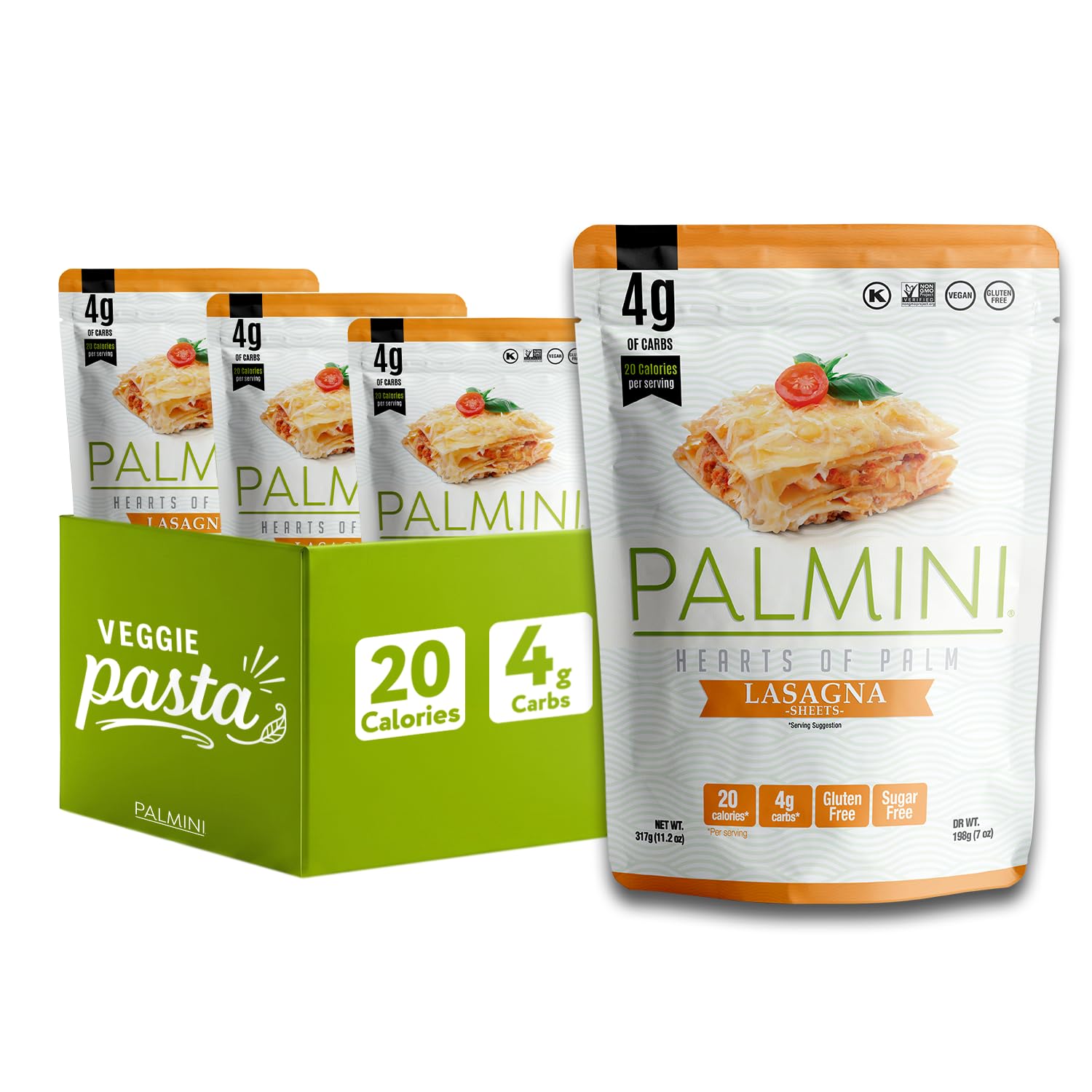
Palmini’s lasagna sheets occupy a specific niche: a pasta substitute made from hearts of palm that promises the structure of lasagna noodles without the carbohydrates. The product gained visibility through Shark Tank, but the more relevant question for most shoppers is whether a vegetable-based sheet can actually hold up in a baked lasagna, or whether it collapses into something closer to a casserole of soggy vegetables. Based on how the product is formulated and how it behaves in typical use, the answer is mixed but more workable than skeptics might expect.
The sheets are cut from hearts of palm, the inner core of certain palm species, which is why the ingredient list is short and the nutrition panel is unusually lean for a pasta product. A serving is low in calories and carbohydrates, and the product is gluten-free, vegan, and non-GMO, which broadens its appeal beyond keto dieters to anyone avoiding gluten or managing blood sugar. Each sheet is thin and somewhat rigid out of the package, with a faint vegetal smell that most people will notice on opening. The three-pack format is practical for households that plan to make lasagna more than once, though it also means committing to the product before knowing whether the texture suits you.
In practice, the sheets are used much like no-boil lasagna noodles, layered with sauce, cheese, and fillings and then baked. Palmini recommends rinsing and briefly boiling or soaking the sheets before assembly, and this step matters more than the package copy suggests. Skipped entirely, the sheets can retain a firm, almost fibrous bite that reads as undercooked. Rinsed and softened, they become pliable enough to layer without cracking, though they remain more fragile than wheat noodles and tear easily if handled roughly. The result after baking is a lasagna that holds its shape when cut, with distinct layers, but the sheets themselves stay slightly al dente and have a mild artichoke-like flavor that sauce mostly masks. Expect the texture to be closer to a firm vegetable than to traditional pasta; anyone anticipating the chew of semolina noodles will be disappointed.
There are real trade-offs. The sheets do not absorb sauce the way wheat pasta does, so a baked lasagna can turn watery as the vegetable releases liquid, particularly with a wet tomato sauce. Draining the sheets well and using a thicker sauce helps, but it is an adjustment. The hearts of palm flavor is subtle yet present, and in delicate recipes such as a white lasagna with béchamel it can come through in a way that clashes. The sheets also brown unevenly under high heat and can develop a slightly rubbery edge if overcooked. Finally, the price per serving runs higher than dried lasagna noodles, which is the usual cost of specialty low-carb products.
Compared with other low-carb pasta alternatives, Palmini sits somewhere in the middle. Zucchini sheets are cheaper and easy to make at home, but they release far more water and produce a looser, wetter lasagna. Eggplant slices bring more flavor but require salting and pre-roasting to avoid sogginess. Shirataki-based products, another common low-carb option, have a springier, more gelatinous texture that many people find off-putting in baked dishes. Palmini’s advantage is that it layers and slices more convincingly than most vegetable substitutes, while its drawback is that it still tastes like a vegetable rather than pasta.
The product suits people who have already adjusted to vegetable-based pasta substitutes and who prioritize low carbohydrate and calorie counts over traditional texture. It works reasonably for gluten-free households, vegans, and anyone following a keto or low-carb plan who misses lasagna enough to accept a compromise. It is less suitable for anyone expecting a close match to conventional noodles, for recipes where the sauce is thin or the baking time is long, and for households feeding children or guests who are not already on board with vegetable pasta. For those cooks, a standard no-boil noodle or a gluten-free wheat substitute will be less frustrating.
Overall, Palmini lasagna sheets are a functional rather than seamless substitute. They require a preparatory step, demand a thicker sauce, and deliver a texture that is honestly vegetable-first. Within those limits, they do what they claim: they make a recognizable, sliceable lasagna that fits a low-carb or gluten-free diet. The product is worth trying for cooks who treat it as its own ingredient rather than as a pasta impersonator, and worth skipping for anyone who wants lasagna to taste like lasagna.