
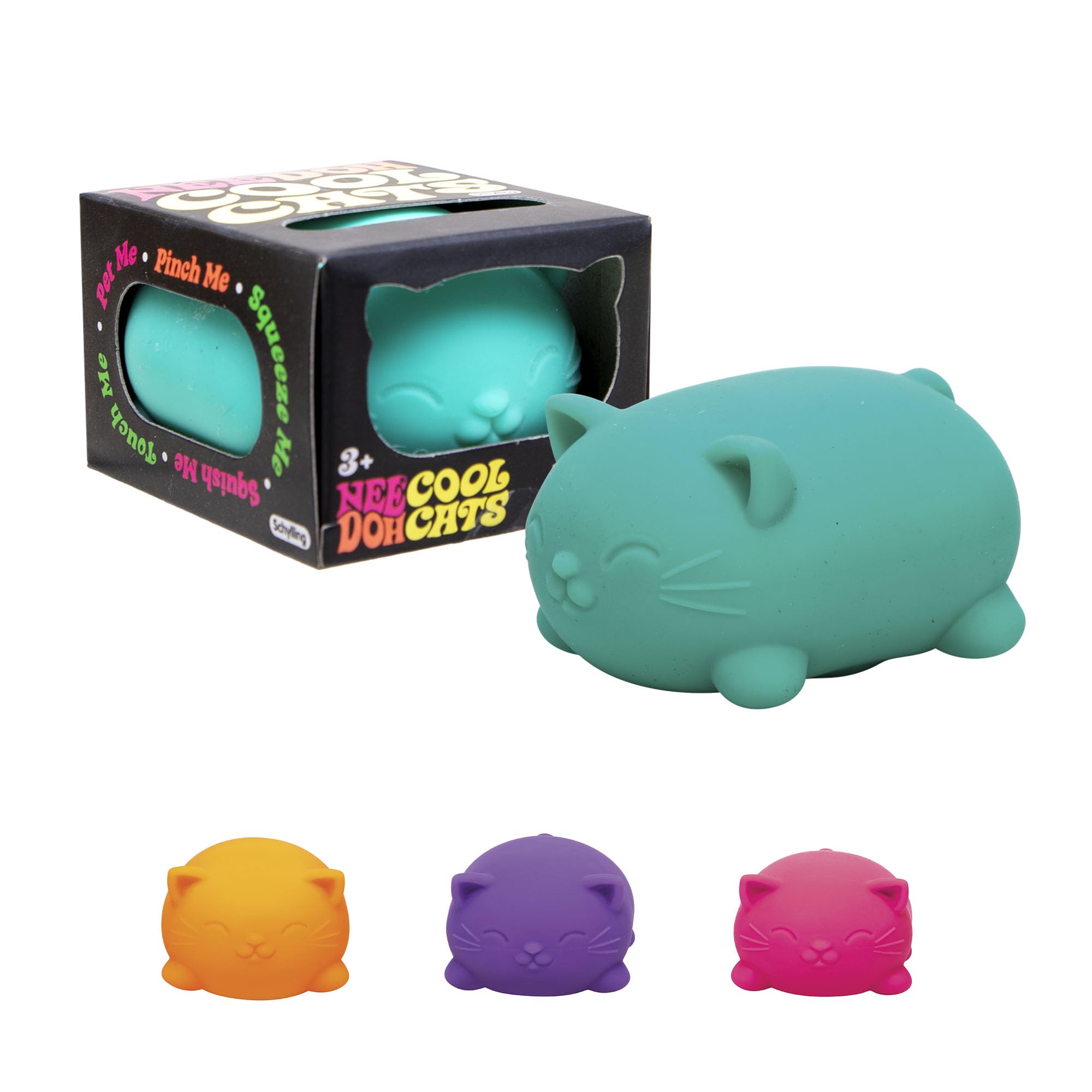
Sensory squeeze toys occupy an odd corner of the market. They are sold as stress relief, fidget tools, and desk ornaments all at once, and the NeeDoh line from Schylling has become one of the better-known names in that space. The Cool Cats version applies the familiar NeeDoh formula to a cat-shaped blob, sold individually with the caveat that the color you receive is random. That last detail matters more than it might seem, and it shapes how the product fits into real use.
In practice, a NeeDoh Cool Cat ends up in the same places most small fidget toys do: on a desk during phone calls, in a backpack, on a nightstand, or in a pocket during a commute. The appeal is the texture. The filling is a soft, dough-like material inside a stretchy outer skin, and squeezing it produces a slow, squishy resistance rather than a quick bounce. It can be stretched, kneaded, and pressed flat, and it returns to roughly its original shape afterward. The cat form is mostly cosmetic; the ears and face are molded into the surface, but the object behaves like a generic squish ball with a themed exterior.
Functionally, the toy is simple. It is a single-piece item with no moving parts, no batteries, and nothing to assemble. The surface is smooth and slightly tacky, which helps it stay in the hand but also attracts lint and dust over time. The stated age range runs from 3 to adult, though the realistic audience skews older. A preschooler will enjoy squeezing it, but the material is not indestructible, and a determined child with fingernails can puncture the outer skin. The manufacturer does not market it as chew-proof or tear-resistant, and it should not be treated as one.
The random color is the most obvious trade-off. Buyers cannot choose between the available cat colors, so anyone buying this as a gift or trying to match a specific preference is taking a chance. For a cheap impulse item this is tolerable, but it is worth knowing before ordering. The toy is also small, roughly palm-sized, which makes it easy to lose and less satisfying for adults with larger hands who want a substantial squeeze. Compared with a foam stress ball, the NeeDoh offers a more tactile, slower response, but foam balls are generally more durable and less messy if the outer layer fails. Compared with a putty or slime product, the NeeDoh is cleaner and contained, though it offers less stretch and shaping variety.
Durability is the area where expectations should be calibrated. These toys are not built for heavy, repeated abuse. Under normal desk use, a NeeDoh can last months, but seams and thin spots can develop leaks, and once the inner filling escapes, the toy is finished. The filling itself is not something you want smeared into carpet or upholstery, so supervision with younger children is sensible. There is also no way to refill or repair one, which makes it a disposable item in the same way most fidget toys are.
As a focus or regulation tool, the Cool Cat works best as a quiet, low-profile option. It does not click, buzz, or make noise, so it is usable in meetings or classrooms where louder fidgets would be disruptive. The squish is calming for some users, though it is not a substitute for a proper sensory tool recommended by an occupational therapist. It is a pleasant object to handle, not a clinical device.
Who is this for? It suits adults and teens who want a small, silent desk toy, and it works as a low-cost stocking stuffer or party favor. It is also reasonable for older children who understand not to pick at it. Who is it not for? Buyers who need a specific color, households with very young children who mouth or tear toys, and anyone expecting a durable, long-term stress ball. People who dislike tacky surfaces or random-color purchases should look elsewhere.
The NeeDoh Cool Cats is a modest, inexpensive sensory toy that does one thing well: it squishes pleasantly and quietly. Its limitations are real but predictable, and for the price, they are mostly acceptable. It is best approached as a small, disposable comfort object rather than a lasting tool.