
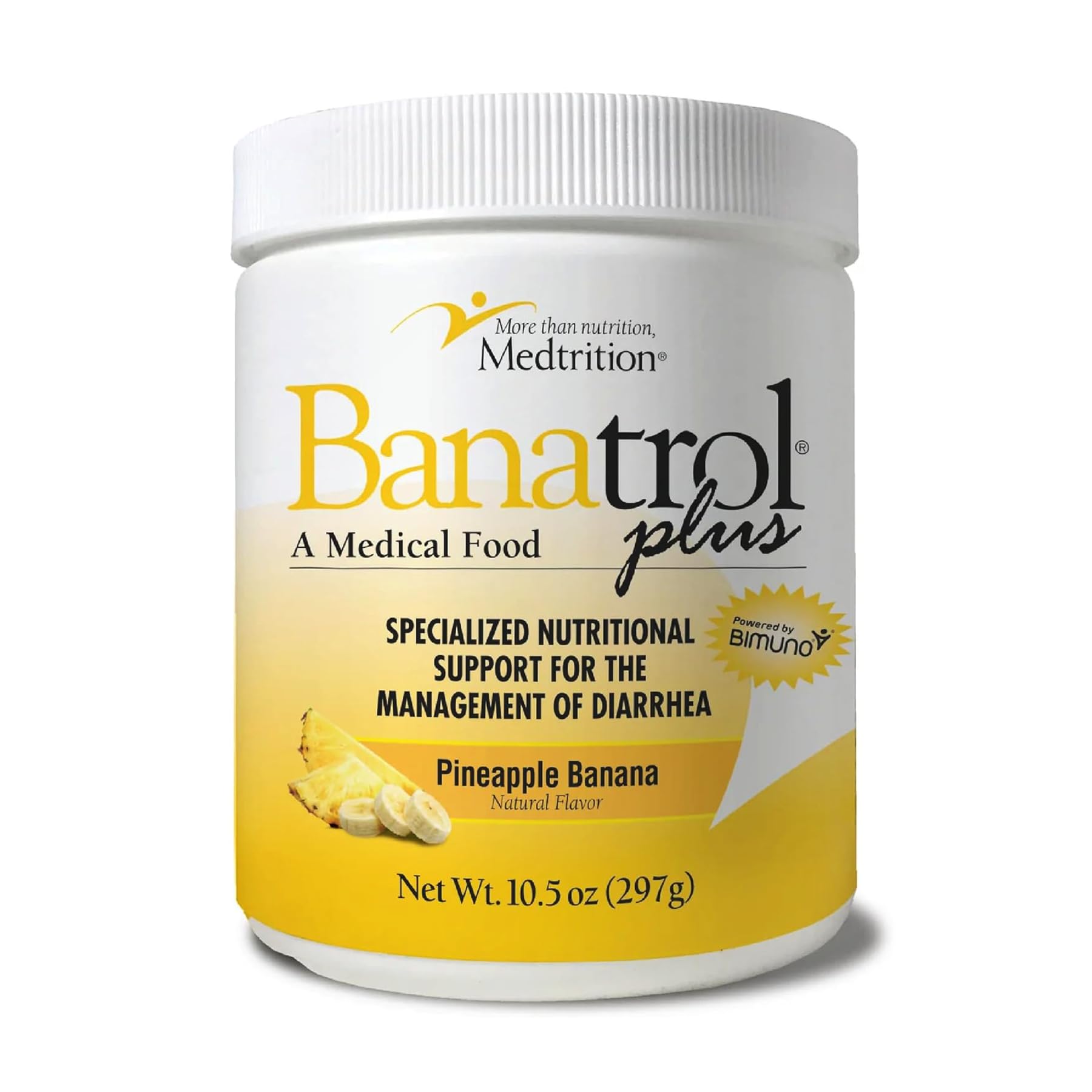
Banatrol sits in an unusual spot in the digestive-health aisle. It is sold as a food product rather than a drug, yet it is marketed specifically for diarrhea and IBS-related urgency. That positioning matters, because it shapes what the product can claim, how it is regulated, and what kind of user it realistically fits. Medtrition’s version comes in a 28-serving tub of pineapple-flavored powder, and the pitch is built around two ingredients: banana flour and a prebiotic fiber blend.
The core idea is straightforward. Green banana flour is high in resistant starch, a type of carbohydrate that resists digestion in the small intestine and ferments in the colon. The prebiotic component feeds gut bacteria rather than binding or slowing motility the way loperamide does. That is the central distinction: Banatrol is not an anti-motility drug and does not work like one. It is closer to a dietary intervention that some people use to firm up stool consistency and reduce frequency over time.
In practice, the powder is mixed with water or another liquid and taken between meals, typically a few times a day during a flare and less often for maintenance. The pineapple flavor is there to make the banana base more palatable, though the texture is a common sticking point. Resistant starch powders tend to be slightly gritty or chalky, and users frequently mention needing to stir vigorously and drink quickly before it settles. It is not a capsule you can swallow unnoticed.
- Format: 28-serving tub of flavored powder, scooped and mixed with liquid
- Key ingredients: green banana flour plus a prebiotic fiber blend
- Positioning: classified as a food, not an OTC medication
- Claimed use: IBS-related diarrhea and recurring loose stools
- Flavor: pineapple
The clinical support referenced in the marketing is worth reading carefully. There is published research on green banana and pectin combinations for persistent diarrhea, and resistant starch has a legitimate evidence base in digestive health, but much of it comes from smaller studies or specific populations. It is reasonable to describe the ingredient as clinically studied; it is a stretch to treat the product as a proven treatment for every case of IBS. Buyers should expect a food-grade supplement with plausible mechanisms, not a guaranteed fix.
One genuine trade-off is timing and consistency. Prebiotic fibers generally need regular use to have any effect on gut flora, so someone hoping for same-day relief after a single serving is likely to be disappointed. The effect builds, and it varies widely between people. Some users report firmer stools within a few days; others notice little change or experience bloating and gas early on as the fiber ferments. That initial gas is a known characteristic of prebiotic products and is not a sign the product is failing, but it can be uncomfortable and is worth knowing before starting.
Compared with conventional OTC anti-diarrheals like loperamide, Banatrol is slower, gentler, and non-constipating by design. Loperamide works within hours by slowing gut motility, which makes it useful for acute situations like travel or a short-lived bug, but it can cause constipation and is not meant for long-term daily use. Banatrol occupies the opposite niche: recurring, low-grade problems where the goal is to stabilize rather than stop everything abruptly. It is also different from a standard psyllium fiber supplement, which bulks stool but does not carry the same prebiotic or green-banana profile. Neither category is strictly better; they solve different problems.
Who is this for? People dealing with IBS-D or recurring loose stools who want a non-drug option and are willing to use it consistently for a week or two before judging results. It may also suit those who have had bad experiences with anti-motility drugs and want something that does not simply halt the gut. It is less suitable for acute, severe, or unexplained diarrhea, which warrants medical attention rather than a food product. Anyone with a banana allergy should obviously avoid it, and people managing diabetes should note the carbohydrate content. It is also a poor fit for anyone who wants a capsule or dislikes thick, slightly gritty drinks.
Cost is another consideration. At 28 servings per tub, frequent flare-day use burns through it quickly, and the per-serving price is higher than basic fiber supplements. That is a real barrier for anyone planning to use it several times daily for extended periods.
The honest summary: Banatrol is a reasonable, well-formulated prebiotic option for recurring diarrhea and IBS, with a mechanism that is plausible and partially supported by research. It is not fast-acting, not universally effective, and not cheap. Approached as a patient, consistent dietary tool rather than a rescue medication, it has a defensible place in the routine of someone who has already ruled out more serious causes with a clinician.