
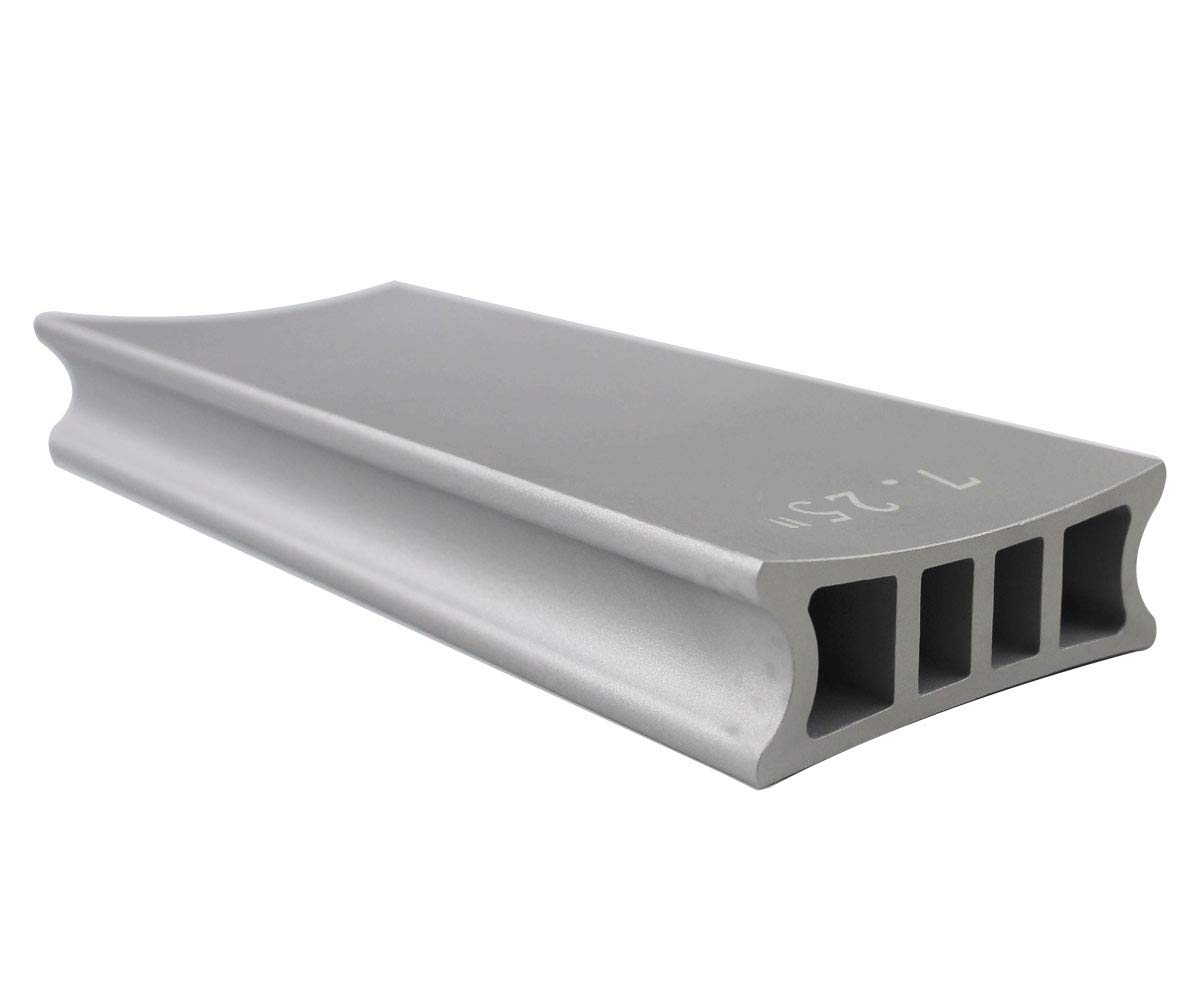
Fret leveling is one of those jobs where the tool matters more than most players expect. A sanding block that isn’t straight, or that doesn’t match the fingerboard radius, will either crown the frets unevenly or leave you sanding far longer than necessary. The Guyker Two-Way Radius Sanding Block is aimed squarely at that task: a CNC-machined aluminum beam with a 7.25-inch radius on one face and a 15-inch radius on the other, intended for guitar and bass fret work and fingerboard maintenance.
The two radii are the core of the design, and they’re a sensible pairing. The 7.25-inch curve covers vintage-spec Fender-style boards, while the 15-inch face suits flatter modern boards and many acoustics and basses. Having both on one piece of aluminum means one tool covers a lot of the instruments that pass through a typical home workbench. The block is machined from aluminum rather than cast or made of wood, which matters for flatness and for staying straight over time, though it also means the tool is heavier than a wooden beam of similar size.
In use, the block is meant to be fitted with adhesive-backed sandpaper and run along the frets with the radius matched to the board. The weight of the aluminum does some of the work for you, and the rigidity helps keep the leveling stroke consistent across the length of the neck. That rigidity is the main functional argument for aluminum over wood: a wooden radius block can warp or wear unevenly, and once it’s out of true, it quietly introduces errors into every fret job. A machined aluminum beam doesn’t have that problem, assuming the machining is accurate. The catch is that you’re trusting the factory’s tolerances, and on a budget tool that’s worth checking with a straightedge before the first use.
There are practical trade-offs worth noting. The two-way design is convenient, but the block is only as good as the radius match. If your instrument sits between the two offered radii, or uses something like a 9.5-inch or 12-inch board, neither face will be correct and you’ll need a separate block. The 7.25 and 15 pairing is common, but it’s not universal, and compound-radius boards aren’t served well by a single fixed radius at all. The aluminum body also needs care: it’s durable, but dropping it on a hard floor or clamping it carelessly can ding an edge, and a damaged edge will show up in the sanding surface. The sandpaper attachment method is another consideration. Adhesive-backed paper works, but repositioning or replacing it leaves residue that needs cleaning off the beam, and some users prefer the simpler paper-holding of wooden blocks with slightly rounded edges.
Compared with a wooden radius block, the Guyker trades warmth and lighter weight for dimensional stability and a more consistent sanding plane. Compared with a full fret-leveling file or a dedicated leveling beam with a flat face, it’s more specialized: this is a radiusing and fret-leveling tool, not a general-purpose sanding block, and it won’t replace a crowning file or a flat beam for checking neck relief. It also sits in a different category from a notched straightedge, which is for assessing the board rather than working it. Buyers sometimes confuse the two, and it’s worth being clear that this tool removes material; it doesn’t measure anything.
Who is it for? Primarily the home luthier or experienced tinkerer who does their own fret work and owns instruments with 7.25-inch or 15-inch boards, or both. It’s also reasonable for someone building a small repair kit who wants a rigid, dual-purpose beam without buying two separate blocks. Who is it not for? Players who have never leveled frets and are looking for a first tool to learn on may find a cheaper wooden block less intimidating, and anyone working mainly on 9.5-inch or 12-inch boards, or on compound-radius necks, should look at blocks made for those specs instead. Professional shops will likely want a wider range of radii and possibly a longer beam for full-neck work.
Expectations should be realistic. This is a functional, no-frills tool that does a specific job when the radius matches the instrument and the user knows how to level and crown frets. It won’t compensate for poor technique, and it won’t fix a twisted neck. Check the faces for flatness and the edges for burrs on arrival, keep the sandpaper fresh, and clean the adhesive residue between jobs. Treated that way, a machined aluminum two-radius block is a reasonable addition to a maintenance bench, provided your instruments fall on the two radii it offers.