
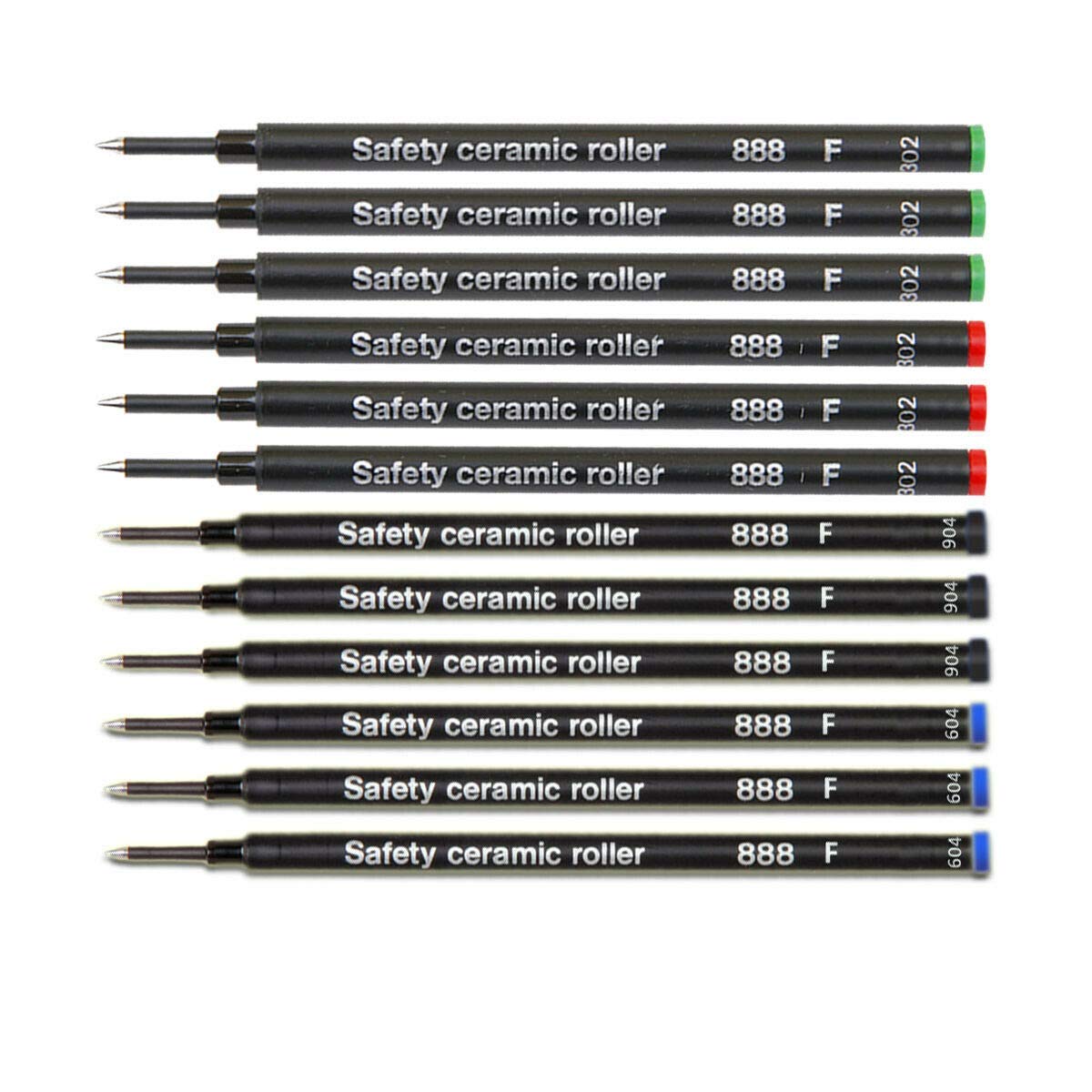
Rollerball pens occupy an odd middle ground between disposable ballpoints and fountain pens, and the refill is where that distinction becomes practical. Schmidt’s 888 F is a ceramic-tip rollerball refill designed to fit a range of standard rollerball bodies, and this 12-pack bundles the four common ink colors — green, red, black, and blue — in fine tip. The pitch is straightforward: buy in bulk, keep a pen working, and avoid hunting down single refills at the last minute. Whether that math works out depends heavily on how you write and what pen you already own.
The 888 F uses a ceramic ball tip rather than the steel tip found on most ballpoint refills. In practice, ceramic tips tend to lay down liquid ink more smoothly and with less of the faint scratchiness that ballpoints develop over time. The fine designation means a line width closer to a gel pen than a broad rollerball — useful for forms, margin notes, and anything where legibility at small size matters. The ink is liquid rather than the paste used in ballpoints, which is why rollerballs feel wetter on the page and dry more slowly.
Where these refills earn their keep is in everyday handwriting tasks: signing documents, filling out paperwork, taking meeting notes, annotating printouts, and color-coding planners or study materials. The four-color assortment in this pack is the practical part — black and blue cover most office and legal uses, while red and green are handy for corrections, grading, or organizing. Buying twelve at once makes sense for teachers, office administrators, or anyone who goes through ink steadily and resents paying per-unit prices at a stationery shop.
Compatibility is the first thing to check before ordering, and it is where most disappointment originates. Schmidt refills fit a number of European-style rollerball pens, but they are not universal. The 888 F is a standard-length rollerball refill, and some pen bodies — particularly slim or unusually designed models — will not accept it, or will accept it only with the spring from the original refill. Buyers should confirm the refill type their pen takes rather than assuming. The 12-pack format compounds the risk: a wrong fit means twelve unusable refills, not one.
- Tip: ceramic ball, fine point
- Ink: liquid rollerball ink in black, blue, red, and green
- Quantity: 12 refills, assorted colors
- Format: standard rollerball refill, spring compatibility varies by pen
Performance expectations should be realistic. Liquid ink rollerballs write dark and consistent, but they are more prone to smearing on glossy or coated paper and take a moment longer to dry than ballpoint ink. Left uncapped, the tip can dry out and need a scribble to restart. The fine tip reduces ink flow compared to a medium rollerball, which extends refill life somewhat but also means the writing experience is less lush — closer to a precise gel pen than a wet, expressive rollerball. Users who prefer a broad, wet line may find the fine tip underwhelming.
Compared with gel refills, the Schmidt 888 F offers a more traditional liquid-ink feel with generally good consistency across colors, though gel inks often dry faster and are more widely available in retractable pen formats. Compared with ballpoint refills, the rollerball writes noticeably smoother and darker but demands more care with paper choice and drying time. Compared with simply buying a new disposable rollerball each time, refilling is cheaper over the long run and less wasteful — provided the pen body is one you actually like using.
Durability of the refills themselves is reasonable for normal use. The ceramic tip resists wear better than some steel tips, and the ink supply is sized comparably to other standard rollerball refills. There is no way to gauge remaining ink visually on most pens, so running dry mid-task is a real possibility; the multi-pack mitigates this by keeping spares on hand. Storage matters too — refills left loose in a drawer with the tip exposed can dry or pick up grit, so keeping them capped or in packaging is worth the small effort.
This pack suits people who already own a compatible rollerball pen and write enough to justify bulk purchasing: teachers grading papers, office workers signing and annotating documents, students color-coding notes, or anyone who likes having a matched set of colors in the same pen body. It is less suitable for someone unsure of their pen’s refill compatibility, for writers who prefer broad wet lines, or for left-handed writers who struggle with slow-drying liquid ink and smearing. Casual users who write a few lines a week will likely find twelve refills more than they can use before the ink or tip degrades.
The honest summary: a sensible, workmanlike refill pack with a useful color spread and a smooth fine-tip writing feel, held back mainly by compatibility uncertainty and the slower drying typical of liquid ink. Check your pen first, and the rest is straightforward.