
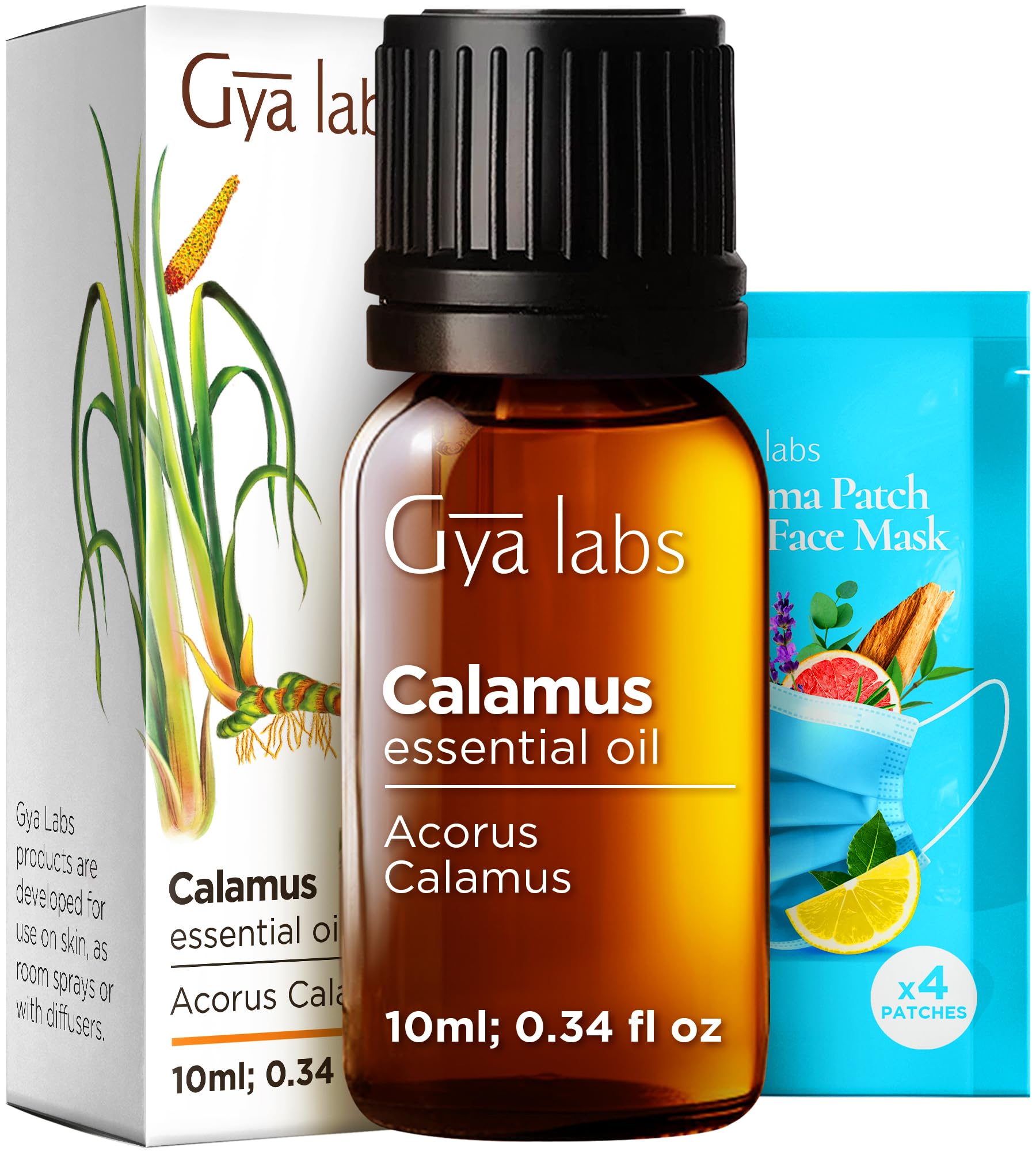
Calamus essential oil occupies an unusual corner of the aromatherapy market. It is not a crowd-pleaser like lavender or a workhorse like tea tree. It comes from the rhizome of Acorus calamus, a wetland plant with a long history in traditional medicine across parts of Asia and Europe, and its scent is best described as woody, slightly sweet, and earthy with a faint spicy edge. This 0.34 fl oz bottle is a small-format offering aimed at people who want to try the oil without committing to a larger purchase, and that framing is worth keeping in mind when assessing what it actually delivers.
The most common way this oil gets used is in a diffuser, and that is probably where it makes the most sense for most buyers. A few drops added to water produce a warm, grounding aroma that reads as more rustic than refined. It blends reasonably well with cedarwood, sandalwood, or citrus oils, though on its own the scent can feel heavy in a small room. Anyone expecting a bright or floral profile will be surprised; this is a root-derived oil and it smells like one. In dilution, it also shows up in carrier-oil blends for massage or chest rubs, and some users add a drop or two to shampoo or a scalp treatment. These are all plausible uses, but they come with caveats covered below.
On the functional side, the product is a single-ingredient essential oil in amber glass, which is the right packaging choice for light-sensitive oils. The 0.34 fl oz (roughly 10 ml) size yields around 200 drops, so a bottle lasts a while if used sparingly in a diffuser. The dropper insert, assuming it is the standard orifice reducer common to this format, helps control flow, though thicker oils can sometimes dispense unevenly. There is no stated purity standard on the label beyond the botanical name, and that matters here — calamus is a plant with meaningful safety considerations, and a brand that does not publish a batch-specific GC/MS report or clear asarone content leaves the buyer doing guesswork.
That safety point is the biggest trade-off and deserves more than a passing mention. Calamus oil contains beta-asarone, a compound that has raised concerns in toxicological research, particularly around oral consumption. Many regulatory bodies restrict or limit its use in food and cosmetics, and the oil is generally not recommended for internal use, for pregnant or nursing women, or for young children. Even in topical use, it should be heavily diluted and patch-tested. This is not a casual oil to slather on skin or hair without thought, and a product page that markets it for “skin and hair” without prominent dilution guidance is doing buyers a disservice. The practical takeaway is that this is a diffuser-first oil with cautious, occasional topical use at most.
Performance expectations should stay modest. In a diffuser, the scent lasts a reasonable session but does not linger for hours the way some resinous oils do. In a carrier oil at a 1–2% dilution, it absorbs without excessive greasiness, though the earthy aroma can dominate a blend. Anyone hoping for noticeable hair-growth or skin-clearing results should temper expectations; there is no strong clinical evidence supporting calamus oil for those purposes, and the traditional uses that do exist are largely anecdotal. Treat it as an aromatic and ritual ingredient rather than a treatment.
Compared with a more mainstream alternative like rosemary or tea tree oil, calamus is harder to justify as a first purchase. Rosemary offers a similarly herbal profile with a far better safety record for scalp and diffuser use, and it is cheaper per milliliter in most formats. Where calamus stands apart is character: its scent is distinctive and not easily substituted, which is the main reason a curious aromatherapy user might choose it. Against a blended “grounding” synergy oil, a single-origin calamus gives more control over dilution and blending, but it also puts more responsibility on the user to research safe use.
As for suitability, this bottle fits people who already keep a diffuser, enjoy earthy root-based scents, and are comfortable reading up on dilution and contraindications before use. It also suits hobbyist blenders who want a small quantity of an uncommon note to experiment with. It is a poor fit for beginners looking for an all-purpose oil, for anyone who wants something to apply neat to skin or scalp, for households with small children, and for pregnant or nursing users. Buyers who want documented purity testing may also want to look elsewhere or contact the seller for batch documentation before purchasing.
The 0.34 fl oz format is sensible for an oil this niche — it is enough to explore without overcommitting — but the lack of transparency around asarone content and testing keeps it from being an easy recommendation. It is a legitimate, characterful botanical oil with real limitations, and it rewards a careful user far more than an impulsive one.