
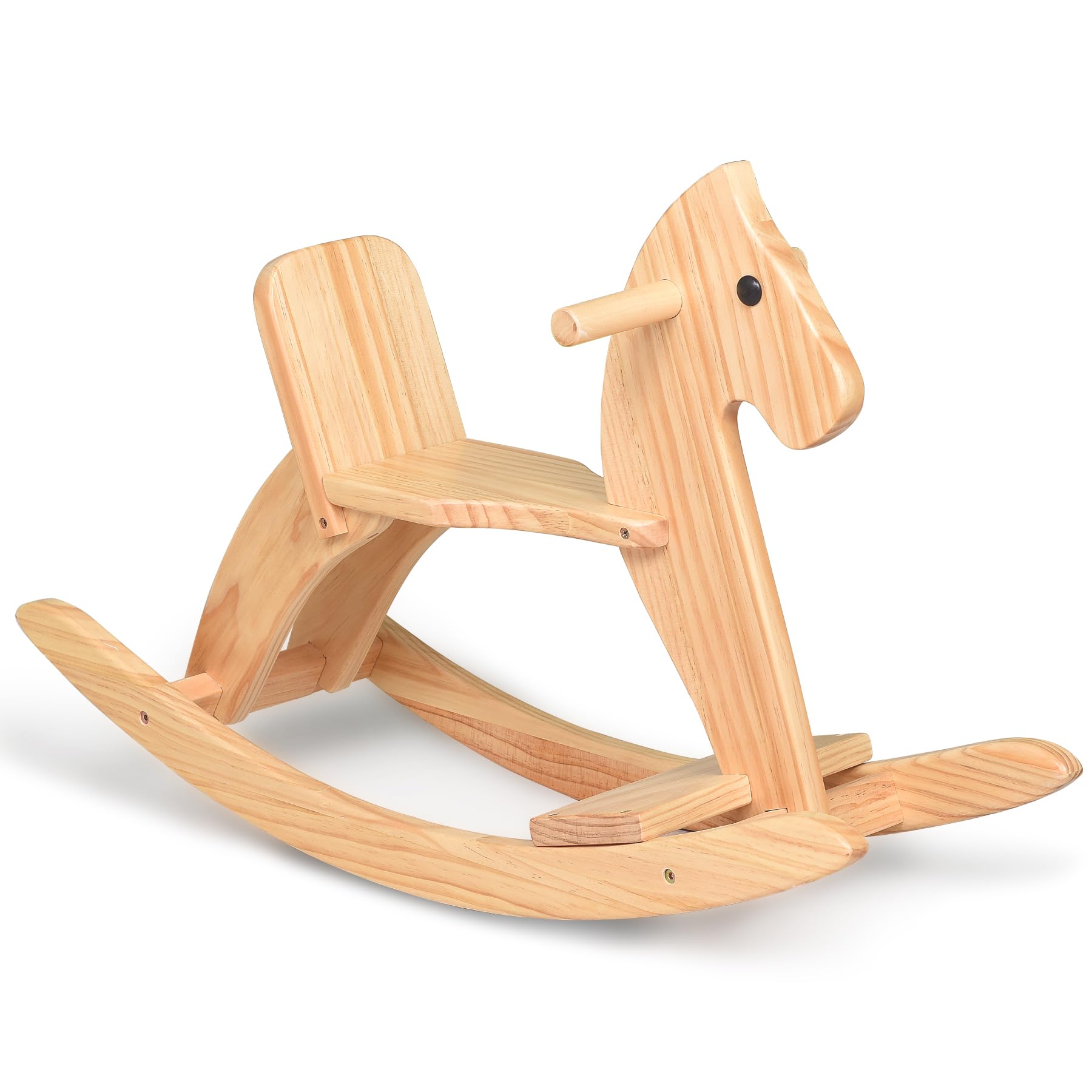
The KRAND Kids Wooden Rocking Horse sits in a slightly odd corner of the ride-on toy market. It is a wooden rocking horse in silhouette, but it is also a foot-pedal ride-on, which means it occupies the space between a traditional heirloom rocker and the plastic wheeled toys that dominate toddler playrooms. That hybrid positioning is the most interesting thing about it, and also the thing worth thinking through before buying.
In practice, the toy is used two ways. The curved wooden base allows the classic back-and-forth rocking motion that most parents picture when they hear “rocking horse,” and the foot pedals suggest a gliding or scooting motion along the floor. For a child in the roughly one-to-three-year range, this gives a bit more variety than a static rocker, which can lose its appeal after a few weeks. The pedals also give toddlers something to do with their feet, which matters for kids who are starting to want more active play but are not ready for a balance bike.
Functionally, the build is what you would expect from a wooden ride-on at this price tier. The frame is wood rather than molded plastic, which generally means a heavier, more stable feel and a less toy-like appearance in a living room. The seat is sized for small children, and the handles are positioned for a toddler’s grip. The foot pedals are the key differentiator: they are intended to let a child push off and propel the horse forward, adding a movement dimension beyond rocking. Parents should expect this to work best on carpet or a rug; on smooth hard floors the toy can slide more than a young child anticipates, and on thick carpet the pedals may not generate much glide at all.
That is the first real trade-off. A foot-pedal rocker is a compromise between two toys, and it does neither job quite as cleanly as a dedicated product. A pure rocking horse has a more satisfying, deeper rock. A wheeled ride-on or balance bike is more efficient for scooting. The KRAND does both adequately, but families with limited space might reasonably ask whether they need the hybrid at all. If your child is already scooting confidently on a wheeled toy, the pedal function here will feel like a step backward.
Assembly and finish are worth mentioning because they affect the first impression. Wooden toys of this type typically require some bolting together, and the hardware and instructions vary in quality across brands. Expect a modest setup session rather than an out-of-the-box experience. The wood finish should also be checked on arrival for rough edges or splinters, particularly around the seat and handles, since toddlers put their hands and mouths everywhere. This is not a criticism unique to KRAND, but it is the kind of check that matters more with wooden toys than with smooth plastic ones.
Who is this for? It suits families who want a wooden toy with a classic look, who have a toddler in the lower end of the age range, and who have carpeted or rug-covered play space. It also works well as a first ride-on for a child who is not yet coordinated enough for a balance bike. It is less suitable for older or more active toddlers who have already graduated to wheeled toys, for homes with only hard flooring where sliding becomes a hazard, and for parents who want a toy that will last through multiple children without showing wear. Wooden toys can be durable, but a painted finish on a frequently used rocker will scuff over time.
Compared with a plastic foot-to-floor ride-on, the KRAND offers a warmer look and a more substantial feel, but plastic alternatives are usually lighter, cheaper, and easier to wipe clean. Compared with a traditional wooden rocking horse, it adds a play mode but gives up some of the pure rocking motion. Neither comparison makes it a bad choice; it just clarifies that the hybrid design is the whole point, and buyers should want that specific combination.
Realistic expectations matter here. This is a small, simple toy, not a developmental tool, and its appeal will likely be strongest between roughly 12 and 30 months. After that, most children move on. It is best viewed as a short-window toy that looks good, encourages some balance and coordination, and gives a toddler a satisfying sense of movement. Families who buy it with that framing will probably be content; those expecting it to replace a balance bike or a full-size rocker may be disappointed.