
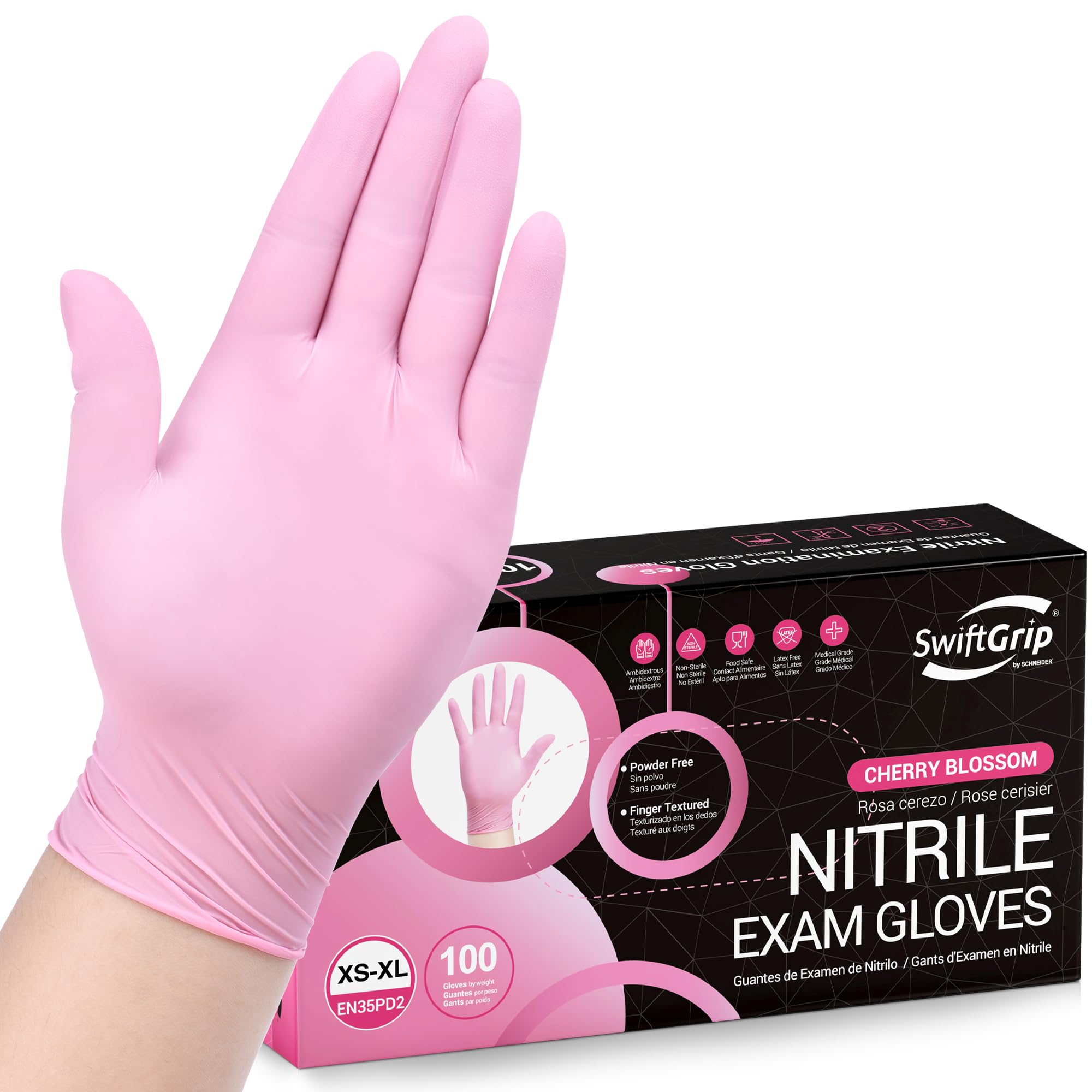
Pink nitrile gloves occupy a strange corner of the disposable glove market. They are sold partly on color, partly on the assumption that a glove marketed to estheticians must be gentler or more precise than the standard exam glove. The SwiftGrip 3-mil box sits squarely in that space: a powder-free, latex-free nitrile glove sold in a 100-count box, positioned for cleaning and beauty work rather than medical use. The question worth asking is whether the 3-mil thickness and the pink color amount to anything beyond aesthetics.
In practice, these get used in a few predictable settings. Someone dyeing hair wants a glove that won’t tear while pulling sections. An esthetician doing extractions or applying a mask wants enough tactile feedback to feel what they’re doing. A home cleaner wants a barrier against bathroom spray and grime without paying exam-glove prices. The 3-mil gauge is on the thin side for nitrile, which is the central trade-off to understand before buying.
What the specs actually mean
- Material: nitrile, latex-free and powder-free, which matters for anyone with a latex sensitivity or for tasks where powder residue would contaminate a surface
- Thickness: 3 mil, roughly the lower end of disposable nitrile; standard exam gloves often run 4 to 6 mil
- Format: 100-count box, medium size, ambidextrous
- Finish: the pink color is cosmetic, not functional, though it does make it easier to spot a dropped glove on a dark floor
Thin nitrile behaves differently from vinyl. It stretches more and conforms better to the hand, which helps with fine work like applying lash extensions or handling small hardware. It also resists punctures better than vinyl at the same gauge. What it does not do at 3 mil is survive sustained abrasion. Scrubbing a textured tub surface or gripping rough tools for an extended session will wear through the fingertips faster than a heavier glove would.
Where the glove performs well
For short-duration tasks, the thinness is an advantage. Dexterity is close to bare-handed, and the nitrile film transmits touch well enough that tasks requiring fingertip sensitivity — tweezing, applying product around the eyes, sorting small parts — don’t feel clumsy. The powder-free interior means hands don’t come out chalky, and the gloves go on reasonably well without powder, though anyone with damp hands will find them harder to pull on than powdered vinyl.
Fit runs consistent with standard medium sizing, and the cuffs sit at a typical wrist length. They are not extended-cuff gloves, so anyone doing deep cleaning with a lot of splashing should expect water to find its way in at the wrist. That is normal for this category, not a defect, but it limits how much protection they offer for wet work.
Limitations worth knowing
The most honest criticism is durability. At 3 mil, a single glove is a single-task item for anything abrasive. Cleaning grout, scouring, or handling rough-edged materials will produce tears at the fingertips, sometimes within minutes. Buyers used to 5- or 6-mil gloves will notice the difference immediately. The pink color also divides people — it reads as clinical to some and as a marketing gimmick to others, and there’s no functional benefit beyond visibility.
Size availability is another consideration. Medium is the most common hand size, but anyone at the edges of that range should check whether the box comes in small or large before committing to a 100-count purchase. A box of ill-fitting gloves is a box that sits in a closet.
How they compare
Against standard blue or black 4-mil nitrile exam gloves, the SwiftGrip is thinner and less durable but offers slightly better tactile feedback and costs less per glove in most listings. Against vinyl gloves, nitrile wins on stretch and puncture resistance, though vinyl remains cheaper for tasks where fit doesn’t matter. Against heavier 6-mil industrial nitrile, there’s no contest on toughness — the heavier glove is the right choice for mechanic work or heavy cleaning, and the SwiftGrip is not trying to compete there.
Who should buy these
These suit estheticians, hair stylists, tattoo artists doing prep work, and home users who want a lightweight barrier for short tasks like dyeing hair, applying skincare, or wiping down surfaces. They are also reasonable for food prep where latex allergies are a concern. They are a poor fit for anyone doing sustained abrasive cleaning, heavy mechanical work, or tasks requiring chemical resistance beyond incidental splashes. Buyers who go through gloves quickly and prioritize cost per glove over longevity may find the thinness acceptable; those who want one glove to last through a full cleaning session should look at 5-mil or heavier.
At the end of the day, this is a competent thin nitrile glove with a cosmetic color. It does the job it’s sold for, provided the job is light-duty and short. Expect to use more of them than you would a heavier glove, and budget accordingly.