
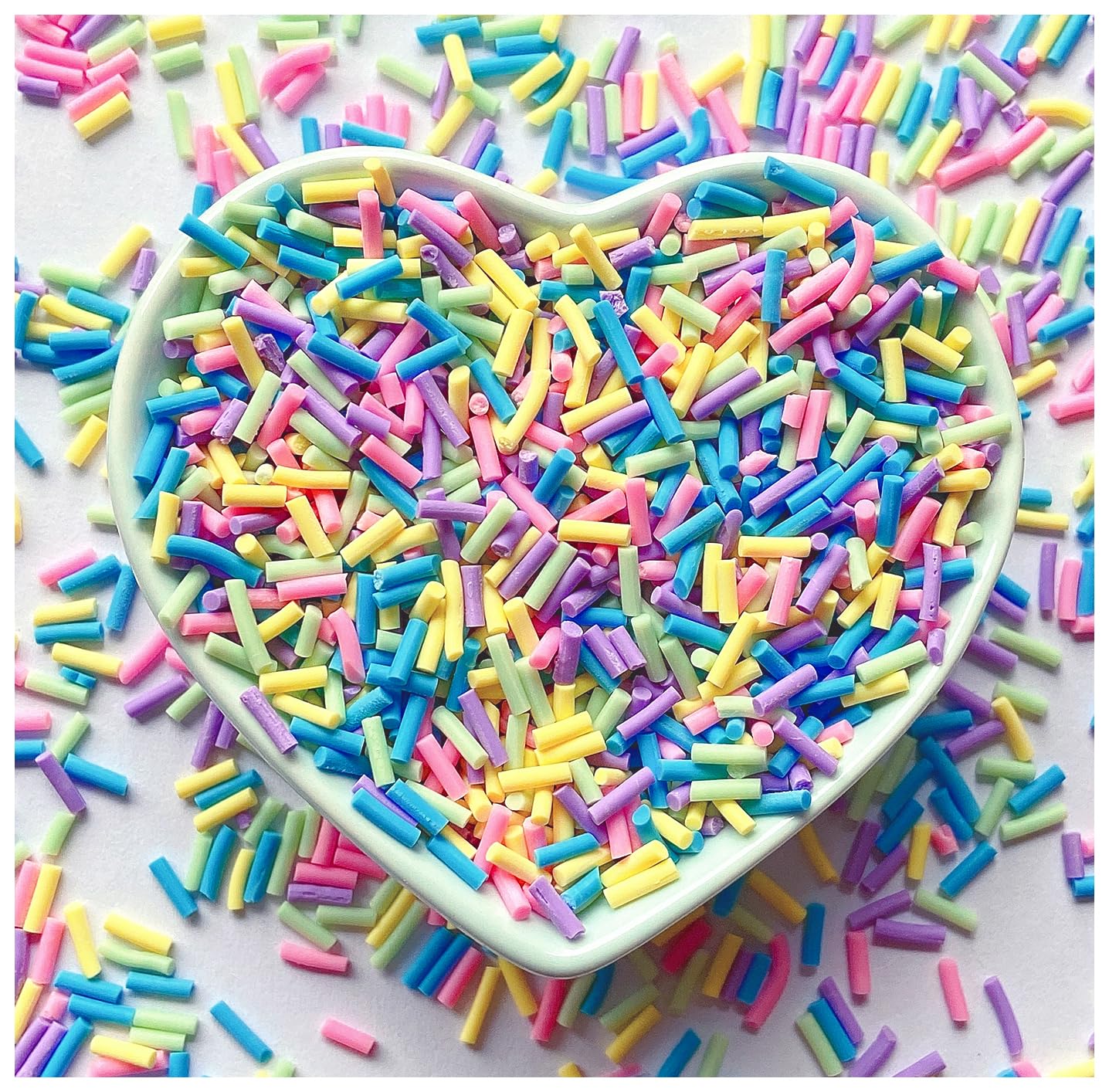
EHOPE’s 50g jar of fake sprinkles in the purple-and-blue mix is one of those craft supplies that looks more versatile in photos than it sometimes proves in practice. The product is a bag of small polymer clay slices and resin pieces shaped to resemble candy sprinkles, intended for nail art, resin casting, phone case decoration, and similar DIY projects. It is not food, and the packaging and product type make that clear enough, though the resemblance is close enough that anyone with small children in the house should treat it accordingly.
The first thing to understand is what these pieces actually are. Polymer clay sprinkles are thin slices cut from clay canes, which means each piece has a fixed pattern running through it. The resin pieces in the mix tend to be slightly glossier and more uniform. In a 50g bag, you get a fairly large quantity, but the pieces are small and lightweight, so the volume is not as generous as the weight might suggest. The purple-and-blue colorway leans cool and slightly muted rather than neon, which makes it easier to work into pastel or candy-themed designs without the result looking garish.
In real-world use, these show up in a few predictable places. Nail technicians use them encapsulated in clear gel or acrylic, or pressed into a top coat before curing. Resin crafters suspend them in clear epoxy for shaker molds, keychains, and coasters. Phone case decorators glue them onto clear cases or set them in resin doming. The pieces are small enough to sit flat in most applications, though the clay slices vary in thickness, and a few will need trimming or will sit slightly proud of the surface. That variance is normal for this category but worth knowing if you expect every piece to be identical.
Key functional details matter here. The bag contains a mix of shapes, typically including rods, rounds, and small irregular bits, so you cannot count on a specific ratio of any one shape. The colors are dyed into the clay rather than painted on, which means they generally hold up in resin without bleeding, though some users report slight color transfer when using certain solvents or strong pigments. The pieces are not sealed, so they can pick up dust if left open, and static makes them cling to fingers and tools. A small dish and a pair of tweezers solve most of that.
There are real trade-offs. The biggest is consistency. Because these are cut clay slices, thickness and edge quality vary, and some pieces arrive broken or crumbly. In a 50g bag, that waste is tolerable, but it is not a precision product. The second is color accuracy: the purple and blue read differently under indoor versus daylight, and the mix skews more purple than the product photo suggests. The third is scale. These are best for small-scale work. On a large resin piece, they disappear into the background, and on a cake, they would be far too small to read as decoration, despite the “cake” in the product name. They are decorative only and should never touch food.
Compared with loose glitter or confetti-style sprinkles, clay slices offer more dimension and a more realistic candy look, but they are bulkier and less uniform. Compared with pre-made resin sprinkles sold in single colors, this mix gives variety at the cost of control over the palette. Compared with actual edible sprinkles, there is no contest: these are craft-only and should be stored away from the kitchen.
Who is this for? It suits casual crafters, nail artists doing occasional encapsulated designs, and resin hobbyists who want a cheap, colorful filler for small projects. It is less suitable for professional nail techs who need uniform, calibrated pieces, for anyone making food-contact items, and for crafters who want a specific shape or color ratio rather than a random mix. As a starter bag for experimentation, it is reasonable; as a precision material, it is not.