
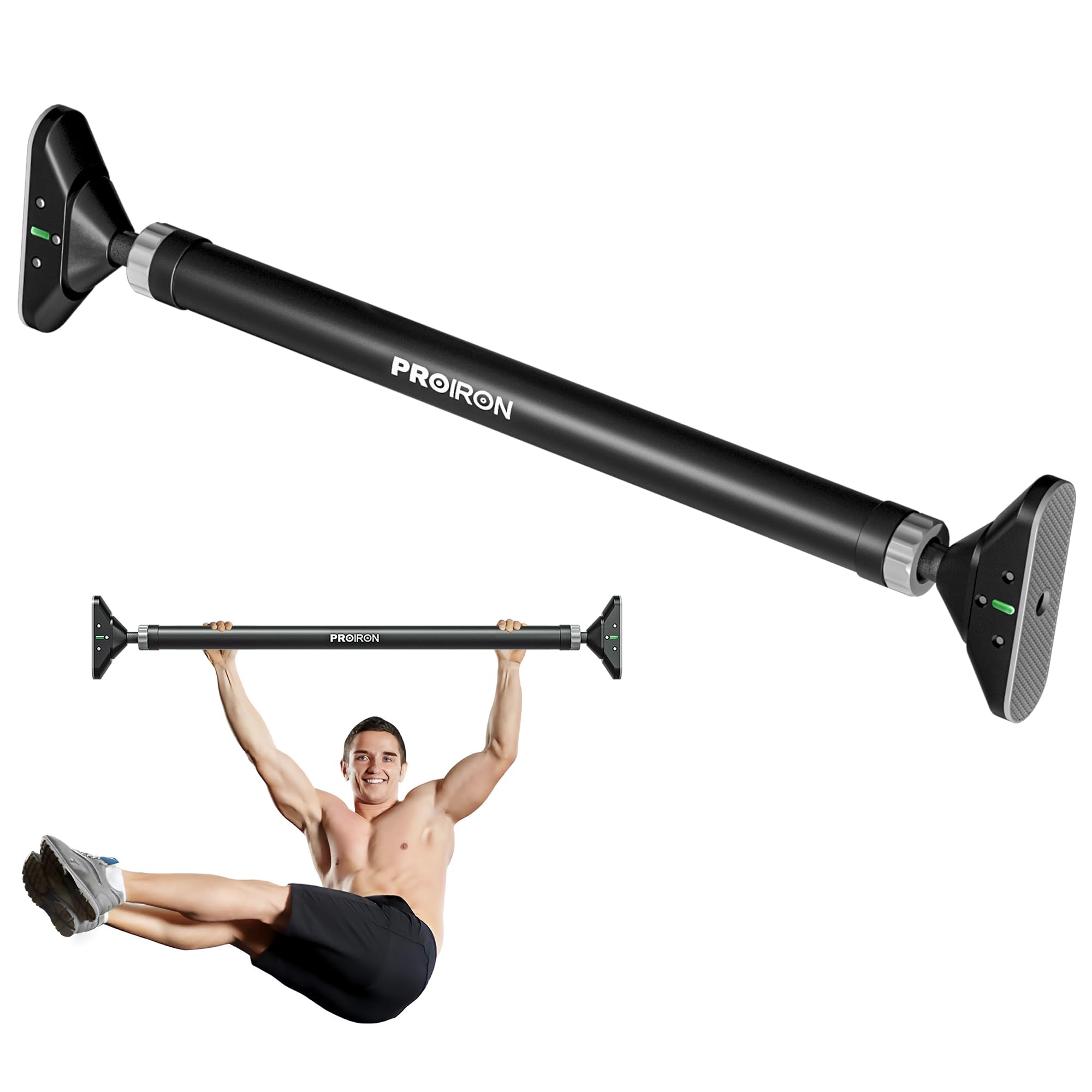
The PROIRON Door Pull-Up Bar is a telescoping chin-up bar designed to fit doorways from 28.3 to 38.2 inches wide. It’s aimed at people who want to add pull-ups or chin-ups to their home routine without permanently installing hardware. The bar uses a tension-based mounting system, wedging itself between the door frame with rubber pads at each end. This review covers how it works in practice, where it falls short, and who might find it useful.
In real-world use, the PROIRON bar is typically set up in a doorway that gets regular foot traffic. Because it relies on outward pressure, installation is quick: you extend the bar until it’s snug, then twist the locking mechanism to secure it. The rubber pads prevent scratching and provide grip against the frame. However, the bar must be checked for tightness before each use—vibration or repeated loading can cause it to loosen slightly. It’s not a set-and-forget piece of equipment.
Functionally, the bar offers a few key features. The telescoping design accommodates a range of doorway widths, making it versatile for different homes. The steel construction feels sturdy, and the foam grips are comfortable for most hand sizes. The bar supports pull-ups, chin-ups, and hanging leg raises, though the latter requires careful balance. The maximum user weight is typically around 300 pounds, but that assumes proper installation and a solid door frame. The bar is not suitable for doorways with glass panels or weak frames.
One limitation is the lack of a locking pin or safety clip. The tension mechanism relies on friction and the user’s ability to tighten it sufficiently. Over time, the rubber pads may compress or wear, reducing grip. Also, the bar can leave marks on some door frames despite the pads, especially if the frame is painted or has a soft finish. Another trade-off is that the bar blocks the doorway when installed, so it’s best for less-used doorways or for quick removal after workouts.
Compared to a wall-mounted pull-up bar, the PROIRON is less permanent and doesn’t require drilling, but it’s also less stable. Wall-mounted bars offer a fixed, rock-solid platform for heavy training, while telescoping bars like this one are more prone to slight movement during use. For light to moderate use, the difference may not matter, but serious athletes might find the flex distracting. Another alternative is a doorway pull-up bar that hooks over the frame—these are often cheaper but can damage the frame’s top trim and are limited to standard door sizes.
Who is this for? It suits renters or homeowners who want a temporary pull-up solution without drilling, and who have a suitable doorway (solid frame, standard width). It’s also good for people who are just starting with bodyweight exercises and need an affordable entry point. However, it’s not for those who want a permanent, wobble-free bar for intense training, or for doorways that are too narrow or too wide. It’s also not ideal for very tall users, as the bar’s height is fixed by the door frame, which may be too low for comfortable hanging.
In terms of performance expectations, the PROIRON bar handles standard pull-ups and chin-ups well for users up to about 220 pounds, provided it’s installed correctly. Heavier users may notice more flex. The grips are adequate but can become slippery with sweat, so chalk or gloves might be needed. The bar’s finish is basic—painted steel—and may show wear over time. Assembly is straightforward, but the instructions are minimal, so careful adjustment is key.
Overall, the PROIRON Door Pull-Up Bar is a functional, no-frills option for light home workouts. It’s not the most stable or durable bar on the market, but it’s a reasonable choice for casual users who prioritize portability and ease of setup. Just be prepared to check tightness regularly and accept that it’s a compromise compared to more permanent installations.