
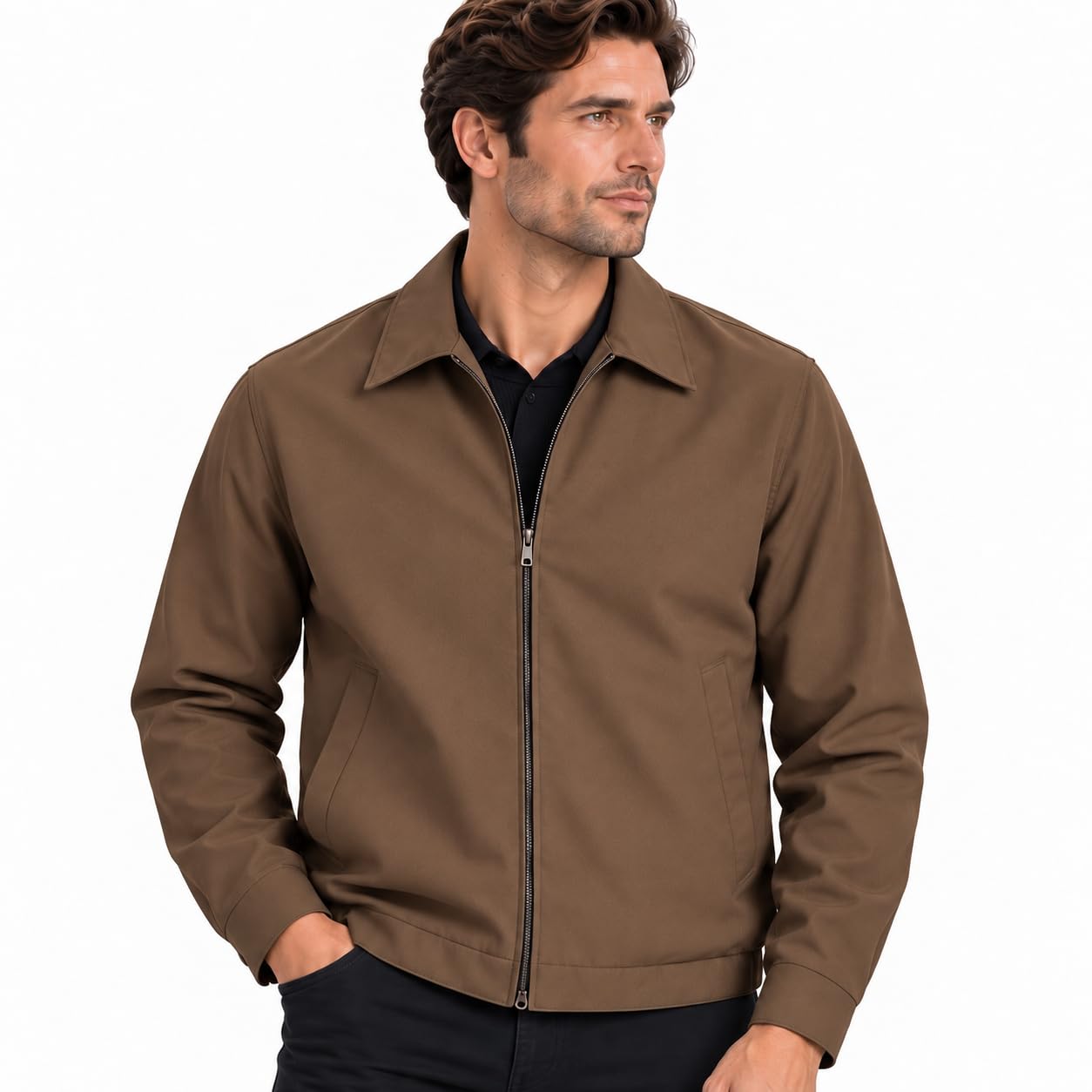
Perry Ellis is a brand most people associate with office-ready polo shirts and dress-casual separates rather than technical golf apparel. The Lightweight Golf Windbreaker sits somewhere between those worlds. It is a zip-front, water-resistant shell aimed at golfers who want a light outer layer for breezy mornings or an unexpected drizzle, without committing to a full performance rain suit. Based on the stated specifications and how this category of jacket typically behaves, here is a realistic look at what it offers.
The jacket’s core purpose is straightforward: block wind, shed light moisture, and pack down small enough to live in a golf bag. It uses a synthetic woven shell with a water-resistant finish rather than a fully waterproof membrane, which is an important distinction. The finish will handle mist, a brief shower, or damp grass, but it is not designed to keep you dry through sustained rain. The full-length zip, stand collar, and elasticized cuffs and hem are the features doing the actual work here, sealing out drafts at the points where wind usually gets in. There is typically at least one zippered hand pocket, useful for tees or a glove, though storage is modest.
In real-world use, this is the kind of layer that gets worn for the first three or four holes on a cool morning and then comes off once you warm up. Golfers tend to keep it folded in the bag for the shoulder seasons, when the forecast is uncertain and a short shower could roll through. It also works for range sessions, early tee times, and the walk from the car to the clubhouse. Because it is lightweight, it does not add much bulk under the arms during a swing, which matters more than most casual buyers realize. A stiff or heavy jacket restricts rotation; a thin shell like this generally does not.
Where the jacket is likely to fall short is in breathability and durability. Water-resistant finishes on lightweight shells tend to trap heat during exertion, so on a humid day you may feel clammy even though the fabric is thin. The finish also degrades over time with washing and abrasion, so the water resistance you get on day one is not the water resistance you will have after a season of regular use. Re-treating with a spray-on DWR product is possible but adds a maintenance step most buyers do not anticipate. The synthetic shell is also not especially abrasion-resistant; brushing against cart paths, branches, or a bag strap can leave marks.
Compared with a dedicated golf rain jacket from a technical brand, this Perry Ellis piece is lighter and less expensive but also less protective. A true rain shell usually has sealed seams, a higher waterproof rating, and better ventilation, at the cost of weight and price. Compared with a softshell jacket, it is more packable and better at blocking wind but less warm and less stretchy. It is closer in spirit to a packable windshirt than to outerwear built for weather. Buyers expecting rain-suit performance will be disappointed; buyers wanting a wind layer with mild water resistance will find it adequate.
Sizing and fit deserve a note. Golf outerwear often runs slightly generous to allow layering over a polo, and Perry Ellis in general tends toward a classic, roomier cut. That is fine for most body types but can feel boxy on slimmer frames. The stand collar is useful for wind but can feel stiff against the neck when fully zipped. These are minor trade-offs, not dealbreakers, but worth knowing before ordering online.
As for who should consider it: this jacket suits the casual golfer who plays in mild-to-cool conditions and wants a light, packable layer that looks presentable at the clubhouse. It also works for spectators, caddies, or anyone who spends hours outdoors in changeable weather and wants something easy to carry. It is not suitable for players who regularly golf in heavy rain, who need high breathability during hot-weather rounds, or who expect a technical shell to last several seasons of hard use. It is also not a substitute for a warm midlayer on cold days; it blocks wind but provides little insulation.
The honest summary is that this is a competent, lightweight windbreaker with modest water resistance, best treated as a convenient extra layer rather than serious weather gear. It does its job within a narrow range, and buyers who understand that range will be satisfied. Those expecting more should look at a purpose-built rain jacket instead.