
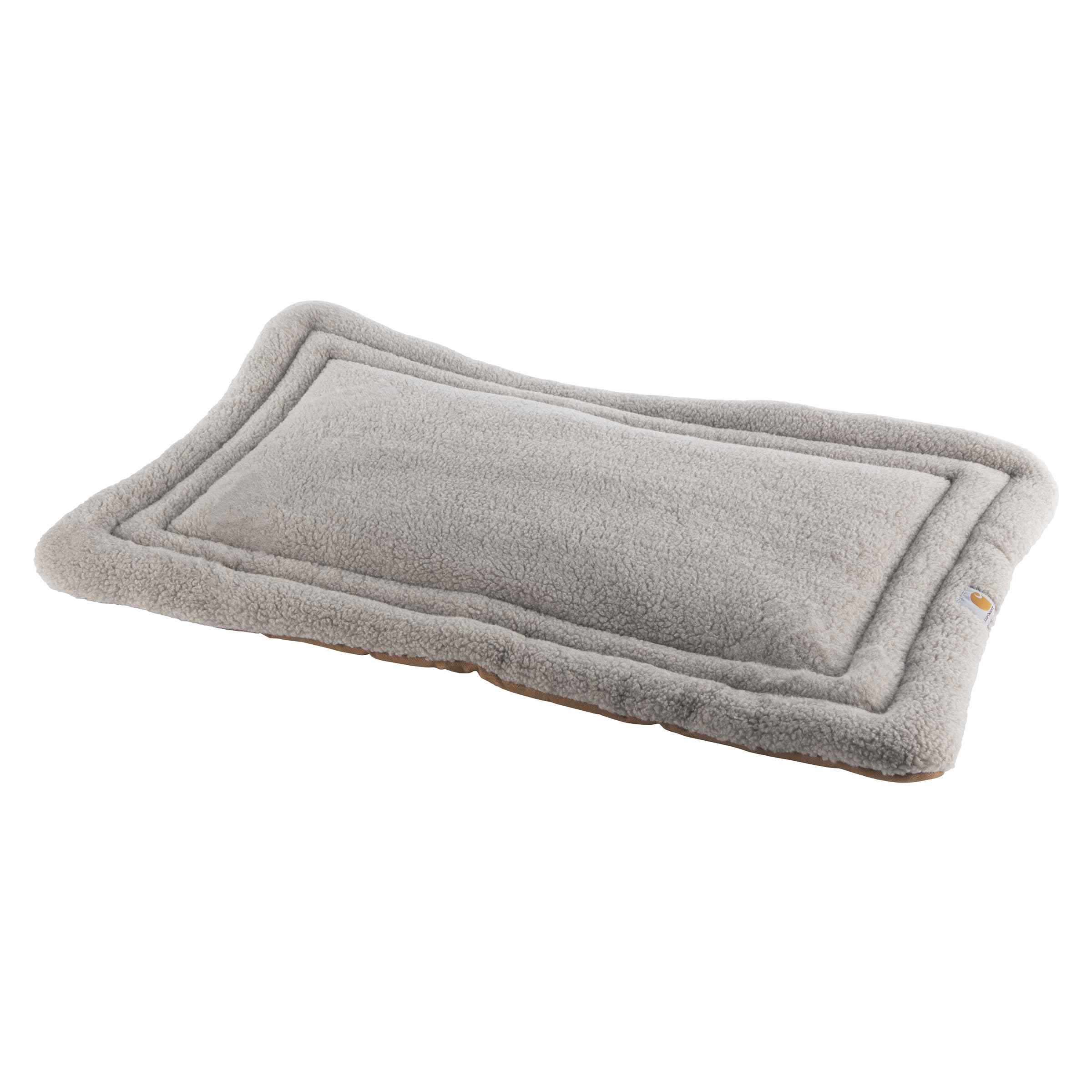
The Carhartt Firm Duck Sherpa-Topped Napper Pad sits in an odd but useful corner of the market. It is not quite a camping pad, not quite a dog bed, and not quite a work-site cushion, yet it borrows from all three. The idea is straightforward: a layer of firm duck canvas on the bottom, a sherpa fleece face on top, and enough structure to keep it from collapsing into a puddle when you put it on uneven ground. In practice, it works best for people who need a durable, portable surface to sit or lie on in places where comfort is secondary to toughness.
The most common use case is probably job-site downtime. Contractors, landscapers, and mechanics who take breaks on gravel, concrete, or the bed of a truck tend to appreciate that the canvas side resists abrasion and moisture far better than a fleece blanket or a foam stadium seat. It also shows up in tailgating, hunting blinds, and casual camping, where the sherpa face adds warmth against cold ground. The pad rolls or folds reasonably well, though the firm duck material does not compress the way a soft fleece would, so it takes up more room in a pack or truck cab than you might expect.
Functionally, the construction is the main story. The duck canvas is the same heavy-weight cotton weave Carhartt uses in its work jackets, which means it handles scuffs, dirt, and light moisture without much complaint. The sherpa top is synthetic and softer than the canvas, but it is not a plush blanket; it has a slightly dense, utilitarian feel. Seams are stitched to hold up to regular use, and the overall pad has a stiffness that helps it stay flat when unrolled. That stiffness is a double-edged feature. It keeps the pad from bunching under you, but it also means the pad does not drape over irregular surfaces like a soft quilt would. On a sloped or rocky patch, you may find yourself adjusting it more than a flexible mat.
Comfort is where expectations need calibrating. The padding is modest. This is not a sleeping pad designed for a full night’s rest on hard ground; it is closer to a thick utility mat. For sitting, kneeling, or a short lie-down, it is adequate. For extended sleep, most people will want additional foam or an air pad underneath. The sherpa face is warm, which is welcome in cold weather but can feel clammy in summer heat, and it is not removable or washable as a separate layer. Spot cleaning is the realistic maintenance path, and the canvas will absorb stains over time. That is normal for work-grade gear, but it is worth knowing before you buy.
Compared with a standard foam camping mat or a folding stadium seat, the Napper Pad trades plushness for durability. A foam mat is lighter and packs smaller, but it tears and compresses over time. A stadium seat offers more back support but is bulkier and less useful for lying down. The Carhartt pad sits between those categories: more rugged than a camping mat, more versatile than a stadium seat, but not as comfortable as either for its specific purpose. It is also heavier than most ultralight options, which matters if you are carrying it any distance.
Who is it for? People who work or spend time outdoors in rough conditions and want a surface that can take abuse without falling apart. It suits truck beds, garages, job sites, hunting camps, and cold-weather tailgates. It is less suitable for backpackers counting ounces, side sleepers who need real cushioning, or anyone expecting a washable, hotel-soft pad. If you want a durable utility layer that doubles as a warm seat, this is a reasonable pick. If you want comfort-first camping gear, look elsewhere.