
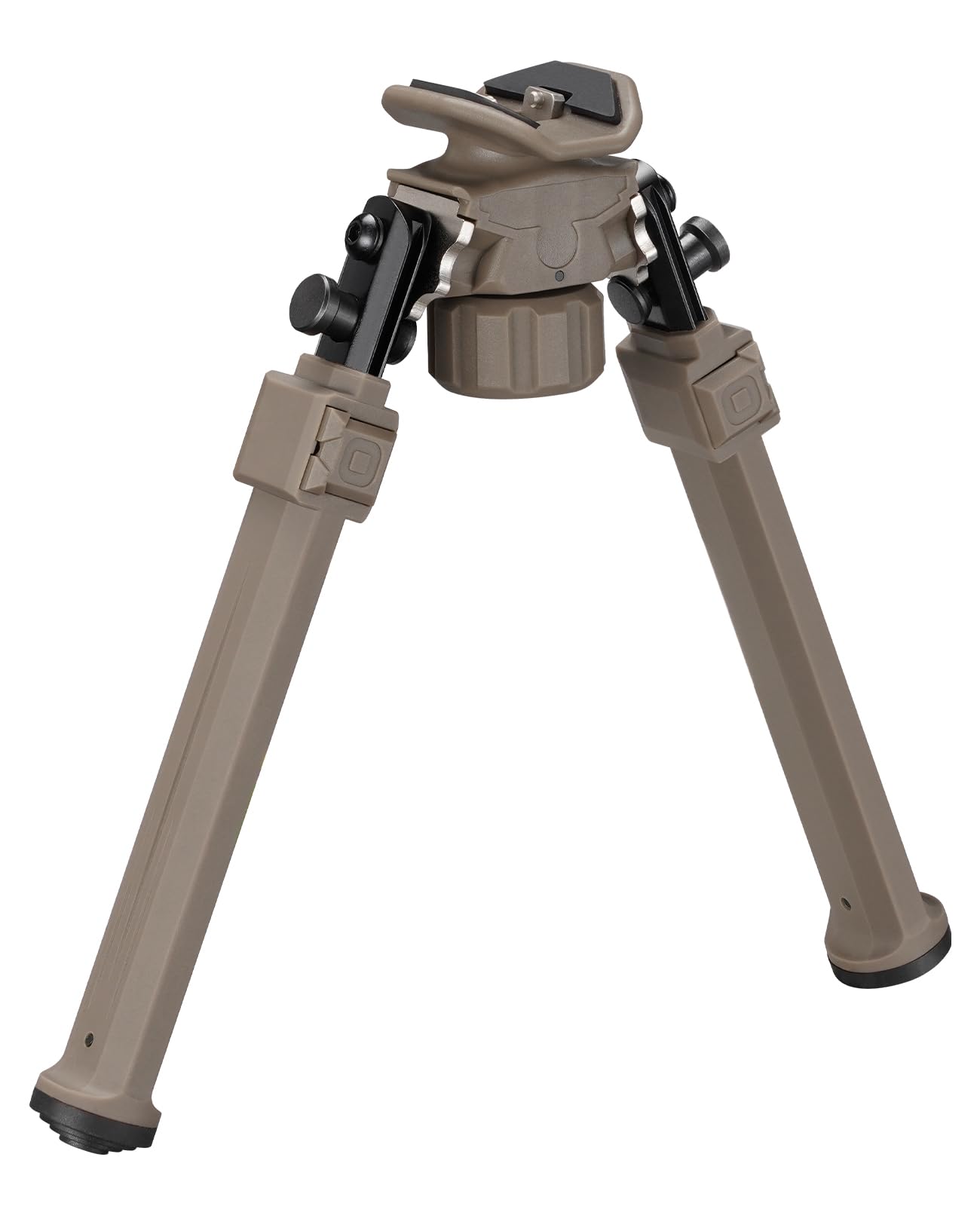
The MidTen Sling Swivel Stud Bipod Sling Mount is a folding bipod that attaches to a rifle’s existing sling swivel stud, eliminating the need for a separate rail or adapter. Finished in flat dark earth, it’s aimed at hunters and shooters who want a lightweight, low-profile support option without modifying their stock. This review covers its design, real-world performance, and where it falls short.
Installation is straightforward: the bipod clamps directly onto the sling stud, typically found on the underside of most bolt-action rifle stocks. The mount uses a simple screw-tightening mechanism, and the legs fold forward or backward via a spring-loaded detent. The flat dark earth finish is a molded polymer or painted metal (the manufacturer doesn’t specify, but the feel suggests a durable polymer blend). The legs are notched for height adjustment, offering several positions from roughly 9 to 11 inches. The feet are rubberized for grip on hard surfaces. A sling swivel is integrated into the mount, so you don’t lose your sling attachment point—a thoughtful touch.
In the field, this bipod shines for its intended purpose: providing a stable rest for occasional shots. For a hunter sitting in a blind or waiting at the edge of a food plot, the legs deploy quickly and quietly enough (though not silent—there’s a distinct click as the detent engages). The folding mechanism is stiff, which is good for preventing accidental deployment, but it also means you need to firmly snap the legs into place. The panning feature (if present—check model) allows some side-to-side movement, but it’s not a full ball-head; it’s limited to a few degrees of rotation.
On the range, the bipod does what it says: it holds the rifle steady for supported shooting. However, the inherent play in the sling stud attachment means it’s not as rigid as a rail-mounted bipod. There’s a slight wobble that becomes noticeable when you preload the bipod (leaning into it). For hunting accuracy at 100–200 yards, that’s acceptable, but for precision shooting or long-range work, it’s a compromise. Also, the height adjustment is limited; if you need to shoot from a seated position on uneven ground, you may find the maximum height insufficient.
One limitation is the attachment method itself. Sling swivel studs are not standardized in size or thread pitch, so fit can vary. On some rifles, the stud may be too short or too long, requiring shims or a different stud. The clamp design relies on friction, and over-tightening can damage the stock’s finish or crush the wood. It’s a trade-off for the convenience of not needing a rail.
Compared to a dedicated rail-mounted bipod (like a Harris or Atlas), the MidTen is lighter and less expensive, but it sacrifices stability and adjustability. A rail bipod offers a more solid lockup and often more leg positions, but requires installing a rail—an extra cost and permanent modification. For the casual hunter who rarely uses a bipod, the MidTen’s attach-and-go nature is appealing.
Who is this for? It suits hunters who want a lightweight, packable bipod for occasional use and don’t want to alter their rifle. It’s also fine for range plinkers who want a simple rest. Who is it not for? Precision shooters, long-range competitors, or anyone who needs a rock-solid, fully adjustable platform. Also, if your rifle lacks a sling stud or has an unusual stud, look elsewhere.
In summary, the MidTen Sling Swivel Stud Bipod is a functional, affordable option that trades some rigidity for convenience. It’s not a premium product, and it doesn’t pretend to be. For its niche—hunters and casual shooters—it gets the job done, provided you understand its limitations.