
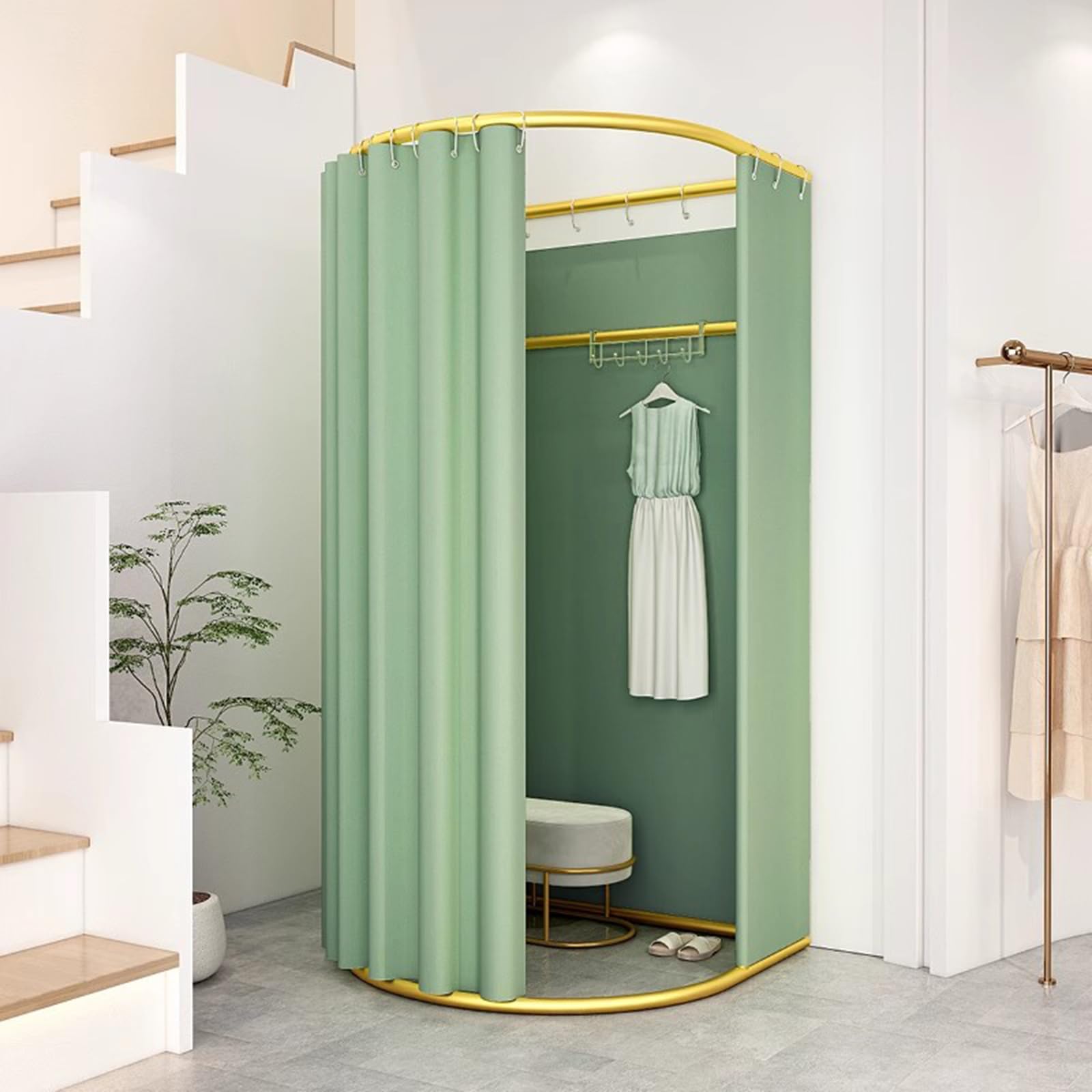
Pop-up fitting rooms occupy an odd middle ground between event equipment and furniture. They exist because stores, market stalls, and photo shoots occasionally need a private changing space without the cost or permanence of a built room. This 200x100x95cm model in green is a representative example of the foldable, curtain-based type, and it is worth understanding what that category actually delivers before deciding whether it fits a given situation.
The typical use case is straightforward: a boutique hosting a trunk show, a vendor at a craft or clothing market, a photographer needing a quick wardrobe-change area, or a temporary retail setup in a mall corridor. The frame assembles into a roughly person-height enclosure, the fabric curtain wraps the sides, and the whole thing collapses for transport. In that role, it solves a real problem. Shoppers at a pop-up can try items without walking to a distant restroom, and staff avoid the awkwardness of improvising a curtain over a doorway.
Functionally, the dimensions matter more than the marketing. At 200cm tall, the booth clears most adults, though taller users will notice the ceiling. The 100x95cm footprint is compact—enough to stand and change, but not enough to move around freely or store a bag and coat comfortably. The shading curtain is the core feature, and its opacity is the thing to verify. Most curtains of this type block a sightline from a few meters away but are not fully blackout; backlighting from a bright window or overhead fixture can silhouette movement. That is acceptable for a dim market hall and less so in a brightly lit mall concourse.
The folding mechanism is the other defining trait. These frames generally use a pop-up or collapsible pole design, and setup is measured in minutes rather than seconds. The trade-off is that repeated assembly and disassembly puts wear on joints and fabric seams. Buyers should expect the frame to loosen slightly over time, and the curtain fabric—usually a synthetic blend—to crease when folded and hold those creases for a while after setup. It is not a piece that will look crisp after a season of weekly use.
Stability is a recurring weak point across this product class. A lightweight frame with a hanging curtain is vulnerable to bumps and to air movement in drafty spaces. On a hard floor it may shift unless weighted at the base or placed against a wall. Outdoors, even light wind makes it impractical without additional anchoring. Anyone planning to use it in an open-air market should factor in sandbags or stakes, which are rarely included.
Compared with alternatives, the choice usually comes down to three options. A permanent dressing room with rigid walls and a locking door is far more private and durable but costs many times more and cannot be moved. A simple curtain-on-a-rail or a folding screen is cheaper and lighter but offers less enclosure and no roof, so it does not provide the same sense of a dedicated room. This booth sits between them: more enclosed than a screen, more portable than a built room, and priced accordingly.
Who is it for? Small retailers and market vendors who need occasional privacy on a budget, event organizers setting up temporary try-on areas, and photographers or stylists who want a changing space on location. It also suits home sellers staging a boutique-style closet or craft-fair sellers displaying apparel.
Who is it not for? Anyone needing daily, long-term use in a busy store, where a rigid room will hold up better. Shoppers expecting hotel-grade privacy will be disappointed by the curtain’s translucency and the lack of a secure latch. And anyone using it outdoors regularly should look for a heavier frame with proper anchoring rather than this lightweight type.
Realistic expectations are the key. Treated as occasional, temporary infrastructure, this fitting room does its job at a modest price. Treated as permanent retail fixtures, it will show its limits within months. The purchase decision should rest on how often it will be assembled, how bright the surrounding light is, and whether the floor surface is stable enough to keep a light frame in place.