
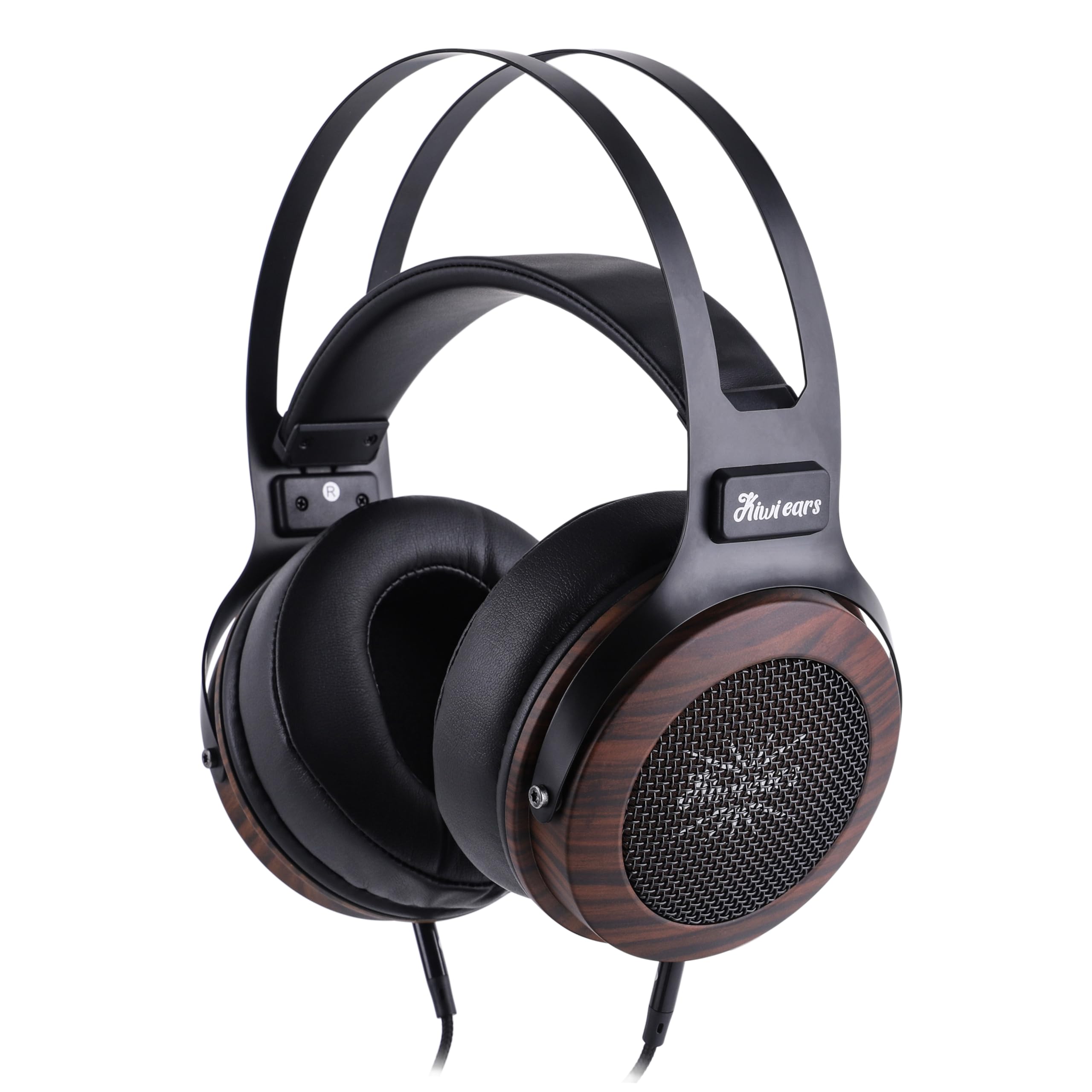
The Linsoul Kiwi Ears Altruva is a pair of wired, over-ear headphones that tries to bridge the gap between studio-style monitoring and everyday listening. With a single 50mm dynamic driver in each earcup, it leans on a simple, proven design rather than multi-driver arrays or active electronics. That approach has its charms, but it also comes with some compromises that are worth considering before you commit.
Out of the box, the Altruva feels solid in a way that’s reassuring without being luxurious. The plastic and metal construction is functional, and the padded headband distributes weight well enough for long sessions. The clamping force is moderate—not too tight, but not loose either—so they stay put during focused listening. The cable is detachable, which is always a plus for repair or replacement, and it terminates in a standard 3.5mm jack, so it works with most phones, laptops, and dedicated amps.
On the sound side, the Altruva presents a neutral-ish signature with a slight emphasis on the lower mids and a gentle roll-off in the top treble. What that means in practice is that vocals and guitars come through with clarity and body, while cymbals and high-frequency detail are present but not pushed forward. The 50mm driver handles dynamics well—quiet passages stay quiet, and louder sections don’t turn into a mess—but it’s not a bass cannon. The low end is there, but it’s more about punch than deep sub-bass rumble. If you’re mixing or editing audio, this kind of honest response helps you make decisions without the music being colored too aggressively. For casual listening, it’s enjoyable, though you might find yourself wanting a bit more excitement for certain genres like electronic or hip-hop.
One of the standout features is the open-back design. Unlike closed-back headphones, the Altruva lets air move through the earcups, which creates a more spacious and natural soundstage. Instruments feel like they’re placed in a room around you, rather than inside your head. This is a big plus for critical listening or for anyone who appreciates a sense of depth in recordings. But it also means that sound leaks both ways. People around you will hear what you’re playing, and you’ll hear them—the hum of a fridge, a keyboard clatter, or a neighbor’s TV. That makes these headphones a poor choice for open offices, commutes, or any shared quiet space.
There are a few other trade-offs to keep in mind. The Altruva requires a decent amount of power to sound its best. On a phone or a basic laptop, it will get loud enough, but the dynamics can feel a bit flat. Plug them into a dedicated headphone amp or a decent audio interface, and they open up noticeably. So, if you’re planning to use them exclusively with a smartphone, you might not be getting the full experience. Also, the lack of any included carrying case or pouch is a minor annoyance. The headphones don’t fold flat, so they take up a fair amount of space in a bag, and without a case, they’re more exposed to scratches and bumps.
Compared to closed-back alternatives in the same price range—like the Audio-Technica ATH-M50x or the Beyerdynamic DT 770 Pro—the Altruva offers a more natural soundstage and a less fatiguing treble. But those closed-back models are more versatile for tracking and portable use. The Altruva is more of a specialist tool. It’s also worth noting that these are not wireless, so if you’re used to the convenience of Bluetooth, that’s another adjustment.
Who is the Altruva for? In my view, it’s best suited to home listeners who have a quiet room and a decent amp, and who value a natural, honest presentation over bass boost or extra features. It’s also a reasonable choice for amateur audio engineers who want an affordable reference pair for mixing and editing. On the other hand, if you need headphones for travel, for a noisy environment, or if you prefer a more colored, fun sound, you’d be better off with a closed-back or wireless model.
In the end, the Kiwi Ears Altruva is a competent, if not spectacular, pair of wired monitoring headphones. It does what it sets out to do—deliver a clear, balanced sound without gimmicks—but it doesn’t go above and beyond. The build is fine, the comfort is okay, and the sound is honest. If that’s what you’re after, and you can work around the open-back limitations, it’s worth a listen. Just don’t expect it to do everything.