
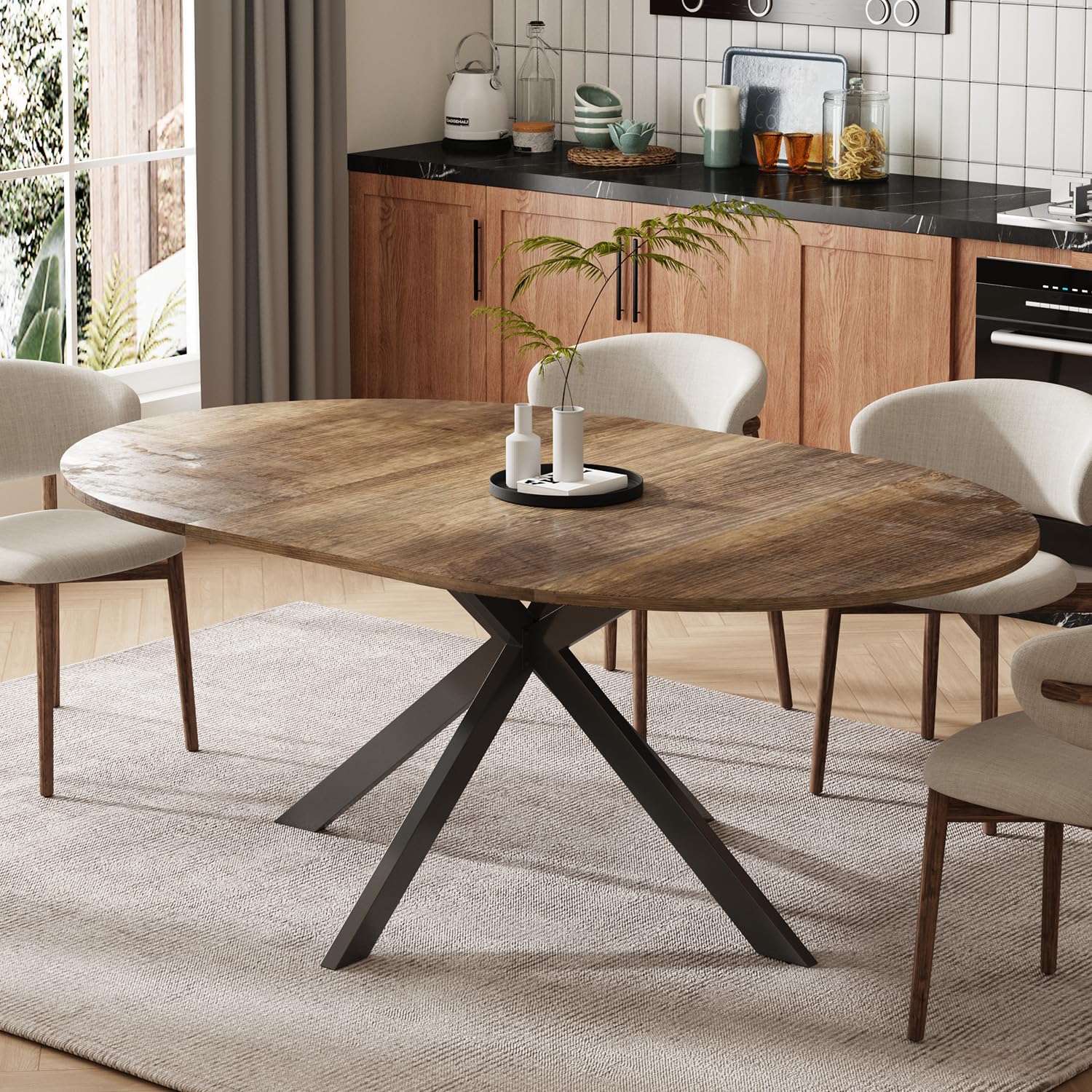
The 59-Inch Extendable Round Dining Table aims to solve a common problem: fitting a table that seats four to six people without dominating a room. It uses a drop-leaf mechanism to transform from a compact round to a larger oval shape. After spending time with this table in a typical dining room setup, several observations stand out, both positive and less so.
This table is designed for real-world use in apartments, condos, or smaller homes where floor space is at a premium. In its closed position, the round top (about 42 inches) comfortably seats four for everyday meals. The extension process involves pulling out two leaves stored under the top and locking them into place, which is straightforward but requires a bit of effort. The expanded oval shape measures 59 inches long and seats six, though the end seats can feel a bit tight for larger individuals. The industrial-style metal frame is sturdy and provides a stable base, even when fully extended. The wood-like top has a matte finish that hides minor spills and smudges reasonably well, but it is not a solid hardwood—it is an engineered wood with a veneer, which means it can scratch or stain if not careful.
Key functional features include the drop-leaf extension system, the black metal legs with crossbars for stability, and the overall 59-inch length when expanded. The table supports a weight of up to 150 pounds distributed evenly, which is adequate for daily use but not for heavy loads like multiple large serving dishes. The assembly is moderate; two people can complete it in about 45 minutes with the included tools. However, the instructions are somewhat vague, and aligning the leaves during installation can be finicky. One notable limitation is the lack of a locking mechanism for the leaves when stored—they slide out easily if the table is bumped, which could be a minor annoyance in a busy household.
Compared to a traditional fixed-round dining table of similar size, this extendable model offers flexibility but compromises on surface stability. A fixed 48-inch round table is simpler and often more solid, but it cannot accommodate extra guests. Alternatively, a rectangular drop-leaf table might provide more usable space when extended, but it lacks the round shape that encourages conversation. This table strikes a middle ground, but the oval shape when extended can make seating arrangements awkward for six, especially if chairs have armrests. The industrial frame, while visually appealing, does not match all decor styles—it leans toward a modern or rustic look rather than traditional or formal.
Who is this table suitable for? It works well for small-space dwellers who need an occasional extra seat without sacrificing floor area. It is also a decent choice for couples or small families who host dinners occasionally but do not require a permanent large table. The table is less suitable for those who need a high-end finish or solid wood construction, as the veneer will show wear over time. It is also not ideal for daily seating of six, as the extended configuration feels cramped and the middle legs can interfere with foot room. If you have a dedicated dining room with ample space, a fixed oval or rectangular table might offer better comfort and durability.
In terms of realistic performance, the table serves its purpose but has trade-offs. The extension mechanism works reliably but feels a bit loose after repeated use. The metal frame is sturdy, but the legs can scratch hardwood floors if not fitted with protective pads (which are not included). The wood top is easy to clean but prone to visible scratches from utensils or plates. Over time, the veneer may peel at the edges if exposed to humidity. For the price point, it is a functional piece that balances cost and utility, but it is not a long-term heirloom piece. If you prioritize flexibility over permanence and are willing to accept some surface wear, this table is a reasonable option. If you value solid construction and timeless design, consider spending more on a fixed-table alternative.