
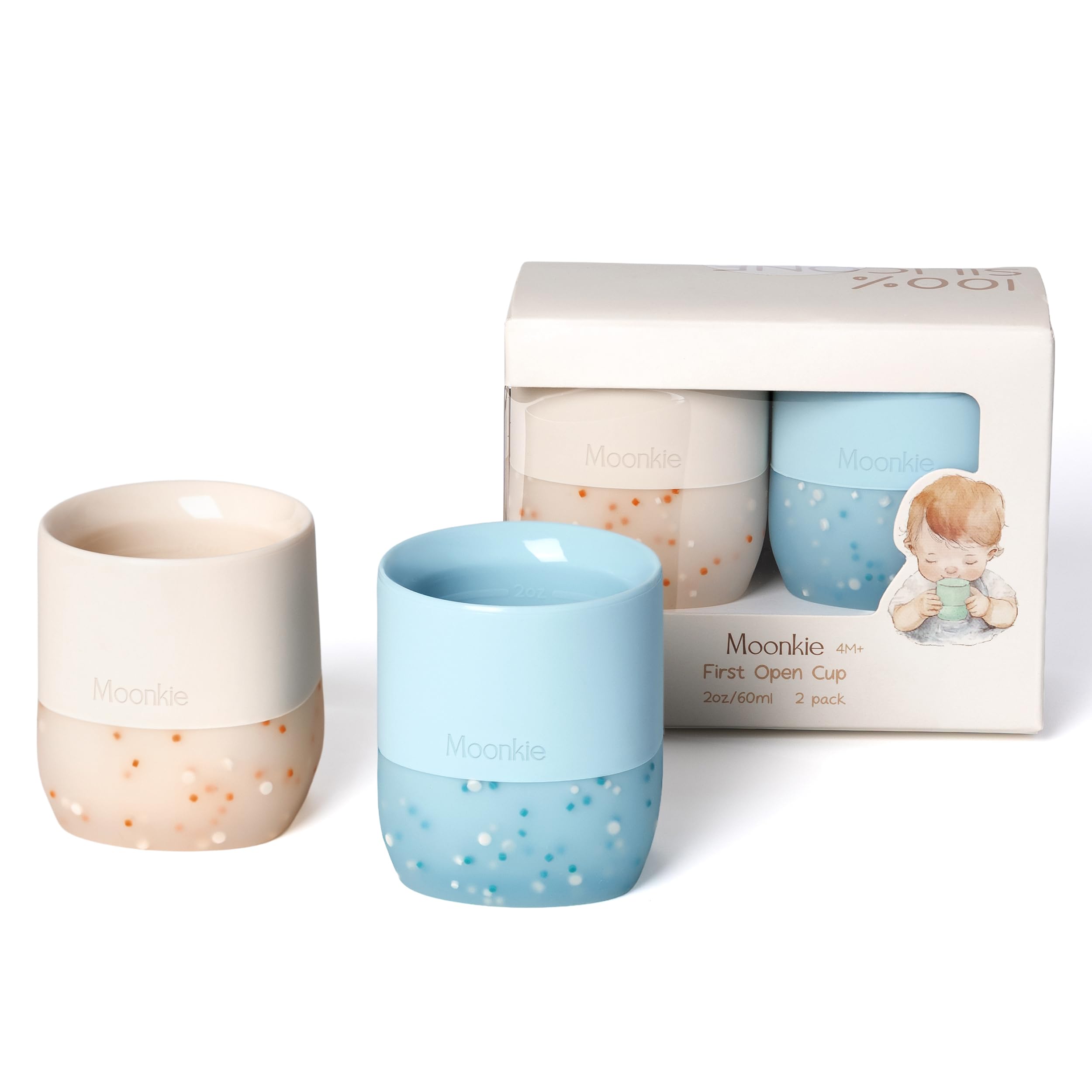
Open cups are a staple in baby-led weaning, but the market is flooded with options that are either too large for tiny hands or too flimsy to withstand daily use. The Moonkie Silicone Baby Cups aim to fill a specific niche: tiny 2-ounce open cups designed for infants from 4 months old. We took a closer look at what these cups offer, where they fall short, and who might benefit from them.
The first thing you’ll notice about these cups is their size. At just 2 ounces, they are significantly smaller than standard sippy cups or even most open training cups, which typically start at 4 ounces. This makes them well-suited for the early stages of introducing an open cup, when a baby is just learning to coordinate holding and tipping. The silicone material is soft and flexible, which is gentle on emerging gums and teeth, and the cups are free from BPA, PVC, and phthalates. The confetti sprinkle design—tiny colored flecks embedded in the silicone—adds a playful touch without being overly cartoonish. The Ether/Ivory color scheme is neutral and modern, though the sprinkle pattern might not appeal to everyone.
In real-world use, these cups are often employed during meals or snack times as a first step toward independent drinking. The small capacity means less mess if spilled, and the open top allows babies to see and smell the liquid, which can encourage them to try. The cups are top-rack dishwasher safe and can be boiled or steamed for sterilization, which is convenient for parents. However, the silicone material, while soft, does have a tendency to attract lint and dust, so a quick rinse before use is often necessary. Also, because the cups are so small, they need to be refilled frequently, which can be a hassle during longer meals.
One of the key limitations of these cups is their capacity. While 2 ounces is appropriate for a first cup, it may quickly become too small as a baby’s intake increases. Many parents find that they need to transition to a larger cup within a few months, making the Moonkie cups a relatively short-term investment. Additionally, the open design means that spills are inevitable, especially as babies learn to tip and control the flow. The silicone is grippy, which helps little hands hold on, but it also means the cups can be difficult to clean if liquids like milk or smoothies are left in them for too long. The narrow opening makes it hard to scrub the bottom thoroughly without a bottle brush.
Compared to other training cups, such as those with handles or weighted bases, the Moonkie cups are minimalist. They don’t have handles, which means babies must learn to grasp the cup with both hands or wrap their fingers around the body. This can be challenging for very young infants, but it also encourages the development of fine motor skills. Unlike sippy cups with valves, these open cups allow for natural sipping, which is better for oral development. However, the lack of a lid or spout means they are not suitable for travel or for babies who are not yet sitting up independently.
So, who are these cups for? They are ideal for parents who are following a baby-led weaning approach and want to introduce an open cup early, around 4 to 6 months, under close supervision. They are also a good choice for parents who prefer silicone over plastic and want a small, manageable cup for their baby to practice with. The 2-pack is convenient for rotating between uses or keeping one at home and one at daycare. However, they are not suitable for babies who are not yet able to sit upright with support or who have a strong tendency to throw or drop cups, as the silicone, while soft, can still cause a mess. Parents looking for a long-term cup that will grow with their child may want to consider a larger stainless steel or hard plastic open cup instead.
In terms of durability, the silicone is thick and seems to hold up well to repeated use and washing. We haven’t seen reports of tearing or degradation with normal use, but as with any silicone product, it can retain odors and stains over time, especially if used with strongly colored liquids like tomato juice or turmeric. The cups are also relatively lightweight, which is good for little hands, but they can be tipped over easily, so a splat mat or a confined eating area is advisable.
Overall, the Moonkie Silicone Baby Cups are a niche product that serves a specific purpose: introducing open cup drinking to very young infants. They are well-made, thoughtfully designed, and appropriately sized for their intended use. However, their limited capacity and short lifespan make them a transitional item rather than a long-term solution. Parents should weigh the benefits of early open cup introduction against the cost and the need to upgrade to a larger cup relatively soon. If you’re committed to baby-led weaning and want a safe, small cup for your baby to practice with, these are a reasonable option. If you’re looking for a cup that will last through toddlerhood, you might be better off with a larger, more versatile training cup.