
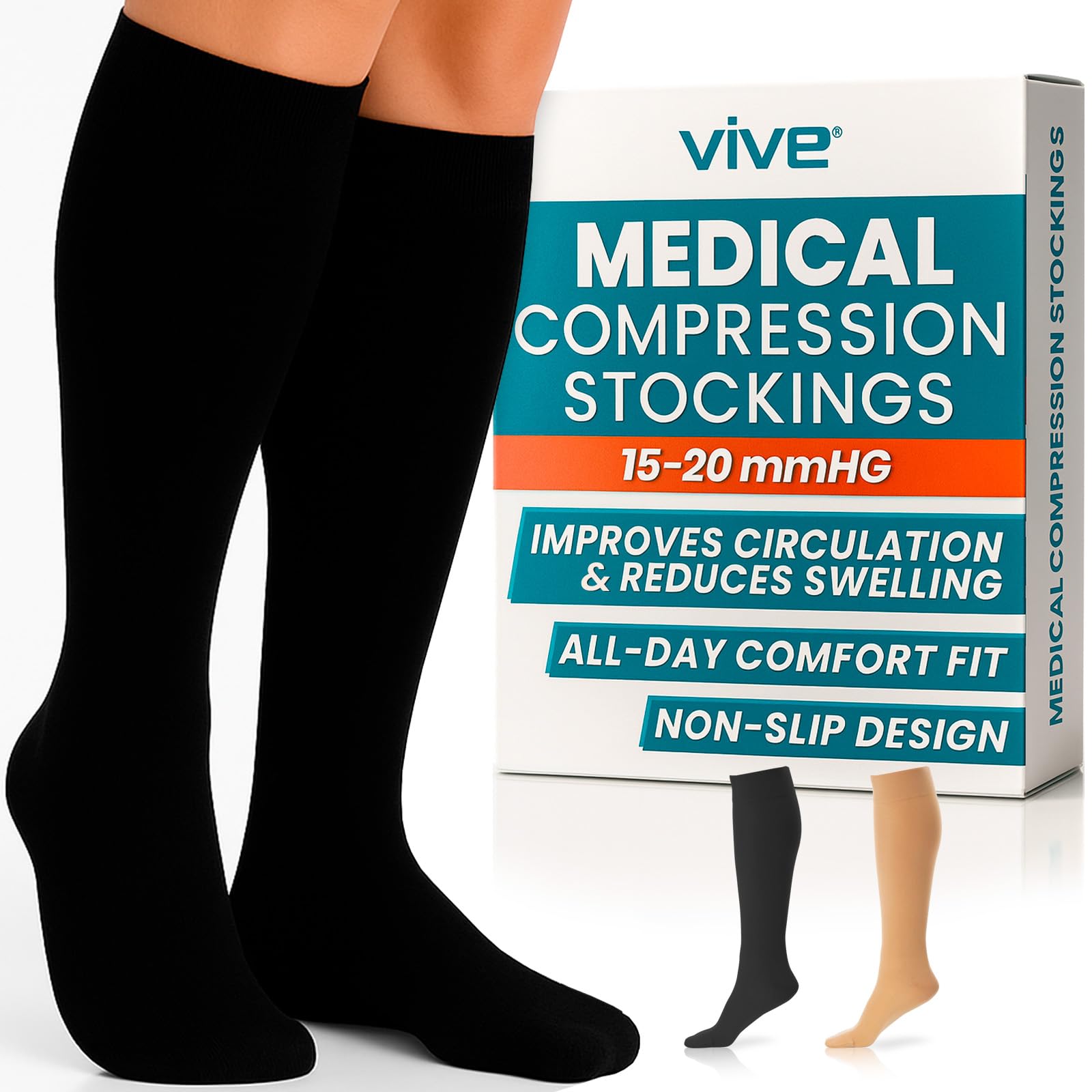
Compression socks occupy a useful but often misunderstood corner of the apparel market. They’re medical devices in some contexts, athletic gear in others, and everyday comfort items for a growing number of people. The Vive Knee High Compression Socks sit in the 15-20mmHg range, which is the lower end of medical-grade compression—typically described as mild to moderate. That positioning matters because it shapes what these socks can realistically do and who will actually benefit from them.
In practice, 15-20mmHg socks are commonly used for tired, achy legs after long periods of standing or sitting, mild swelling during travel, and general circulation support during pregnancy or recovery from minor procedures. They’re not the heavy-duty 20-30mmHg or 30-40mmHg garments prescribed for more serious venous conditions. Vive markets these as unisex, and the sizing reflects that, with a range that covers most adult foot and calf dimensions. The knee-high style is the most common configuration for this level of compression, and it’s the one most people can put on without assistance.
The socks are made from a nylon-spandex blend, which is standard for compression hosiery. The fabric has a moderate stretch and a slightly firm handfeel—not as soft as athletic socks, but not as stiff as some medical stockings. The toe and heel are reinforced, and the top band is designed to stay in place without rolling. In use, the compression is graduated: tighter at the ankle and gradually looser toward the calf. That’s the correct construction for this type of product, and it’s what allows the sock to support venous return rather than just squeeze uniformly.
One thing to note is that these are not seamless. There’s a toe seam, which is common but can be a nuisance for people with sensitive toes or neuropathy. The seam is flat-ish, but it’s there. Also, the fabric, while breathable enough for daily wear, isn’t moisture-wicking in the way dedicated athletic compression socks are. If you’re wearing them for running or high-intensity workouts, you’ll notice more retained heat and moisture than with sport-specific options.
Real-world usage tends to fall into a few categories. The most common is prolonged sitting—office work, long flights, or drives. Here, the socks can help reduce that heavy, swollen feeling by the end of the day. They’re also used by nurses, teachers, and retail workers who are on their feet for hours. For post-surgical or pregnancy-related mild swelling, they’re a reasonable over-the-counter option, though anyone with a diagnosed condition should check with a clinician first. The 15-20mmHg level is generally well-tolerated, but it’s not trivial—first-time users often find them tighter than expected, especially around the ankle.
Putting them on takes a bit of technique. The fabric doesn’t glide, so you need to roll them on rather than pull. People with limited hand strength or mobility may struggle, and that’s a genuine limitation. There’s no zipper or assistive feature here. For those who need easier donning, a lower-compression sock or a different style (like an open-toe or a wrap) might be more practical.
Compared to athletic compression socks, the Vive socks prioritize sustained compression over moisture management and cushioning. Athletic versions often have targeted padding, mesh zones, and a tighter, more elastic fit for performance. The Vive pair is more of a daily-wear medical-style sock—less flashy, more functional for all-day use. Compared to drugstore support hose, these are a step up in construction and fit, though not dramatically different in function. They’re also more expensive than basic support socks, which is worth weighing if you only need occasional use.
Durability is decent but not exceptional. With regular washing, the elastic can start to relax after several months, which is typical for this category. Following care instructions—cold wash, air dry—helps prolong life. The socks come in a few color options, mostly neutrals, which is fine for medical-style wear but limited if you want something more expressive.
Who are these for? They suit people who want mild, all-day compression for tired legs, mild swelling, or travel, and who don’t need a prescription-strength garment. They’re also a reasonable choice for those who stand or sit for long stretches and want a straightforward knee-high sock. Who are they not for? Anyone with advanced venous disease, open wounds, or a diagnosed condition requiring higher compression should consult a healthcare provider—these aren’t a substitute for prescribed stockings. Also, if you have very sensitive skin or sensory issues, the toe seam and firm fabric might be irritating. And if you’re looking for performance socks for running or cycling, you’ll likely be happier with a sport-specific design.
In summary, the Vive Knee High Compression Socks are a functional, mid-range option in the 15-20mmHg category. They do what they claim—provide graduated mild compression—without much fuss. The trade-offs are typical: a bit of difficulty putting them on, a toe seam, and limited breathability for intense activity. They’re not a miracle product, but for everyday leg support, they’re a sensible choice if the fit and compression level match your needs.