
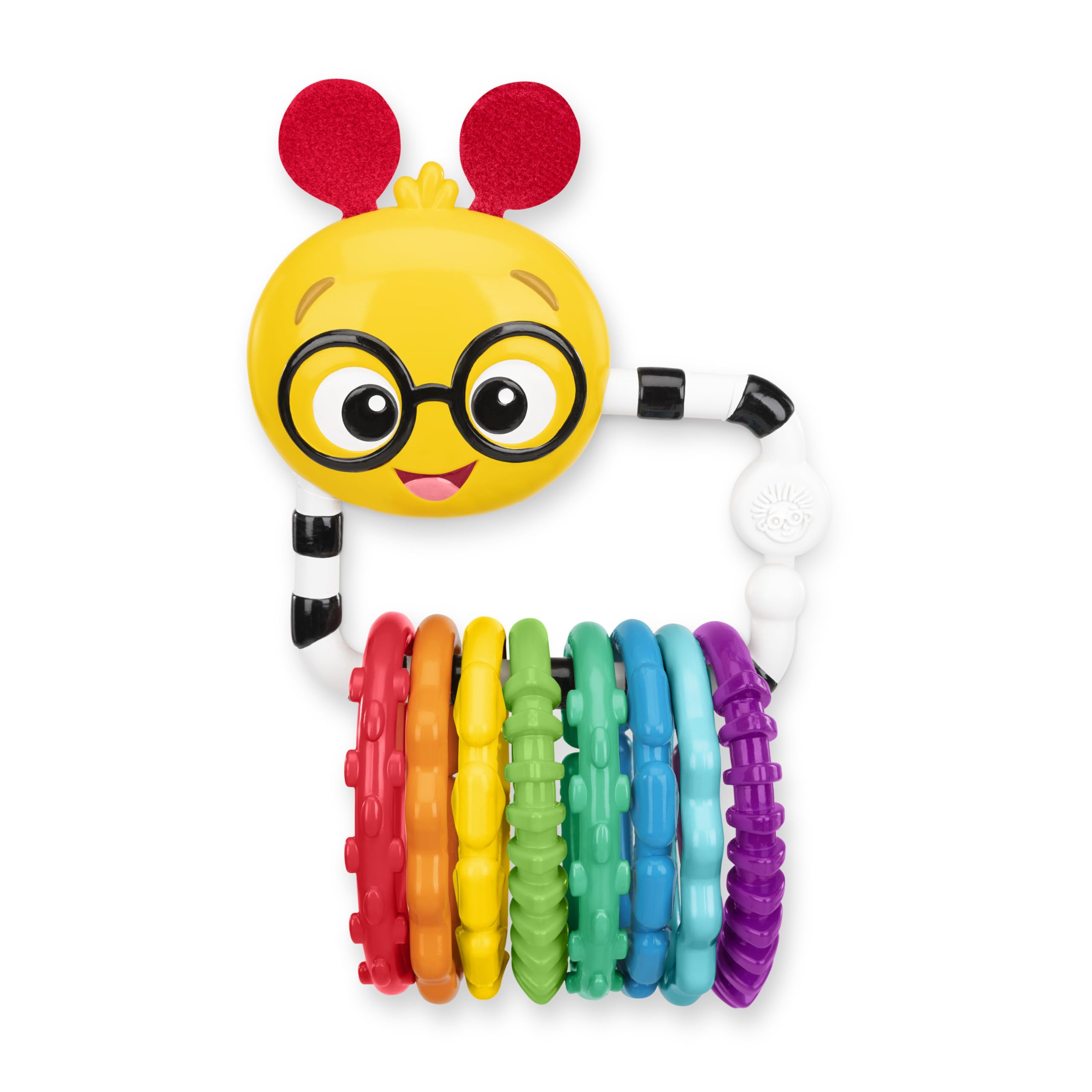
The Cals Connectors are a set of textured plastic links aimed at the youngest end of the toy market—babies from birth upward. They belong to a familiar category: simple, open-ended objects that parents clip onto strollers, car seats, and play gyms. The appeal is easy to understand, since a linking toy does several jobs at once. It gives a baby something to grip and mouth, and it gives a parent a way to keep other small items from hitting the floor. Whether it earns a place in a diaper bag depends on how well it handles both roles.
In practice, these links are most often used in three ways. The first is as a standalone teether or grasping toy, where the textured surface and open shape give small hands something to hold. The second is as a connector: the links snap together into a chain, which can be draped across a stroller bar or attached to a play mat. The third, and probably the most common, is as a tether for pacifiers, small toys, or clips so they stay within reach instead of landing on the ground. That last use is where parents tend to get the most value, since it addresses a daily annoyance rather than a developmental milestone.
The functional design is straightforward. Each link is a C-shaped plastic ring with a gap that allows it to hook onto another link or onto a fabric loop, strap, or bar. The surface is molded with raised textures, which is intended to give gums and fingers something to explore. The plastic is lightweight, and the rings are sized to be manageable for an infant’s grip once they have enough coordination to hold on. Because the set contains multiple links, they can be used individually or joined into a longer chain, which adds some flexibility without adding complexity.
Where the toy earns credit is in its simplicity. There are no batteries, no sounds, and no assembly. It can be wiped down, tossed in a bag, and handed over without instructions. For newborns, the textured surface is the main draw, and for slightly older babies the linking action becomes a modest fine-motor exercise. It is the kind of object that gets used in short bursts rather than held attention for long stretches, which is normal for this category.
There are real trade-offs, though. The most significant is that textured links are not a substitute for a proper teething product. The plastic is firm, and while the texture may be soothing for some babies, it does not offer the cooling or softness that dedicated teethers do. Parents looking specifically for gum relief should treat these as a secondary option. The linking action is also limited: the rings connect, but they do not rotate, click, or lock, so older babies who want cause-and-effect feedback may lose interest quickly. And because the links are small enough to be grasped, they need to be checked regularly for wear at the gap, since a stretched or cracked link is a choking concern. Supervision is not optional here.
Compared with other stroller and play-mat accessories, the Cals Connectors sit at the basic end of the spectrum. Soft fabric links are gentler and quieter but harder to clean. Rigid plastic clip systems are more secure for attaching toys but less interesting to mouth. This set lands in the middle: more versatile than a single-purpose clip, less durable-feeling than a dedicated harness system. It is a reasonable general-purpose link rather than a specialized tool.
The toy suits parents who want a low-cost, no-fuss accessory for the stroller or diaper bag, and babies who are content to mouth and handle simple objects. It is less suitable for parents seeking a true teether, for older infants who need more sensory feedback, or for anyone who wants a locking, secure attachment for a heavy toy. As a small, inexpensive add-on, it does what it claims without much fuss—just do not expect it to replace the dedicated items it is often used alongside.