
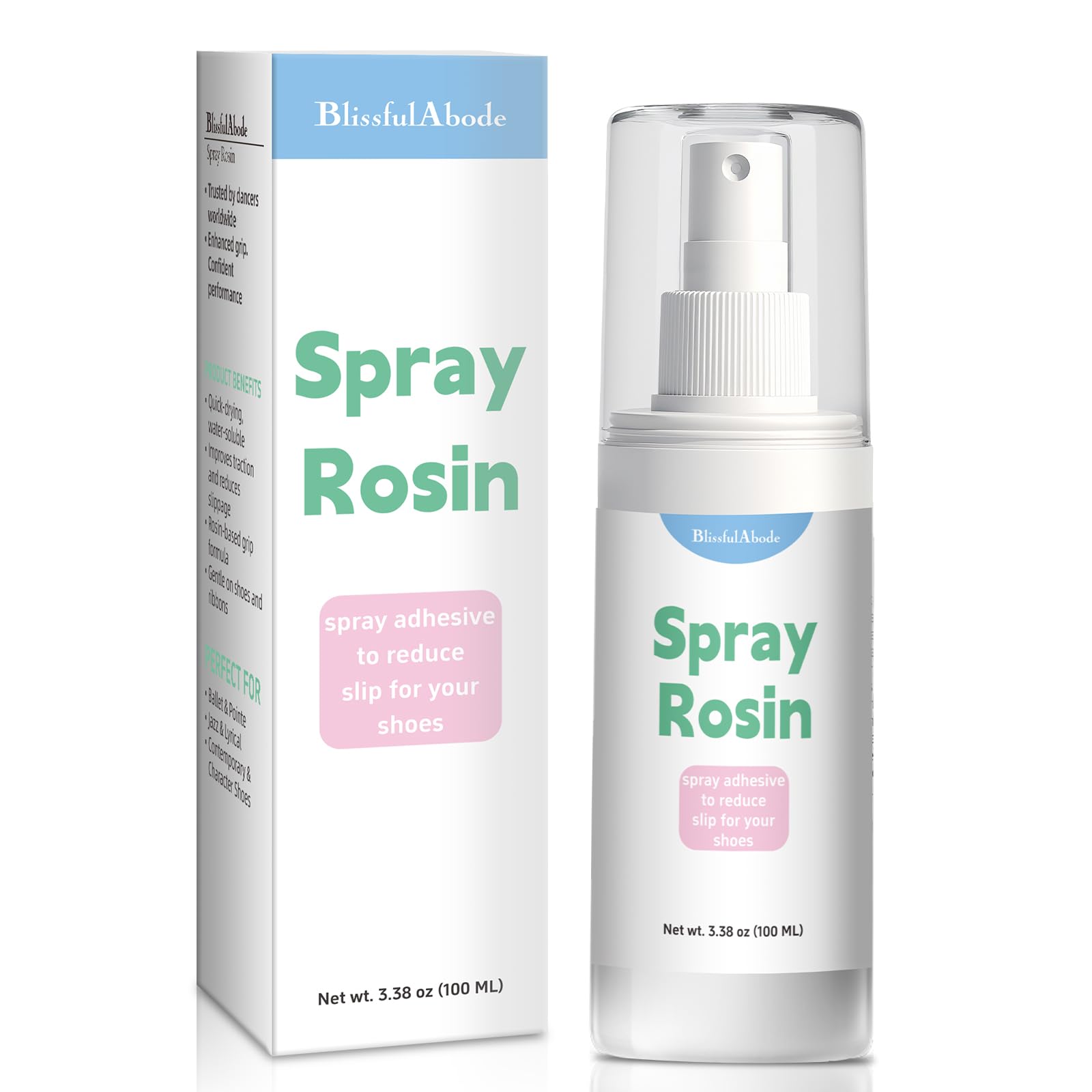
Dancers know the struggle of slippery shoes. Whether you’re on pointe, turning in jazz shoes, or navigating a slick stage floor, losing grip at the wrong moment can be both frustrating and risky. Spray Rosin for Dancers aims to solve this with a convenient aerosol format, offering an alternative to traditional block rosin or sticky sprays. I tested it across several dance settings—from a sprung-floor studio to a polished stage—to see how it holds up in real use.
The product comes in a 3.38-ounce can, which is small enough to toss into a dance bag without adding noticeable weight. The spray mechanism delivers a fine mist, allowing for even coverage on the soles of pointe shoes, ballet slippers, jazz shoes, and even ribbons. A quick shake and two or three light coats are usually enough to create a tacky surface. The application process is straightforward: spray, let it dry for a few seconds, and you’re ready to go. Unlike some liquid rosins that leave a sticky residue on your hands or the floor, this one dries fairly clean, which is a significant plus for shared studio spaces.
In terms of performance, the grip is noticeable but not dramatic. On a standard marley floor, my pointe shoes felt more secure during relevés and pirouettes, and the slip I sometimes experience in jazz shoes was largely eliminated. The effect lasts for a decent session—roughly an hour of moderate activity—but it does wear off faster than traditional rosin powder, especially if you’re perspiring heavily. Reapplication is easy, though, and the portability makes it practical for quick touch-ups between classes or during competition day. The spray also works on ribbons, which is a thoughtful touch; tying them securely becomes less of a battle when they have a bit of extra friction.
One limitation I noticed is that the spray doesn’t perform as well on very dusty or dirty floors. If the stage hasn’t been mopped recently, the tackiness diminishes quickly, and you might find yourself reapplying more often than you’d like. Additionally, the aerosol can isn’t ideal for air travel—you’ll need to pack it in checked luggage or leave it at home. And while the formula is clean-drying, it can leave a faint residue on shoe soles over time, so you’ll want to wipe them down occasionally to maintain the material.
Compared to traditional block rosin, this spray is less messy and more controlled. Block rosin crumbles and can be tough to gauge how much you’re applying, whereas the spray gives you a consistent layer. That said, block rosin tends to offer a stronger, longer-lasting grip for heavy pointe work. If you’re a professional dancing multiple hours daily, you might still prefer the old-school approach. For students, recreational dancers, or anyone who needs a reliable grip boost without the fuss, this spray is a solid middle ground.
The product is best suited for dancers who value convenience and portability. It’s particularly handy for younger dancers navigating class-to-class schedules or for performers who need a quick fix during dress rehearsals. It’s less ideal for those with sensitive skin or allergies to aerosol propellants, and if you’re dancing on extremely slippery surfaces like untreated wood, you may find it insufficient without supplemental rosin. Also, if you’re someone who dislikes any product residue on your shoes, this might not be your first choice.
In summary, Spray Rosin for Dancers is a practical tool that does what it claims, with some caveats. It won’t replace the ritual of preparing shoes with traditional rosin for serious professionals, but it offers a clean, easy-to-use alternative for everyday dance situations. The trade-offs are clear: convenience over longevity, and portability over maximum grip. If you’re looking for a no-mess solution to keep in your bag, it’s worth trying—just adjust your expectations for high-sweat or dirty-floor scenarios.