
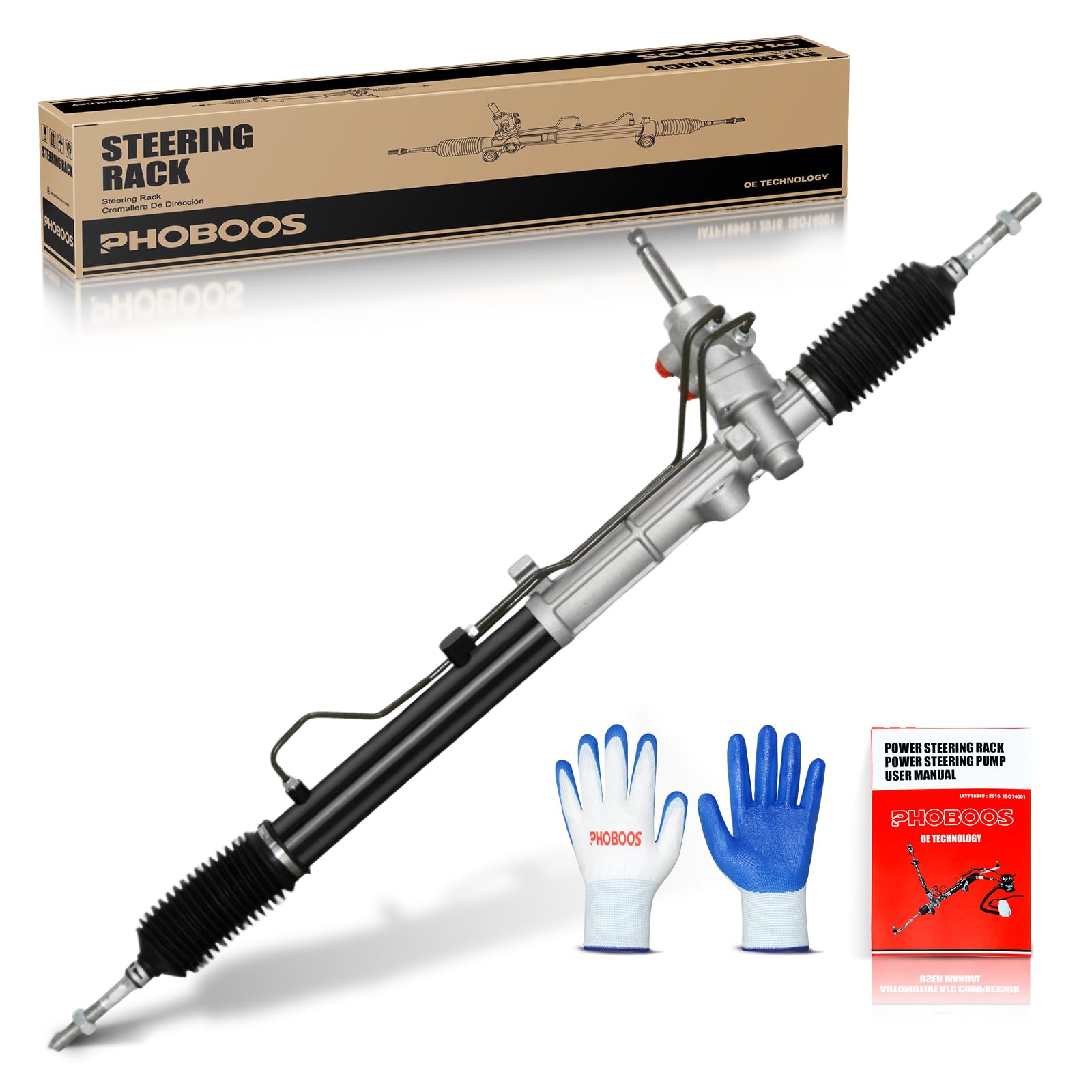
Replacing a steering rack is rarely a decision anyone makes casually. For owners of the 2010–2013 Kia Forte, Forte5, and Forte Koup equipped with the 2.0L four-cylinder, a failing rack usually announces itself through leaking seals, vague on-center feel, or a persistent groan when turning. The PHOBOOS hydraulic power steering rack and pinion assembly, referenced as 26-2449, is a new-unit replacement aimed squarely at that scenario. It is not an upgrade, and it does not pretend to be one. The question worth asking is whether a new aftermarket unit makes sense versus the alternatives.
The assembly is a complete hydraulic rack, meaning it arrives with the pinion, housing, and seals already assembled. Installation follows the same path as an OEM replacement: disconnect the tie rod ends, separate the steering column joint, remove the mounting bolts, and deal with the hydraulic lines. Because it is listed as a direct fit for the 2.0L Forte variants across those model years, the mounting points and line connections should align without fabrication. That said, “direct fit” in the aftermarket world means the geometry matches, not that the job is easy. This is still a several-hour job on jack stands, and the hydraulic system will need to be bled carefully afterward. Trapped air in the system is the most common reason a fresh rack feels wrong on the first drive.
Functionally, the unit does what a hydraulic rack is supposed to do. It converts steering wheel rotation into lateral tie rod movement through a hydraulic assist system, and the valving is calibrated to provide effort reduction at low speeds while retaining some road feel at cruising speed. Buyers should expect steering that feels close to the original factory calibration, not sharper or heavier. There is no variable-ratio trickery here, no sport tuning, and no electronic interface—it is a conventional hydraulic part. For a commuter car like the Forte, that is appropriate.
The most obvious trade-off is that this is a new aftermarket unit rather than a remanufactured OEM rack or a dealer part. New construction avoids the core-return hassle and the uncertainty of a rebuilt unit with unknown internal wear, which is a genuine advantage. On the other hand, aftermarket seals and internal tolerances are not guaranteed to match OEM specifications over a long service life. Owners planning to keep the car another 100,000 miles may want to weigh the cost difference against a remanufactured OEM rack, which carries its own risks but at least has factory casting cores. The PHOBOOS unit also lacks the broad, long-term field data that a dealer part accumulates, so early buyers are effectively part of that sample.
Another consideration is the hydraulic system itself. A new rack does not fix a tired pump, contaminated fluid, or corroded lines. If the original failure involved metal debris circulating through the system, installing a new rack without flushing the lines and reservoir can shorten its life. The review of this part should include a realistic caution: budget for new fluid, new O-rings at the line fittings, and possibly a pump inspection. Skipping those steps is the most common installation mistake.
In terms of who this suits, the target buyer is a DIY-oriented owner or an independent shop working on a high-mileage Forte where the original rack has begun leaking or developed play. It also fits budget-conscious owners who want a new part without dealer pricing and are comfortable with aftermarket sourcing. It is less suitable for someone expecting OEM-level longevity documentation, for cars with modified suspension geometry that may stress the rack differently, or for anyone who is not prepared to properly bleed the system and align the front end afterward. An alignment is not optional after a rack swap.
Compared with a remanufactured rack, the PHOBOOS unit offers the appeal of untouched internals and no core charge, but gives up the known provenance of an OEM casting. Compared with a used salvage rack, it is clearly the safer choice, since salvage racks carry unknown wear and no warranty history. The part sits in a reasonable middle ground: more confidence than used, less documentation than dealer, priced accordingly.
Expectations should stay grounded. This is a repair component, and its job is to restore normal steering, not transform the car. If the installation is done correctly and the system is flushed and bled, the Forte should return to the steering feel it had when the original rack was healthy. If shortcuts are taken, even a good rack will feel vague or noisy. The part is a sensible option for the right owner, provided the surrounding hydraulic system gets the attention it deserves.