
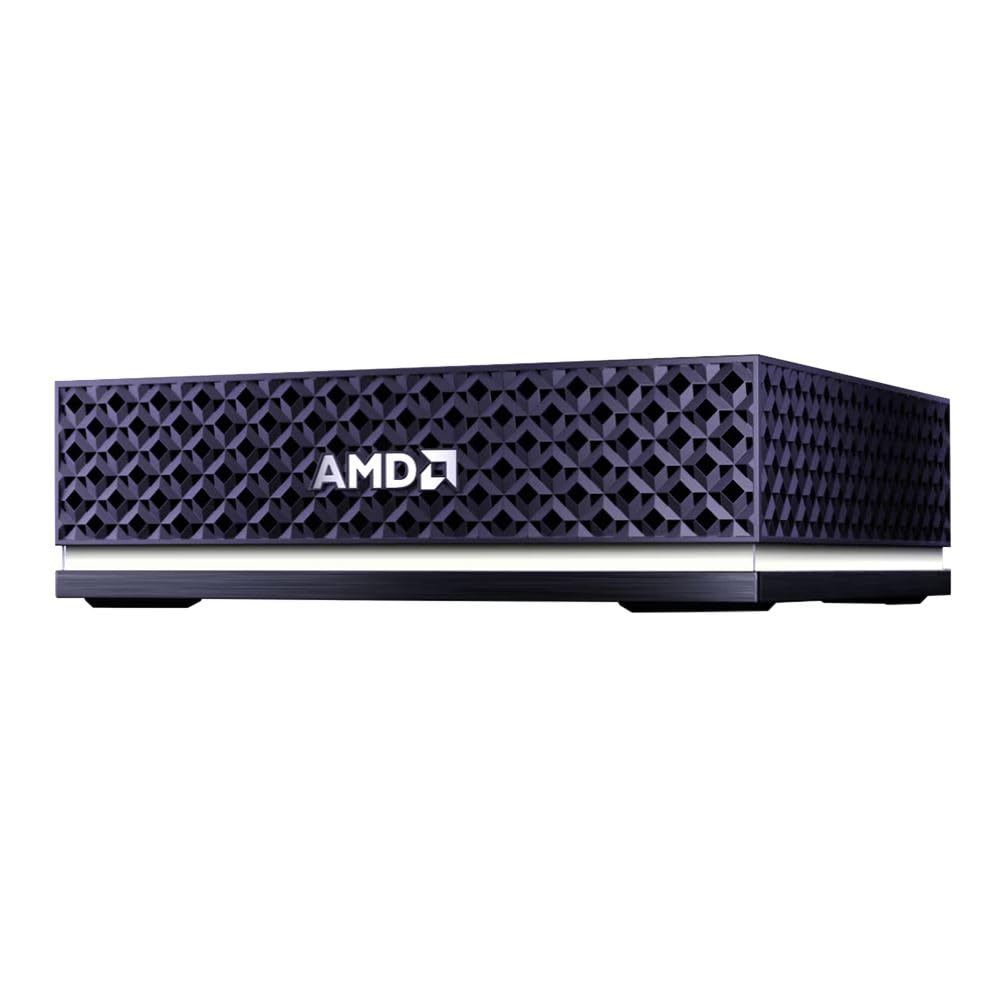
The AMD Ryzen AI Halo is a desktop computer aimed at developers who want to run AI workloads locally on Linux. It combines AMD’s Ryzen AI hardware with a preinstalled Linux OS, positioning itself as a turnkey solution for tasks like model training, inference, and prototyping. But how does it hold up in practice? Based on the specifications and typical use cases, here’s a closer look.
In real-world usage, the Halo is likely to appeal to machine learning engineers, researchers, and hobbyists who prefer to keep their data on-premises or need a dedicated machine for AI development. Common scenarios include running local large language models (LLMs), computer vision experiments, and data processing pipelines. The Linux OS means you’re not fighting with driver compatibility or licensing issues, and the hardware is tuned for AI acceleration.
Key functional features include the Ryzen AI engine, which integrates a neural processing unit (NPU) alongside the CPU and GPU. This setup is designed to offload AI tasks efficiently, potentially reducing latency and power consumption compared to running everything on the CPU. The platform supports popular frameworks like PyTorch and TensorFlow, though you’ll need to ensure versions are compatible with AMD’s ROCm stack. Connectivity options are standard: USB ports, Ethernet, and display outputs, but don’t expect Thunderbolt or other exotic interfaces. The included Linux distribution is likely a custom or Ubuntu-based build with AI libraries preinstalled, saving setup time.
Performance-wise, the Halo is not a supercomputer. It’s positioned for mid-range AI development, so training large models from scratch will be slow. Inference on smaller models (e.g., Llama 2 7B) should be feasible, but don’t expect data-center-level throughput. The NPU acceleration helps with specific workloads, but software support is still maturing; not all frameworks fully utilize the NPU yet. In practice, you might find yourself falling back to the GPU or CPU for some tasks.
One limitation is the closed nature of the AI stack. While Linux is open, the Ryzen AI software stack is proprietary, and updates may lag behind upstream. Also, the Halo’s form factor and cooling solution mean it’s not silent under load; if you’re sensitive to noise, consider a different chassis. Additionally, the lack of expandability (e.g., limited PCIe lanes) could be a constraint for users wanting to add multiple GPUs later.
Compared to a standard Linux workstation with an NVIDIA GPU, the Halo offers tighter integration but less flexibility. NVIDIA’s CUDA ecosystem is more mature, so if you rely on CUDA-specific libraries, the Halo might require workarounds. On the other hand, if you’re invested in AMD’s ecosystem or want a preconfigured solution, the Halo reduces setup hassle.
Who is this for? It’s suitable for developers who want a dedicated, low-maintenance AI development box and are comfortable with Linux. It’s not for those who need maximum performance for large-scale training or who require the latest CUDA features. Also, if you’re a beginner, the Linux environment might be a hurdle, though the preinstalled tools help.
In summary, the AMD Ryzen AI Halo is a niche product that fills a specific need: a local AI development platform that’s ready to go. It’s not without compromises, but for the right user, it could be a practical addition to the lab.