
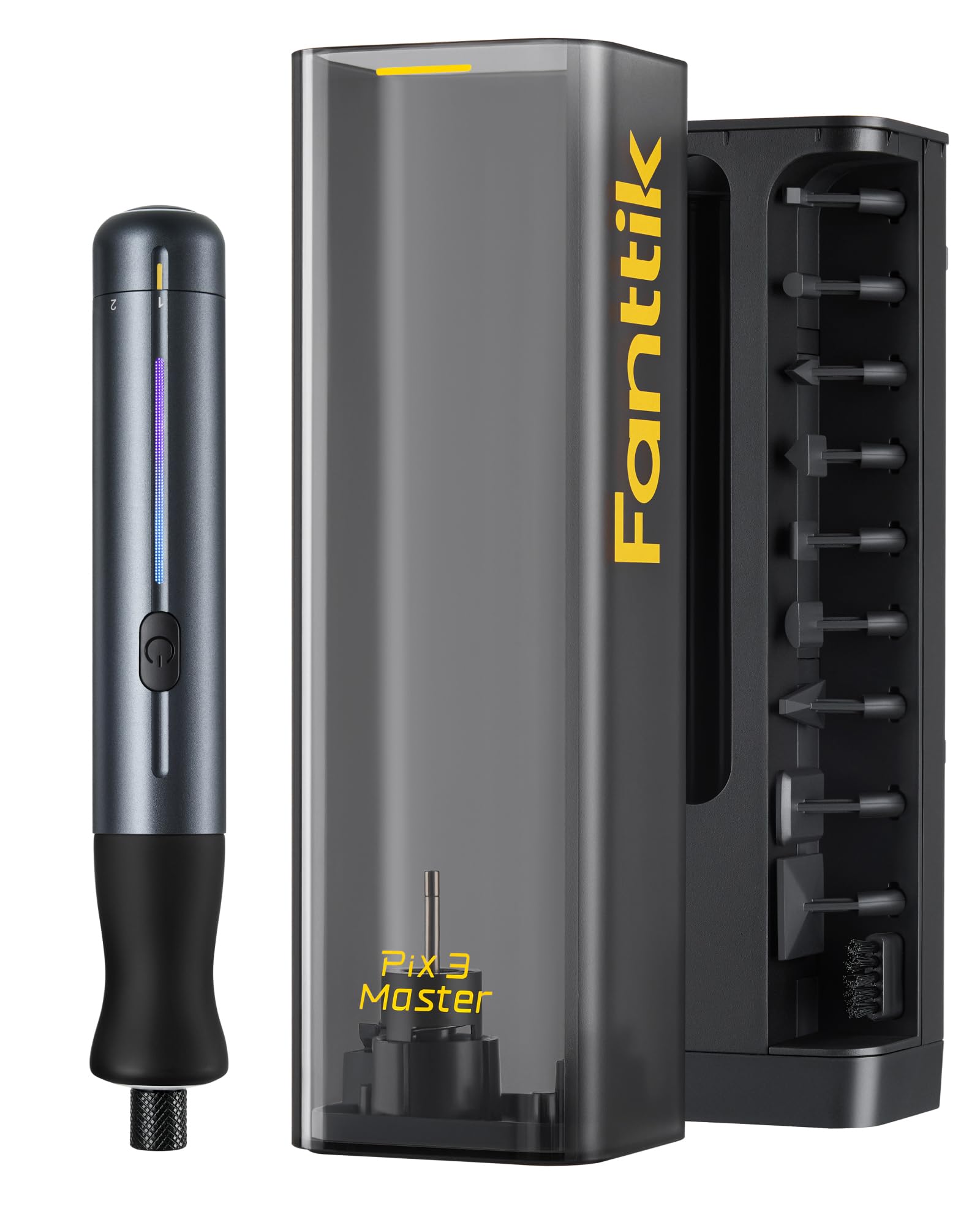
The Fanttik Pix 3 Master is a small electric detail sander aimed at hobbyists who need to smooth 3D printed parts, scale models, and other intricate work. It’s a niche tool, but for those who spend hours hand-sanding tiny surfaces, it promises to save time and effort. After spending a few weeks with it, here’s a realistic look at what it does well and where it falls short.
Unlike larger random orbital sanders, the Pix 3 Master is designed for precision. Its compact body and small sanding pads let you reach into corners and tight curves that would be impossible with a full-size sander. The tool runs on a rechargeable battery, which adds to its portability, though it also means you’re tethered to a charger when the juice runs out. In use, the sander is comfortable to hold for extended periods, and the variable speed dial gives you control over the aggressiveness of the sanding.
One of the first things you’ll notice is the range of accessories. The kit includes several sanding pad shapes and grits, which is handy for different materials and contours. The pads attach via a hook-and-loop system, making swaps quick. For 3D printed parts, which often have layer lines and support marks, the Pix 3 Master can speed up the smoothing process significantly compared to hand sanding. However, it’s not a magic eraser—you still need to start with coarser grits and work your way up, and the tool’s small size means it’s best for detail work rather than large flat areas.
Performance-wise, the sander has enough power for light to medium tasks. It won’t bog down easily on plastic or resin, but if you press too hard, the motor can stall. The battery life is respectable, but if you’re working on a big project, you’ll likely need a second battery or plan for breaks. The noise level is moderate; it’s not whisper-quiet, but it’s not deafening either. Vibration is noticeable but manageable, especially if you let the tool do the work rather than forcing it.
One limitation that stands out is the availability of replacement pads. The hook-and-loop backing is convenient, but the proprietary pad shapes mean you’re locked into buying replacements from Fanttik or compatible third-party sources. That can be a hassle and adds to the long-term cost. Also, while the tool is great for detail work, it’s not a substitute for a larger sander when you need to cover more surface area. For big prints or models, you’ll still want a bigger tool for the bulk of the work and use the Pix 3 Master for the fine details.
Compared to a rotary tool with a sanding drum, the Pix 3 Master is less aggressive and more controlled, making it better for delicate work where you don’t want to accidentally gouge the surface. Rotary tools are more versatile but require a steady hand and can remove material quickly. The Pix 3 Master’s oscillating action is gentler and more predictable, which is a plus for beginners. However, if you already own a rotary tool, you might find the Pix 3 Master redundant unless you frequently need to sand in tight spots.
So, who is this for? It’s ideal for 3D printing enthusiasts who want to finish their prints without hours of hand sanding, and for model makers who need to smooth small parts. It’s also good for anyone working with resin or plastic models where precision is key. On the other hand, if you primarily work with wood and need to sand large flat surfaces, this tool will be too small and slow. It’s also not for someone on a tight budget, as the initial cost and ongoing pad expenses can add up.
In summary, the Fanttik Pix 3 Master is a specialized tool that does one job well: detail sanding. It’s not without its quirks, but for the right user, it can be a valuable addition to the workbench. Just go in with realistic expectations—it’s a helper, not a miracle worker.