
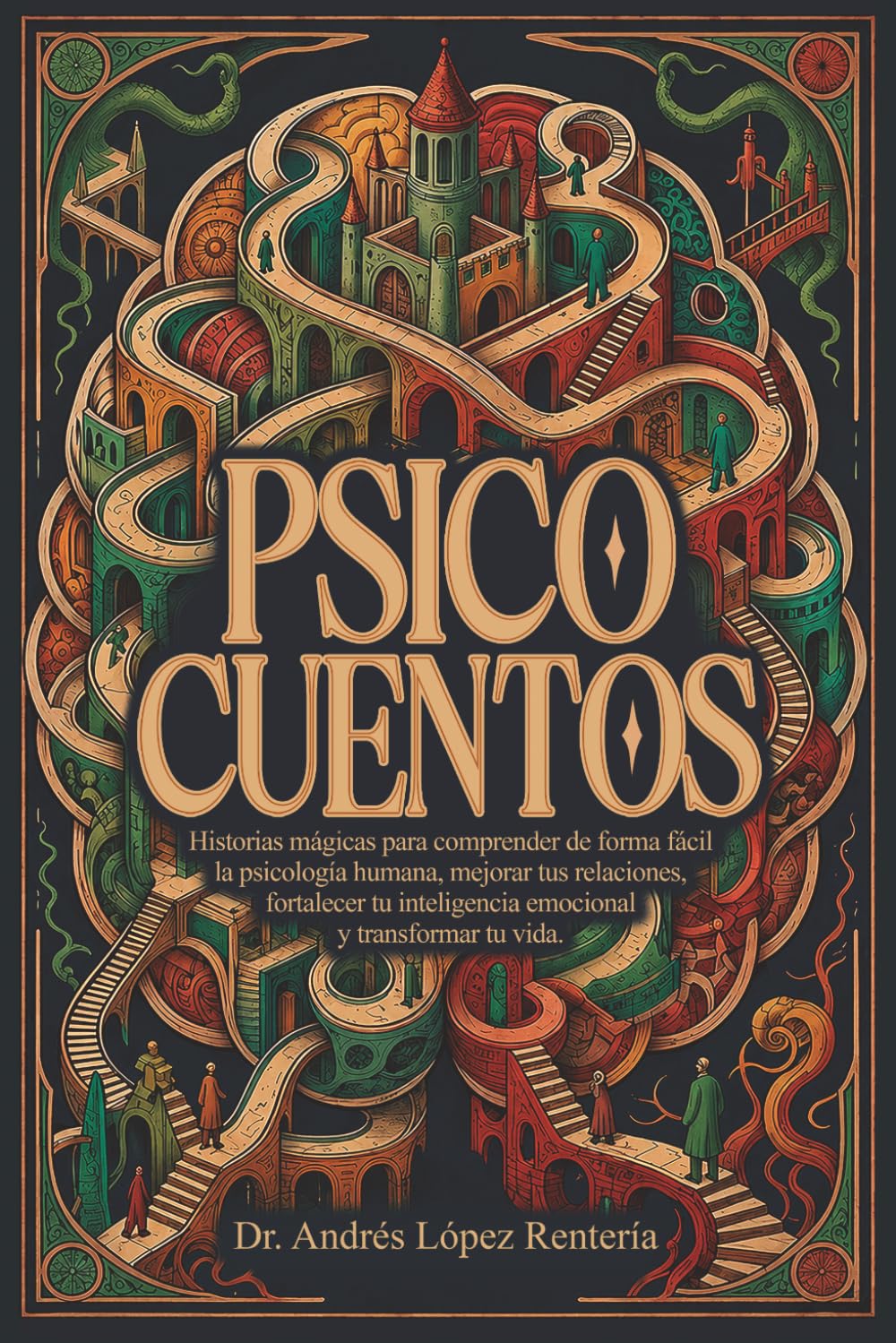
Psico Cuentos is a Spanish-language book that approaches psychology through short stories rather than through the usual textbook format. The premise is straightforward: readers follow narrative situations that illustrate psychological concepts, then apply those ideas to their own relationships and emotional habits. It sits in a crowded space between self-help, popular psychology, and narrative nonfiction, and it is worth understanding what it actually delivers before deciding whether it fits your reading habits.
The book is organized around stories rather than chapters of theory. Each tale tends to center on recognizable human situations, conflict, attachment, communication breakdowns, emotional reactions, and then draws out the psychological lesson embedded in the narrative. This structure is the product’s main functional feature. Instead of presenting concepts like emotional intelligence or relational patterns as abstract definitions, it dramatizes them so that readers can recognize the same dynamics in their own lives. The language is Spanish throughout, and the tone is accessible rather than academic, which matters for readers who want an introduction rather than a clinical reference.
In real-world use, this is the kind of book people tend to read in short sittings rather than cover to cover in one go. Because the stories function as self-contained units, it works well as a bedside read or as something to pick up during a commute. Some readers use individual stories as prompts for journaling or as discussion material in a book club or a small personal-development group. That episodic design is practical, but it also shapes the experience: the book is less a structured course in psychology and more a collection of illustrative vignettes, so readers looking for a sequenced curriculum will need to impose that structure themselves.
What the book does well is lower the barrier to entry. Popular psychology titles in Spanish sometimes lean heavily on jargon or translate awkwardly from English sources. Psico Cuentos avoids that by keeping explanations conversational and grounded in the stories. The emphasis on emotional intelligence and relationships is consistent with what most general readers are actually looking for, practical insight into why they react the way they do and how their communication patterns affect the people around them. Readers who finish a story and think, I have seen that exact dynamic before, are getting what the format promises.
There are trade-offs worth naming. The narrative approach necessarily simplifies. Complex psychological ideas, trauma responses, attachment theory, cognitive biases, are compressed into short stories, and compression means nuance gets lost. Readers with a background in psychology may find the explanations thin or overly generalized, and the book does not function as a substitute for clinical literature or professional guidance. The stories also vary in how directly they connect to the concepts; some land cleanly, while others require the reader to do more interpretive work than expected. And because the book is inspirational in tone, it occasionally drifts toward motivational phrasing rather than staying strictly explanatory, which some readers will appreciate and others will find less rigorous.
Compared with a standard introductory psychology text, Psico Cuentos trades comprehensiveness for readability. Compared with conventional self-help books, it trades prescriptive advice for narrative illustration. Readers who want exercises, worksheets, or step-by-step programs will not find them here in any systematic form. Those who respond better to stories than to bullet points are the more natural audience. The book is best suited to adults who are new to psychology, who read in Spanish, and who want an approachable entry point that connects concepts to everyday relational experience. It is less suitable for students needing academic grounding, for clinicians seeking reference material, or for readers who prefer direct instruction over narrative.
Realistic expectations matter here. This is a book that can shift perspective and prompt reflection, but it is not a therapeutic tool and does not claim to be. Its value depends heavily on how actively the reader engages with each story, pausing to connect the narrative to their own patterns rather than reading passively. Treated as a light, thoughtful companion to personal reflection, it serves its purpose reasonably well. Treated as a definitive guide to human psychology, it will fall short, as any short-story collection would.