
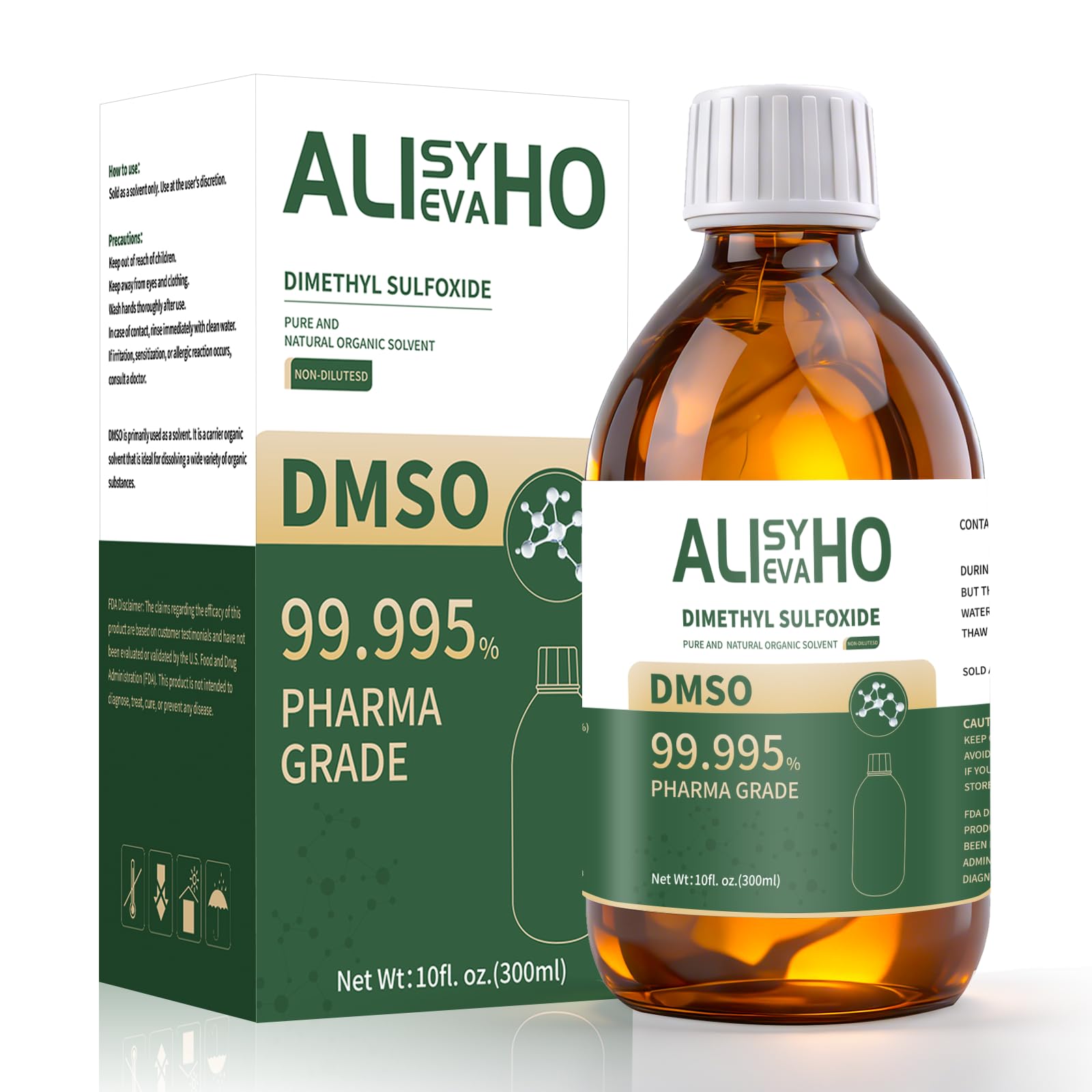
Dimethyl sulfoxide, or DMSO, is a chemical that occupies an unusual space between industrial solvent and alternative remedy. This 10-ounce bottle of pharmaceutical-grade DMSO, listed at 99.995% purity, is aimed at users who want a high-purity form of the compound for topical application or laboratory-style tasks. It is not a finished drug, and it is not marketed as a cure for anything. Instead, it is a raw material that has found a niche among people dealing with muscle aches, joint pain, or those who use it as a carrier solvent in small-scale chemistry projects.
In practical terms, DMSO is a clear, slightly oily liquid with a faint sulfurous odor. It freezes at around 18°C (64°F), so in cooler rooms it may turn solid; warming the bottle in a bowl of warm water returns it to liquid. The 10-ounce size is substantial for personal use—most people apply only a few milliliters at a time—so a bottle can last months or even years if stored properly. The pharmaceutical-grade designation means it meets United States Pharmacopeia (USP) standards for purity, which is relevant because industrial-grade DMSO can contain impurities like dimethyl sulfide or water that may irritate skin or interfere with sensitive applications.
One of the most common uses for DMSO is topical application for localized pain. Users typically dilute it with water or mix it with other ingredients, then apply it to the skin over a sore muscle or joint. Because DMSO readily penetrates skin and mucous membranes, it can carry other substances along with it. This is both a feature and a risk: it can enhance absorption of whatever is on your skin, including dirt, lotions, or contaminants. That means careful cleaning of the application area is essential. A typical approach is to start with a low concentration, often 50% DMSO and 50% water, to reduce the chance of skin irritation. Some people experience a warming sensation, redness, or a garlic-like taste in the mouth after application—side effects that are well documented and usually temporary.
Beyond personal use, this grade of DMSO is sometimes used in laboratory settings as a cryoprotectant for cell freezing or as a solvent for water-insoluble compounds. The 99.995% purity figure suggests it has been tested for trace impurities, though the exact certificate of analysis would come from the supplier. For home users, the main functional features are straightforward: it is a polar aprotic solvent that mixes with water and many organic solvents, it has a high boiling point (189°C), and it is relatively stable when stored in a cool, dark place. The bottle should be kept tightly sealed because DMSO is hygroscopic—it absorbs moisture from the air, which can gradually dilute it and introduce contaminants.
There are clear limitations to consider. First, DMSO is not approved by the FDA for any medical use in humans, except for a specific bladder condition called interstitial cystitis, where a prescription form is used. Off-label topical use is common but not supported by rigorous clinical trials for most pain conditions. Second, the taste and smell can be off-putting; even topical application often leads to a garlic or oyster-like taste within minutes, which can linger. Third, skin irritation is a real possibility, especially with higher concentrations or repeated use. And fourth, because it enhances absorption, it can increase the effects of other medications or toxins—so it should not be applied near open wounds or alongside other topical products without careful thought.
Compared to alternative pain relief options, DMSO is unusual. Over-the-counter creams like diclofenac gel or menthol-based rubs are formulated for easy, mess-free application and have undergone clinical testing for safety and efficacy. DMSO requires more preparation, has a stronger odor, and carries more uncertainty. On the other hand, some users find that DMSO provides relief when other topicals do not, possibly due to its deep tissue penetration. It is also far cheaper per application than many commercial analgesics. For laboratory use, DMSO competes with other solvents like dimethylformamide (DMF) or acetone, but its low toxicity profile and ability to dissolve a wide range of compounds make it a common choice.
Who is this for? It suits someone comfortable with handling a chemical at home, willing to research proper dilution and safety precautions, and looking for a high-purity form of DMSO. It is also appropriate for hobbyist chemists or small labs that need a reliable solvent in a convenient size. Who is it not for? Anyone expecting a turnkey, FDA-approved pain reliever should look elsewhere. People with sensitive skin, allergies to sulfur compounds, or those taking multiple medications should be cautious. And if you are not willing to deal with the odor, the freezing point, and the need for careful storage, a conventional topical product will be less hassle.
In summary, this 10-ounce bottle of 99.995% DMSO offers a high-purity form of a versatile solvent. It performs as expected for those who understand its properties, but it demands respect and a bit of homework. It is not a magic bullet, and it is not without risks. For the right user, though, it can be a useful addition to a home medicine cabinet or workshop shelf.