
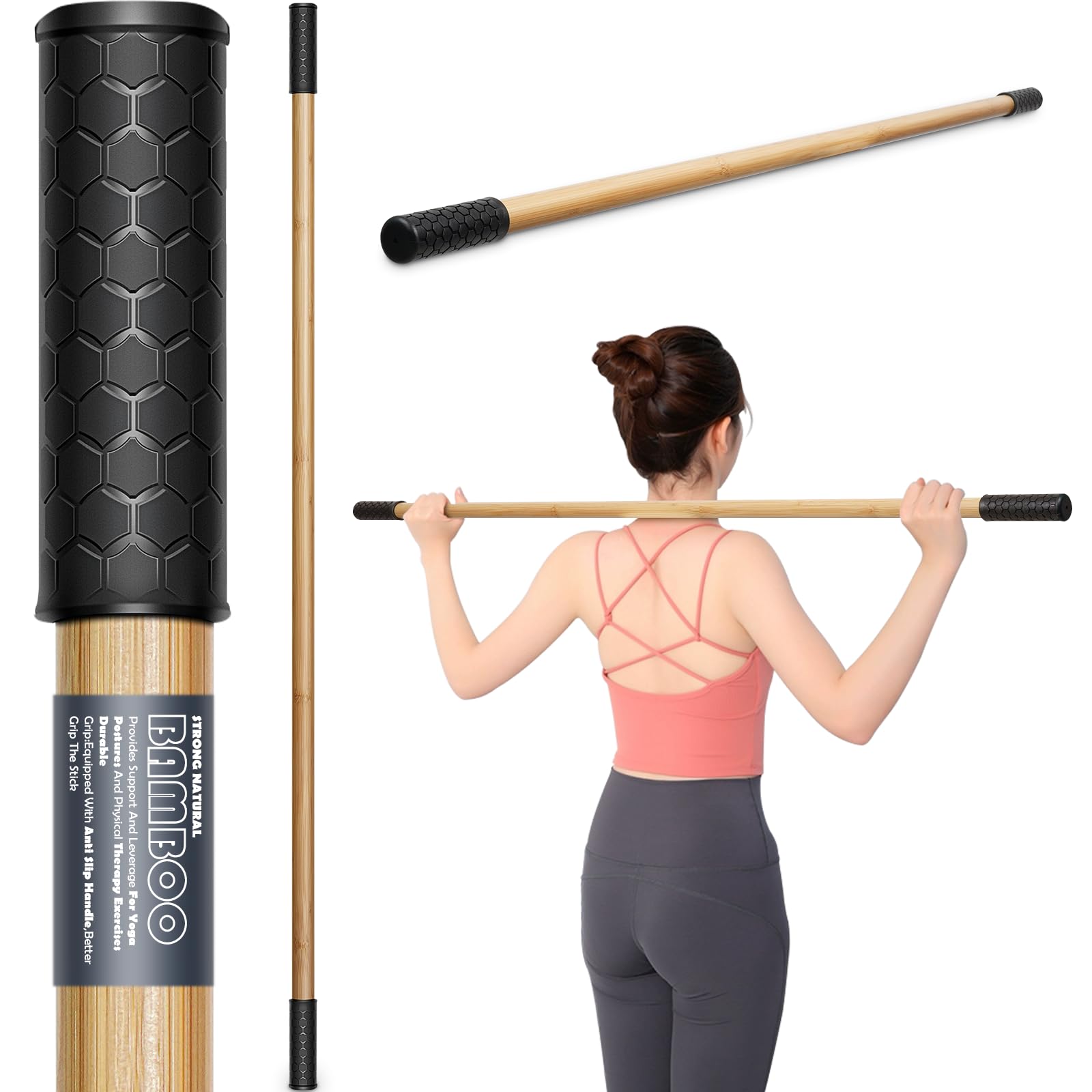
When it comes to physical therapy tools, simplicity often wins. The bamboo dowel rod, a 5-foot (149 cm) stick, is about as simple as it gets. It’s a plain cylinder of bamboo with no moving parts, no grips, and no instructions. Yet, this unassuming object can be surprisingly useful for a range of therapeutic and fitness exercises. But is it worth adding to your home setup? Let’s take a closer look.
In physical therapy, dowel rods are commonly used for assisted stretching, mobility work, and as a prop for balance or alignment. The 5-foot length is a standard size for many shoulder, wrist, and thoracic spine exercises. For example, a therapist might have a patient hold the dowel with both hands to perform shoulder flexion or abduction, using the unaffected arm to guide the affected one. The dowel provides a clear visual and tactile reference for symmetrical movement. It’s also used for wrist curls, forearm pronation/supination, and even lower body work like hip hinges. At home, users often incorporate it into routines for conditions like frozen shoulder, post-surgery rehab, or general stiffness.
The bamboo construction is a key feature. Bamboo is lightweight, which makes it easy to handle during exercises, especially for those with limited strength. It’s also naturally strong and resistant to warping, unlike some wooden dowels that can bend or crack over time. The surface is typically smooth, though it may have slight variations in diameter along the length due to the natural material. That’s a trade-off: bamboo isn’t perfectly uniform like a synthetic rod, but it’s generally durable and eco-friendly. The 5-foot length is a good compromise—long enough for most two-handed exercises, but not so long that it’s unwieldy in a small room. However, for taller individuals or certain exercises, a longer rod (6 feet) might be preferable.
One limitation is that bamboo can splinter if not finished well. Some cheaper dowels have rough spots or edges that might require sanding. Also, bamboo is not as rigid as metal or fiberglass; under heavy load, it could flex or even break. For light to moderate resistance, it’s fine, but for aggressive strength training, a different material might be better. Another consideration: the dowel has no grip, so if your hands are sweaty or weak, it can slip. Adding athletic tape or wearing gloves can help. And while it’s lightweight, it’s still a 5-foot stick—storage might be an issue in tiny apartments.
Compared to alternative tools like a PVC pipe or a wooden dowel, bamboo offers a more sustainable option. PVC is more rigid and uniform, but it’s plastic and less environmentally friendly. Wooden dowels (like poplar or oak) are heavier and may be more expensive. Bamboo hits a middle ground: lighter than wood, more eco-friendly than plastic, and generally cheaper than both. However, if you need something that can withstand heavy use or won’t splinter, a fiberglass rod might be worth the extra cost.
So, who is this for? It’s ideal for physical therapy patients following a home exercise program, especially those with shoulder or arm mobility issues. It’s also good for yoga practitioners wanting a prop for alignment or for seniors needing a lightweight aid for stretching. It’s not suitable for heavy strength training, high-impact activities, or as a walking stick—it’s not designed for body weight support. Also, if you need precise, uniform resistance, this isn’t the tool. It’s a simple, natural product that works well for its intended purpose but has the quirks of a natural material.
In use, the dowel feels comfortable in hand, and the length allows for a good range of motion. The bamboo has a slight give, which can be forgiving during stretches. However, the lack of grip means you might need to adjust your hold. For those with arthritis or very weak grip, a foam-covered dowel might be more comfortable. Also, the ends are usually cut flat, which is fine, but some may prefer rounded ends for safety.
Overall, the bamboo dowel rod is a practical, no-frills tool that serves its purpose. It’s not a miracle worker—it won’t replace professional therapy—but as a supplement to a rehab routine, it’s a solid choice. Just manage expectations: it’s a stick, and it does what a stick does. If you’re looking for a versatile, affordable, and eco-friendly option for home exercises, this could be a good fit. But if you need something more durable or with specific features, you might want to explore other options.