
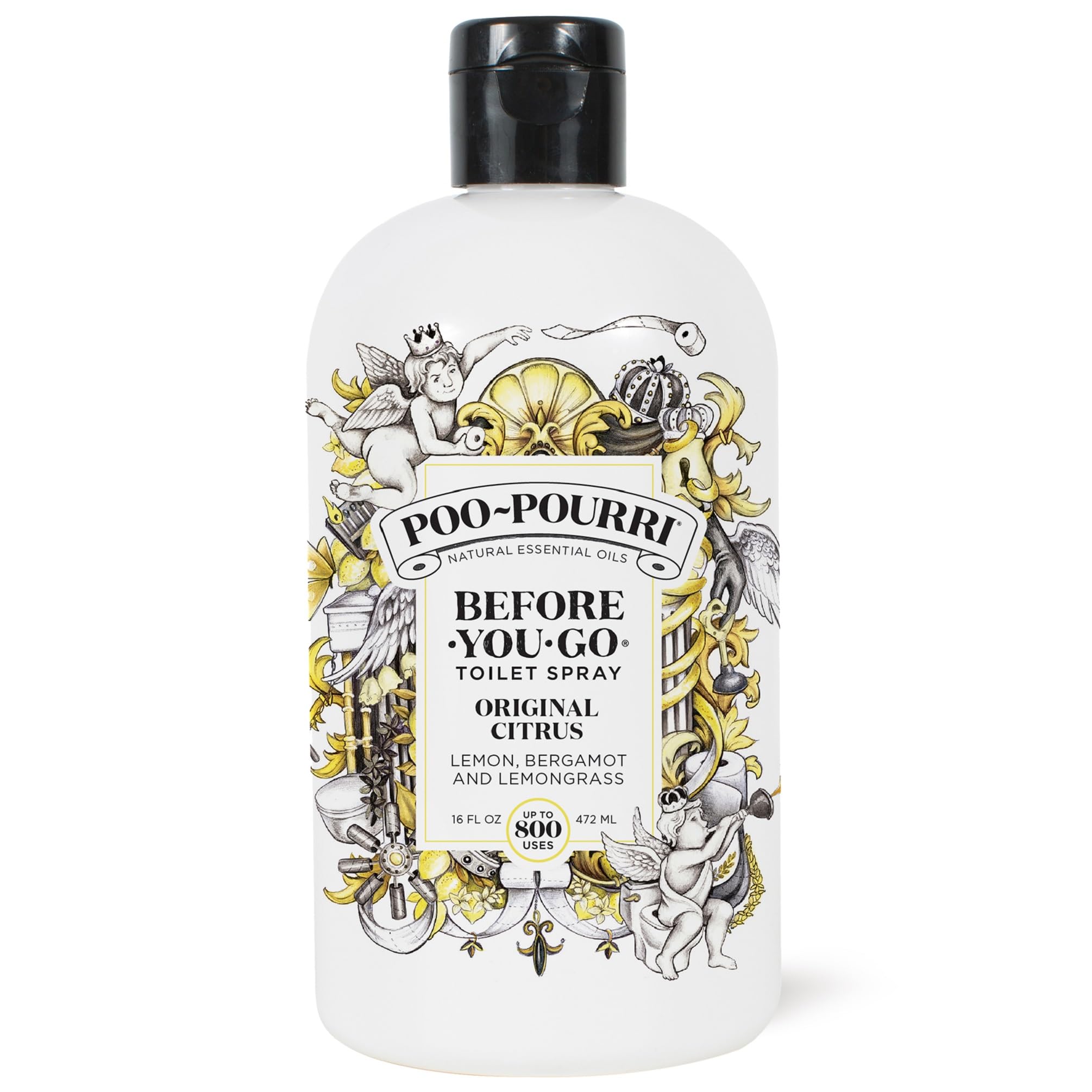
Poo-Pourri built its reputation on a simple premise: spray a scented oil layer onto the water before you go, and the film traps odors beneath the surface rather than masking them after the fact. The 16-ounce refill bottle is the least glamorous version of that idea, but arguably the most sensible one for anyone who has already bought into the concept. It is a straight refill for the brand’s smaller spray bottles, sold in bulk and priced per ounce considerably lower than the travel-size units that got the product its following.
In practice, the product is used in a specific, almost ritualistic way. You spray three to five pumps into the bowl before use, the essential oils form a thin barrier on the water’s surface, and the volatile compounds in the waste are largely contained when they hit that layer. It is not a room spray and does not work well if applied afterward. The original citrus scent is bright and slightly sharp, closer to a lemon-lime cleaning product than to perfume, which is a reasonable choice for a bathroom context but not something everyone will love.
The functional appeal of this size is mostly economic and logistical. A 16-ounce bottle yields roughly 400 to 500 uses depending on how many pumps you use, which is a lot of bathroom visits for one container. The bottle itself is a simple plastic jug with a screw cap; it does not come with a sprayer, so you are expected to decant into a smaller bottle. That is worth flagging clearly, because the listing photos can make it look like a ready-to-use spray. If you do not already own a Poo-Pourri spray bottle, you will need to buy one or transfer the liquid into a pump bottle of your own.
Performance is consistent with the category. The oil layer does reduce noticeable odor in a shared bathroom, particularly in the first minute or two after use, which is when most of the embarrassment happens. It does not eliminate odor entirely, and in a small, poorly ventilated room with no fan, some residual smell will still register. The effect also depends on getting the spray pattern right: a few direct pumps aimed at the water work better than a wide mist over the bowl. Users who spray the air instead of the water are essentially using an expensive room freshener.
Compared with the broader category of bathroom odor products, the trade-offs are fairly clear. Aerosol air fresheners and plug-in diffusers mask odors after they have already spread into the room; Poo-Pourri tries to prevent that spread at the source. Activated-carbon or gel-based bowl fresheners sit passively in the water and require no action, but they are less effective at the moment of use. Matches and incense work on the same principle of combustion masking, but they leave smoke and ash. The Poo-Pourri approach asks more of the user — you have to remember to spray before, every time — but it is more targeted when done correctly.
There are real limitations beyond the missing sprayer. The liquid is an oil-based concentrate, so it can leave a faint slick on the water and, over time, a residue on the bowl if sprayed heavily and frequently. The citrus scent is strong enough that some users find it cloying in a small space, and the brand’s other scents may suit different preferences. The refill also assumes loyalty to the Poo-Pourri system; if you are happy with a generic enzymatic bowl cleaner or a simple room spray, this is not a necessary upgrade. And because it is a concentrate, it is not a product to leave within reach of children or pets.
This refill makes the most sense for households or offices that already use Poo-Pourri regularly and want to cut cost and packaging waste by buying in bulk. It is also reasonable for a guest bathroom that sees frequent use, where a single 16-ounce bottle can last months. It is less suitable for someone who wants a one-step product that freshens the air after the fact, for anyone unwilling to keep a separate spray bottle on hand, or for people who are sensitive to strong citrus fragrances. As a refill, it does its job without fuss; as a first purchase, it is a slightly awkward entry point to the product line.