
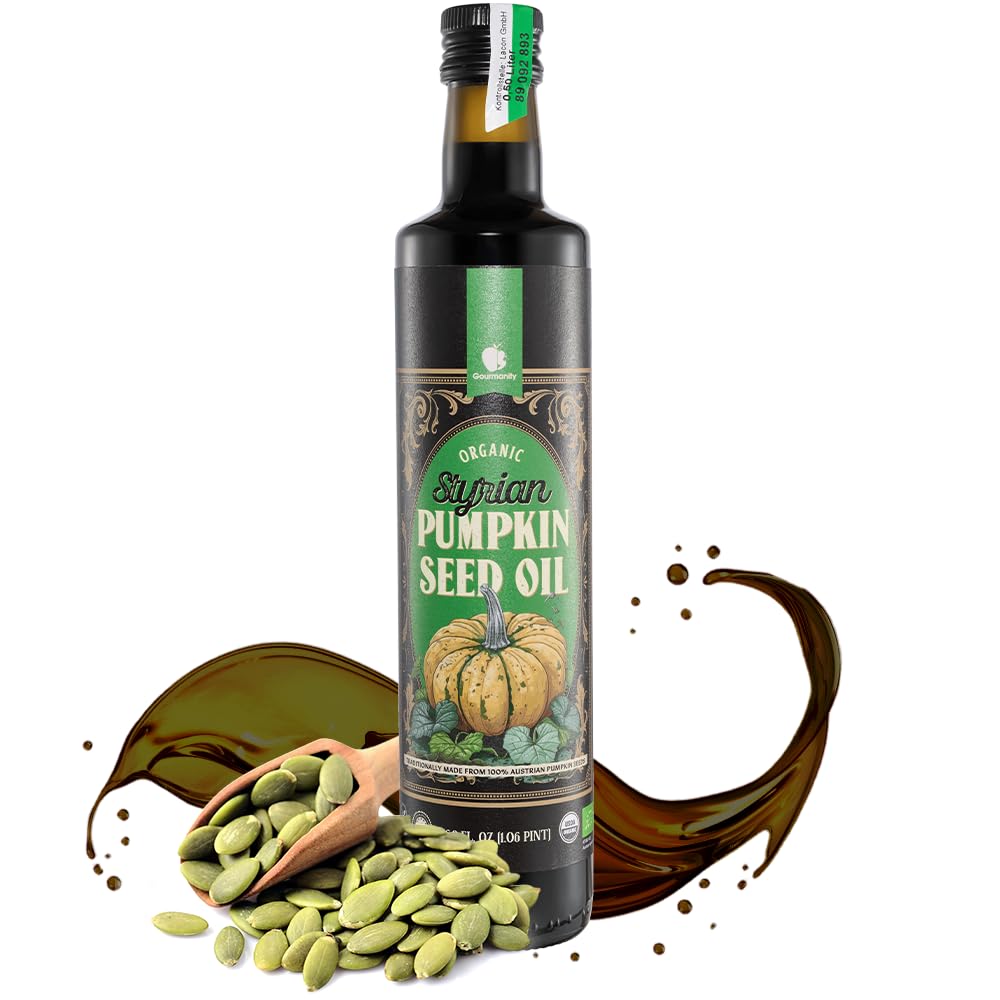
Styrian pumpkin seed oil occupies an unusual place in the pantry. It is not a neutral cooking fat, and it is not a finishing oil in the same way a good olive oil is. Gourmanity’s version, imported from Austria and sold in a 16.9-ounce bottle, is a cold-pressed organic product with a deep, almost opaque green-black color that tends to surprise anyone encountering it for the first time. Understanding what it is actually for matters more than any label claim.
The oil is pressed from hull-less pumpkin seeds, a variety associated with the Styria region of Austria. Cold pressing keeps temperatures low during extraction, which preserves more of the seed’s character but also limits yield and contributes to the price. The result is an oil with a pronounced, nutty, almost roasted-seed aroma and a slightly bitter finish. It is dense in flavor, and a little goes a long way, which is worth keeping in mind given the bottle size.
In practice, this is a finishing oil rather than a cooking oil. The most common use is as a drizzle: over roasted pumpkin or squash, on salads, over steamed vegetables, or stirred into soups just before serving. In Austrian and neighboring Central European kitchens it is often paired with vinegar for dressings, or spooned over dumplings and potatoes. It also shows up in desserts, particularly with vanilla ice cream, where the nutty bitterness contrasts with sweetness. Heating it aggressively is not recommended, since the flavor compounds that make it distinctive degrade quickly and the oil loses much of what makes it worth buying.
Functionally, the bottle is a straightforward dark glass container, which is appropriate since light accelerates rancidity in oils this delicate. The 16.9-ounce size is generous for an oil used in small quantities, and that is a genuine trade-off: unless it is used regularly, it may go stale before it is finished. Refrigeration after opening helps, though it thickens the oil and makes it harder to drizzle. Buyers should expect a shelf life measured in months, not years, once the seal is broken.
Compared with a conventional toasted sesame oil, which shares a similar role as a flavor accent, Styrian pumpkin seed oil is heavier and more vegetal, with a bitterness that sesame oil does not have. Compared with a standard extra virgin olive oil, it is far less versatile. Olive oil can be cooked with, used as a base for dressings, and consumed in larger volumes. This oil is more of a specialty ingredient, and treating it as an everyday fat will lead to disappointment on both flavor and cost grounds. The organic certification and Austrian origin also place it above mass-market pumpkin seed oils, many of which are blended or refined and lack the same intensity.
There are limitations worth stating plainly. The bitterness is not for everyone; people expecting a mild, sweet nut flavor may find it assertive or even harsh. The color can stain, and it darkens dressings and sauces considerably. The price per ounce is high relative to most cooking oils, and the large bottle format works against occasional users. Cold-pressed oils also vary somewhat between batches, so flavor consistency is not guaranteed the way it is with refined products.
This oil suits cooks who already use finishing oils and want a distinctive Central European ingredient for salads, squash dishes, and winter cooking. It is a reasonable choice for anyone curious about Styrian-style pumpkin seed oil specifically, since the Austrian origin and cold-pressed organic production are the relevant credentials. It is less suitable for people who want a single all-purpose oil, for anyone who dislikes bitter or strongly nutty flavors, or for households that cook in small quantities and would struggle to use 16.9 ounces before it declines. It is also not the right purchase for someone looking for a neutral oil for frying or baking, where its character would be wasted or actively unwelcome.
Overall, this is a legitimate specialty product with a clear identity and a real place in the kitchen, provided it is bought with realistic expectations about how it will be used. The main risks are not quality problems but mismatched use: heating it, expecting neutrality, or buying a large bottle without a plan to finish it.