
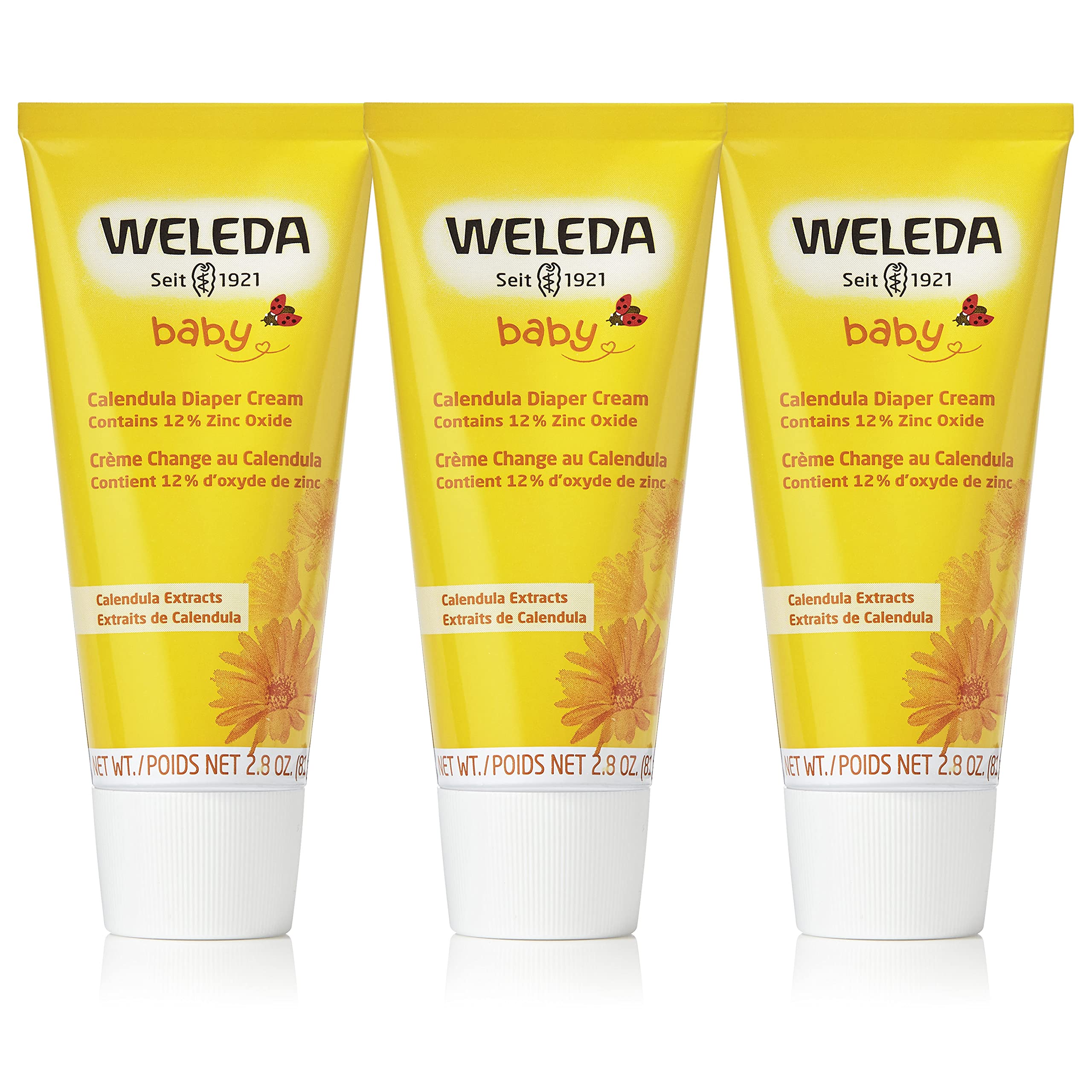
Weleda’s Calendula Diaper Cream sits in a crowded field of diaper rash treatments, but it occupies a specific niche: parents who want a barrier cream built around plant oils and botanical extracts rather than a purely petrolatum-based formula. The three-pack format (2.8 fl oz each) is aimed at households that go through diaper cream steadily and would rather stock up than reorder every few weeks. Whether that math works out depends on how heavily you apply it and how often your baby needs it.
In practice, this is a cream you apply at every diaper change, or at least at the changes where you notice redness starting. The texture is thick but spreadable—closer to a heavy lotion than a stiff paste—which makes it easier to apply thinly across a large area than some of the zinc-heavy creams that require real effort to distribute. A pea-sized amount covers a typical diaper area; for a newborn, less. That matters for the three-pack value calculation, since a single tube can last a surprisingly long time if you are not slathering it on.
The formula relies on several ingredients doing distinct jobs. Zinc oxide provides the physical barrier that keeps moisture away from skin. Lanolin adds occlusion and helps the cream stay put through a wet diaper. Calendula extract and chamomile are the botanical components Weleda is known for, included for their traditional soothing role rather than as clinically proven actives. Sweet almond oil and other plant oils give the cream its spreadability and contribute emollients. It is worth being clear-eyed here: the botanical extracts are a nice-to-have, not the mechanism doing the heavy lifting. The barrier function comes from zinc oxide and lanolin, and that is what you are really paying for in terms of rash prevention.
Realistic expectations matter with any diaper cream. Used proactively on clean, dry skin, this cream does what a barrier cream should: it reduces contact between skin and wetness and gives mild irritation a chance to settle. It is not a treatment for established fungal rashes, and it will not resolve severe diaper dermatitis on its own. If redness persists beyond a few days or develops satellite spots, that is a cue to talk to a pediatrician rather than to apply more cream.
There are trade-offs worth naming. First, lanolin is a common allergen—rare, but real—and some parents specifically avoid it. Second, the cream has a noticeable herbal scent from the calendula and chamomile; it is not overpowering, but it is present, and some babies with sensitive skin do better with fragrance-free formulas. Third, the consistency, while easy to spread, is less tenacious than thick petrolatum-based ointments, so for a baby with active, weeping rash or for overnight protection during a bad flare, a heavier occlusive may hold up better. This cream is at its best for maintenance and mild prevention, not as a rescue treatment.
Compared with a standard petrolatum-based diaper ointment—the kind sold in large tubs at drugstores—Weleda’s version costs more per ounce and offers a more cosmetically pleasant application and a plant-forward ingredient list. The petrolatum option is cheaper, more occlusive, and essentially inert, which some parents prefer for exactly that reason. Neither is objectively better; they serve slightly different priorities. If you want maximum barrier with minimum ingredient list, petrolatum wins. If you want a cream that spreads easily, smells pleasant, and leans on plant oils, this is a reasonable choice.
The three-pack itself is a practical consideration. It works well for families who use this cream daily and want to keep one tube at the changing table, one in the diaper bag, and one as backup. It is less sensible for someone trying the product for the first time, since committing to three tubes before knowing whether your baby tolerates lanolin or the scent is a gamble. A single tube is the smarter entry point.
Who it suits: parents looking for a plant-oil-based barrier cream for routine diaper changes and mild redness, who are not avoiding lanolin and who prefer a spreadable texture over a thick paste. It also suits households that already use Weleda’s calendula line and want consistency across products.
Who it does not suit: babies with known lanolin sensitivity; parents who want a fragrance-free formula; anyone dealing with a severe or persistent rash that needs a heavier occlusive or medical treatment; and first-time buyers who would rather test a single tube before committing to a multi-pack.
Overall, this is a solid, well-made barrier cream with a clear place in a diaper-changing routine, provided you understand what it is and is not. It prevents and soothes mild irritation well, spreads more easily than most, and carries a premium price that reflects the brand and the botanical ingredients more than any unique performance advantage. The three-pack makes sense for committed users and less sense for anyone still deciding.