
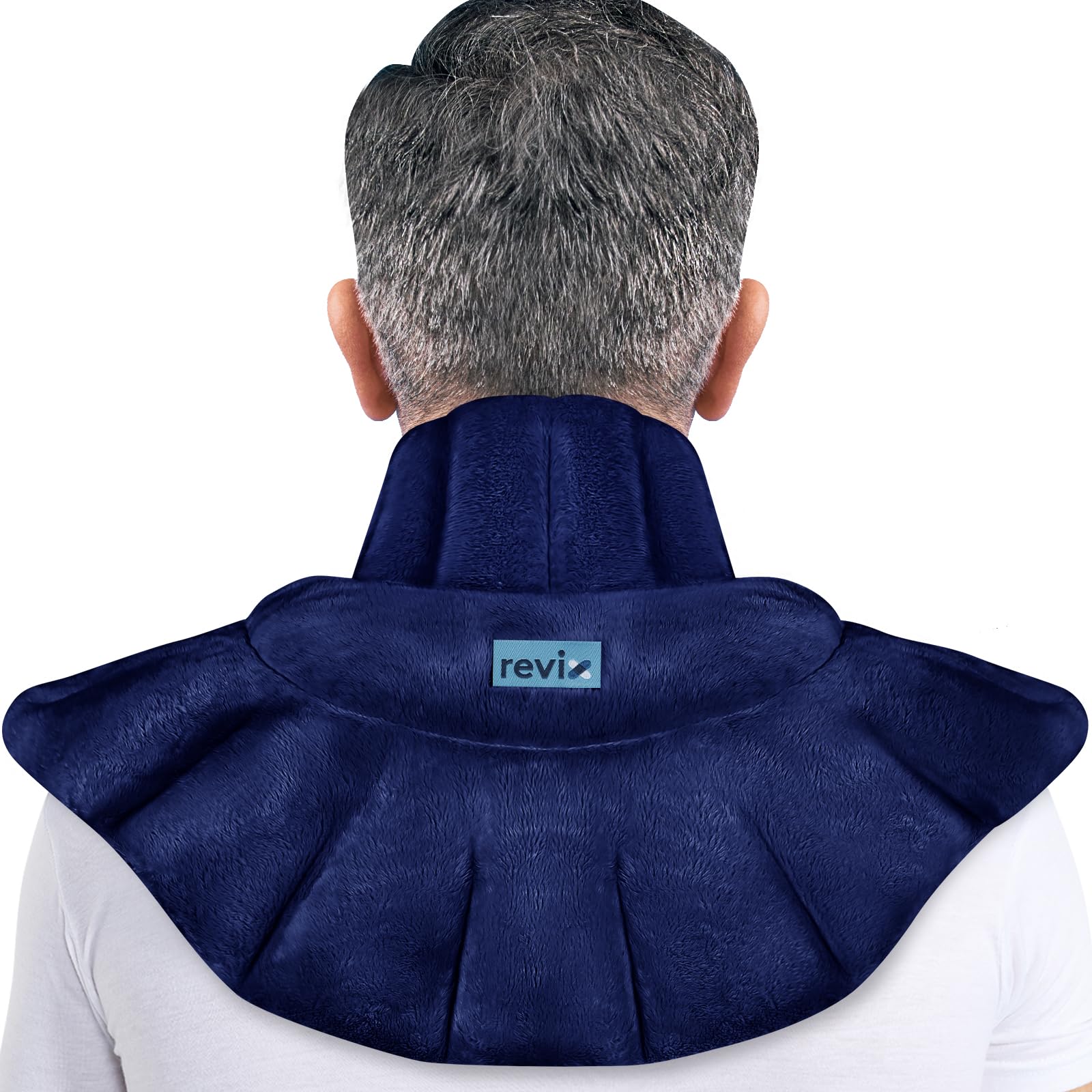
The REVIX microwavable heating pad is a cordless, reusable moist-heat wrap designed to drape over the neck and shoulders or lie across the lower back. It sits in a crowded category of drugstore heat wraps and electric pads, and the question worth asking is whether a microwavable version earns its place compared with the alternatives. Based on how this type of product is built and used, here is a grounded look at what it offers and where it falls short.
The appeal of a microwavable pad is mostly about convenience and mobility. You heat it for a minute or two, drape it on, and move around the house without hunting for an outlet or untangling a cord. That makes it useful during the kinds of low-grade, everyday discomfort people actually deal with: a stiff neck after too many hours at a desk, tight shoulders from carrying bags, or a lower back that aches after a long drive. It is also handy for warming up before stretching or for general relaxation in the evening.
The moist-heat claim is worth explaining plainly. These pads typically contain a grain or seed filling that retains some ambient moisture, so the warmth feels a little less dry than a standard electric pad. In practice, the difference is subtle rather than dramatic, and it depends on how long you heat it and how humid your home is. Anyone expecting a spa-level steam treatment will be underwhelmed; anyone wanting warmth that does not feel desiccating will find it agreeable.
Functionally, the design follows the familiar pattern for this category. The filling is divided into channels or compartments so it does not all slide to one end, which matters when you are trying to keep heat on the back of the neck. The fabric cover is generally soft and intended to sit against skin, and the navy colorway is a practical, low-key choice that hides minor marks better than pale fabrics. Because it is cordless, there is no timer or adjustable heat setting — the temperature is whatever the microwave gives you, and it declines steadily as the filling cools. That cooling curve is part of the experience: warm and intense for the first several minutes, then a gentler, longer-lasting warmth.
Reheating is quick, but it comes with the usual caveats. Overheating can make the surface uncomfortably hot or scorch the filling, and manufacturers generally advise short intervals with checks in between rather than one long blast. The pad also needs to rest and redistribute heat after coming out of the microwave, so it is not quite the instant solution it appears to be. And because heat fades, a session tends to last somewhere in the range of twenty to forty minutes depending on the filling and how warm it started — reasonable for a wind-down routine, less so if you want sustained heat for an hour or more.
- Cordless and portable: no outlet needed, so it works on the couch, in bed, or at a desk.
- Moist-heat feel: gentler on skin than dry electric warmth, though the effect is modest.
- Contoured for neck and shoulders: the shape is meant to drape rather than sit flat, and channeled filling helps it stay put.
- Reusable: reheats in the microwave repeatedly, with no consumables to replace.
- Dual use: works across the shoulders or laid flat on the lower back.
The most obvious limitation is the lack of control. An electric pad lets you set a temperature and, on better models, a shutoff timer, which is safer for anyone prone to falling asleep with heat applied. A microwavable pad gives you no such precision — you get what you get, and you have to stay attentive during reheating to avoid overheating. The weight is another consideration: grain-filled pads are heavier than electric ones, which some people find comforting and others find tiring on the neck after a while. There is also the maintenance question. Most covers are spot-clean only, and the filling should not get wet, so it is not something you toss in the wash after every use.
Compared with an electric heating pad, the trade-off is clear. Electric pads offer adjustable, sustained heat and timers but tether you to a cord and can dry the skin. Microwavable pads offer freedom and a softer warmth but limited duration and no fine control. Compared with disposable heat wraps, the REVIX is more economical over time and produces less waste, though it is bulkier and less discreet for use at work or while running errands.
This pad suits people who want a simple, cord-free way to warm up stiff muscles at home, especially those who dislike the dry feel of electric pads or who move between rooms while using heat. It is a reasonable fit for desk workers, drivers, and anyone building a low-key evening routine. It is less suitable for people who need precise, prolonged, or timed heat — those with circulation concerns, limited sensation, or a tendency to doze off mid-session should look at electric pads with automatic shutoff, and anyone with a medical condition affecting heat sensitivity should check with a clinician first. It is also not the right pick for someone who wants a washable, low-maintenance cover or who finds weighted items uncomfortable.
Overall, the REVIX is a straightforward, functional entry in a well-established category. It does the basic job of delivering moist-feeling warmth to the neck, shoulders, and back without a cord, and it does so with a design that shows some thought about staying in place. The absence of temperature control and the short-lived heat are real drawbacks rather than minor quibbles, but for casual, at-home use they are the same compromises every microwavable pad makes. Buy it for convenience and portability, not for precision or long sessions.